
After covering the shocking revelations in our last article, “SSC Exam Vendor Eduquity: Series of Failures, Controversy and Fraud”, many readers asked us to dig deeper into the real debate i.e., Eduquity vs TCS!
For years, TCS SSC exams were seen as reliable and transparent, but the sudden SSC exam vendor change to Eduquity in 2025 sparked chaos, protests, and endless complaints. Aspirants now find themselves questioning whether the decision was fair or a costly mistake.

In this article, we’ll break down TCS vs Eduquity in detail to uncover which vendor truly serves SSC candidates better.
Profile Comparison: Eduquity vs TCS
Let’s begin by comparing the backgrounds of both companies. It will give you an overall idea about the roots and crucial info about Eduquity and TCS (Tata Consultancy Services)-
| Particulars | Eduquity | TCS (Tata Consultancy Services) |
| Operating Industry | Information Technology & Services; Online Assessment and Examination Solutions | Information Technology; Consulting; Outsourcing |
| Founded | 2000 | 1968 |
| Founder | Ramachandra Dhirendra and Visweswar Akella (founders as per reports) | J.R.D. Tata |
| Headquarters | Bangalore, Karnataka, India | Mumbai (Maharashtra, India) |
| Area Served | Primarily India (wide national presence in the examination domain) | Worldwide |
| Key People | Not publicly detailed in sources; founders Ramachandra Dhirendra and Visweswar Akella noted | Natarajan Chandrasekaran (Chairman); K.Krithivasan (MD & CEO) |
| Parent Company | Privately held; no parent company | Tata Group |
| Competitors | Thonas, ATA, Central Test, Avance Consulting Services, Pinnacle Group, etc. | Accenture, Wipro, Capgemini, Infosys, etc. |
In the upcoming sections, we will compare TCS vs Eduquity thoroughly based on their characteristics, financials, and business.
Eduquity vs TCS: Features Comparison
When it comes to competitive exams like SSC CGL, CHSL, and MTS, candidates want a stress-free experience. Unfortunately, the vendor plays a huge role in whether the exam feels fair and smooth or chaotic and stressful.
To understand this heated debate of Eduquity vs TCS, let’s look at a side-by-side features comparison that highlights how both vendors have handled SSC exams over the years.
| Criteria | Eduquity Career Technologies | TCS (Tata Consultancy Services) |
| SSC Contract Years | From 2025 onward | Till 2024 |
| Exam Types Handled | CGL, CHSL, MTS, Phase Exams | CGL, CHSL, MTS, GD, Phase Exams |
| Quoted Company Price | ₹220 per student | ₹350 per student |
| Technical Reliability | Major issues in 2025 SSC exam: widespread server failures, mass cancellations, hardware/network problems | Robust infrastructure, rare technical disruptions |
| Candidate Complaints | Severe: phase-13 cancellations, inadequate centers, poor infrastructure, frequent miscommunication, mass protests nationwide | Few: minor logistics, smooth operational record |
| History of Blacklisting | Marked “ineligible” by the Directorate General of Training, repeatedly flagged and blacklisted (various states), controversial reputation | No significant blacklisting record |
| Cheating/Scam Allegations | Repeated allegations: rural center cheating, exam mismanagement, links to previous scams (Vyapam, Patwari), facilitation of unfair practices | Strict controls, rare incidents |
| Communication with Candidates | Poor: last-minute cancellations, late admit cards, nonresponsive helplines, mass confusion, lack of transparency | Proactive: timely alerts, candidate support |
| Public Perception (2025) | Unreliable—candidate distrust, demands for vendor replacement, widespread protests and social media outrage | Trusted—preferred by aspirants and educators; record of reliability |
| Reason for Vendor Change | Won on the lowest price; operational record and reliability overlooked during tender process | Higher price, the government opted for “lowest bidder” |
From the table above, the differences are stark. Eduquity entered the SSC exam scene in 2025 with a promise of lower costs, but what followed were widespread complaints, including software lag in exams, repeated SSC technical failures, and even cancellations of the much-anticipated SSC Phase-13 exam.
Candidates complained of broken keyboards, biometric mismatches, last-minute cancellations, and poor communication.
On the other hand, TCS SSC exams were known for exam reliability and smoother logistics. While minor delays or local issues happened, the scale of disruptions was far smaller compared to Eduquity. TCS had a reputation for SSC fair exam conduct, timely notifications, and secure infrastructure.
The biggest takeaway?
Eduquity may have been cheaper for the government, but for aspirants, the cost was immense in terms of time, energy, and shattered trust. Many SSC aspirants have openly declared that the exam strategy under SSC Eduquity became less about preparing for questions and more about surviving technical chaos.
Eduquity Controversies: Cheating, Exam Scams, Poor Communication, Failures, Complaints & Blacklisting
When Eduquity stepped into the role of conducting SSC exams, many aspirants already knew the company carried a cloud of controversy. Over the years, it has faced serious allegations of cheating, scams, mismanagement, and even blacklisting.
What makes the story worse is that despite these past records, the firm was still trusted with one of India’s largest recruitment examinations in 2025. Let’s break down the allegations one by one.
1. Cheating and Scam Allegations
Eduquity’s reputation first came under the scanner during its alleged connection with the Vyapam scam in Madhya Pradesh. This infamous scandal rocked the country, as it exposed how exam fraud, impersonation, bribery, and mass-level malpractice had corrupted recruitment and admission systems. Eduquity’s role in teacher eligibility and Patwari exams during that period drew heavy criticism, especially as irregularities in results and manipulations of merit lists came to light.
The trouble didn’t end there.
In Maharashtra’s MBA CET 2023, Eduquity was dragged into the Bombay High Court over allegations of paper leaks and bribery. Students claimed the exam was mismanaged and demanded a complete re-examination. For aspirants who had prepared for years, this was a nightmare, and for Eduquity, it was another black mark on its record.
Adding to the distrust was Eduquity’s prior blacklisting. Around 2020, India’s Directorate General of Training (DGT) declared the company ineligible due to irregularities in earlier recruitment exams. Yet, despite this official blacklist, Eduquity still managed to bag national-level contracts—including the SSC Phase-13 exam in 2025.
This decision shocked students and experts alike, raising the burning question: How did a blacklisted company end up conducting one of India’s biggest exams?
Critics also pointed out Eduquity’s habit of assigning students to cheating-prone exam centers, often in rural or poorly monitored areas. With weak supervision and inadequate infrastructure, the risk of unfair practices went up significantly, damaging the credibility of exams under their watch.
2. Poor Communication with Candidates
If the cheating allegations weren’t bad enough, Eduquity also developed a reputation for poor communication. Imagine preparing for years, only to receive your admit card just 48 hours before the exam, when the norm is at least four days. That’s exactly what many SSC candidates faced—leading to last-minute travel chaos, panic, and unnecessary stress.
Even when things went wrong, Eduquity rarely responded effectively. Numerous candidates reported server failures, intimidation by staff, and administrative mishandling. Complaints were often ignored, even when police or officials were present. Instead of calming nerves, Eduquity’s silence created even more distrust.
Although the SSC chairman later clarified that Eduquity was not directly involved in paper leaks and only handled exam conduction, that statement did little to reassure students. Dissatisfaction over the company’s crisis management and lack of transparency continues to dominate conversations among SSC aspirants.
3. Unreliability and Candidate Complaints

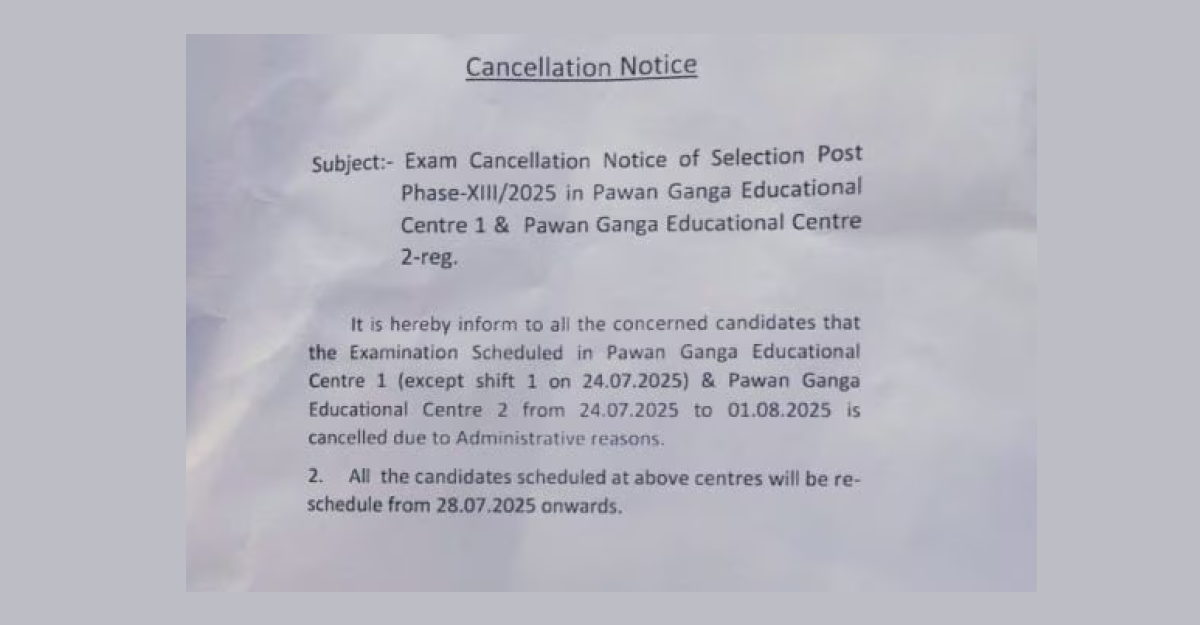
The real test of Eduquity came during the SSC Phase-13 exam in 2025—and it failed spectacularly. Across the country, reports poured in of server crashes, biometric verification breakdowns, broken keyboards, faulty mice, and widespread network outages. In Indore and several other cities, exams were either delayed or outright canceled, leaving candidates devastated.
The chaos didn’t stop there. Wrong center allotments, sending students to remote locations, last-minute cancellations, and poor facilities added to the mess. Aspirants who had spent years preparing suddenly found themselves victims of technical failures, rather than poor preparation.
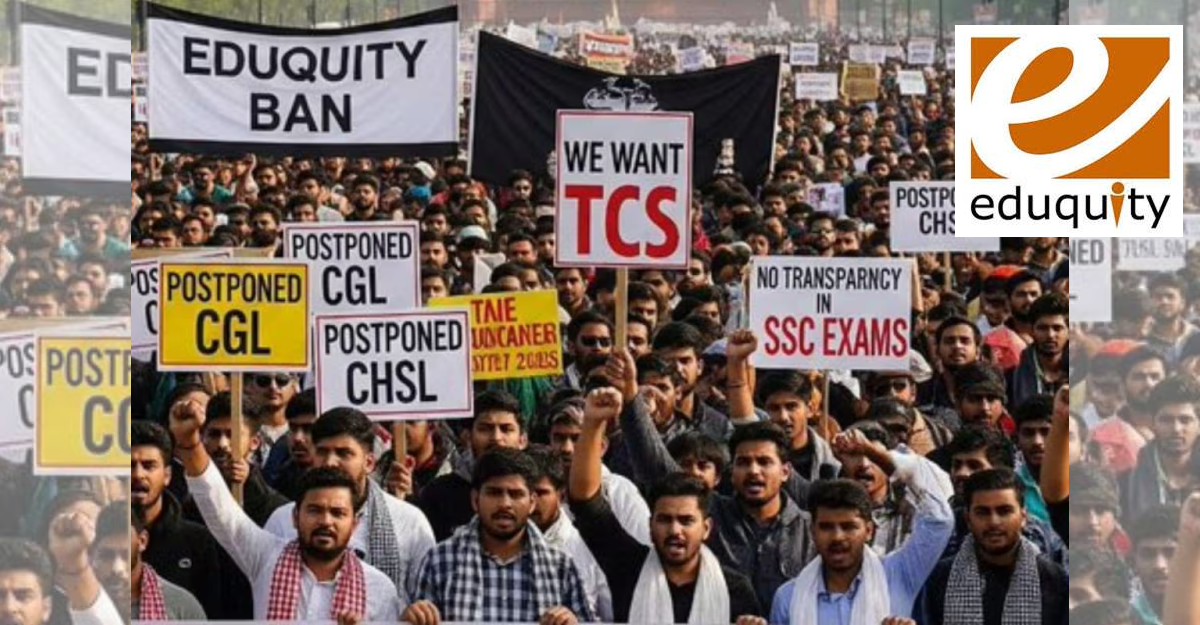
The frustration soon boiled over into nationwide protests. From Jantar Mantar in Delhi to SSC headquarters and the Department of Personnel & Training, angry candidates demanded Eduquity’s removal as the exam vendor. Many also called for an independent investigation into the lapses, citing that their dreams and careers were at stake.
4. Blacklisting History and Ongoing Scrutiny
Eduquity’s blacklisting by the DGT in 2020 should have been a permanent red flag. The decision was taken after repeated irregularities in state-level recruitment and teacher eligibility exams. Yet, despite such a tainted past, Eduquity still managed to secure SSC contracts under the government’s “lowest bidder” tendering process.
This has raised bigger questions about how the system values cost over quality. Choosing the cheapest option may save the government money, but it costs aspirants their peace of mind, their hard work, and sometimes their future.
Even today, Eduquity remains under national scrutiny. Activist groups like the National Educated Youth Union have consistently filed complaints and alerted authorities about Eduquity’s recurring failures. With every new exam it handles, the pressure mounts, and the trust deficit grows.
In short, Eduquity’s story is not just about one or two mistakes. It is a pattern of cheating allegations, poor communication, technical failures, and a controversial blacklisting history. For aspirants, these aren’t just headlines—they are lived experiences that directly affect their careers. And that’s why the debate of Eduquity vs TCS has become so important in the SSC ecosystem.
Eduquity vs TCS: Business Comparison
Beyond exam experiences, it’s worth comparing the two companies as businesses. One is a global IT giant with billions in revenue, while the other is a relatively small private firm.
| Business Aspects | Eduquity | TCS |
| Market Cap | Not Disclosed | ₹10.98 trillion |
| Revenue | ₹135 crore | ₹2.561 trillion (US$31 billion) |
| Operating Income | Not Disclosed | ₹65,331 crore (US$7.7 billion) |
| Net Income | Not Disclosed | ₹48,797 crore (US$5.8 billion) |
| Total Assets | Not Disclosed | ₹159,629 crore (US$19 billion) |
| Total Equity | Not Disclosed | ₹95,771 crore (US$11 billion) |
| Expenditures | Not Disclosed | ₹176,597 crore |
| Profits | Not Disclosed | ₹12,760 crore |
Looking at the table, the contrast is obvious. TCS is a powerhouse with worldwide operations, trusted clients, and huge financial stability. It can afford to invest in robust online exam infrastructure, modern servers, and cutting-edge technology to handle lakhs of candidates simultaneously. That is why its record of TCS exam reliability is strong.
On the other hand, Eduquity is a much smaller player. With limited revenue and little transparency about its financials, it does not have the same capacity to invest in infrastructure or candidate support systems. This lack of resources may explain the repeated exam center problems in Eduquity exams, from server crashes to untrained staff.
It’s also telling that TCS has no history of being blacklisted, while Eduquity’s past includes bans, protests, and lawsuits. When it comes to trust, the comparison feels one-sided.
Final Words on Eduquity vs TCS: Who is the Winner?
So, Eduquity vs TCS – which is better for exams? The answer, based on evidence, is clear: TCS is far superior to Eduquity.
While Eduquity may have won the tender for SSC exams by quoting a lower cost, aspirants have paid the real price through SSC Phase-13 exam problems, repeated technical failures, and SSC selection post disruptions. The chaos has not only wasted months of preparation but also shaken the faith of lakhs of candidates who just want a fair shot at a government job.
TCS, despite being more expensive, has proven its ability to conduct exams with fairness, transparency, and reliability. Its exam interface differences were consistently smoother, and it handled SSC notification and communication with candidates far better than Eduquity ever has.
Note: We have also shared the comparison analysis of the following-
- Accenture vs TCS: Which is the better IT company?
- TCS vs Infosys: Which one is ruling the IT industry?
At the heart of the matter, this is not just about TCS vs Eduquity as companies. It is about the future of aspirants who dedicate years of their lives to clearing SSC exams. They deserve a vendor that can ensure SSC fair exam conduct, not one repeatedly accused of cheating, scams, and mismanagement.
The government must ask itself: Is saving a few rupees per candidate worth risking the dreams of millions? Until then, aspirants will continue to raise their voices in SSC aspirant protests, demanding that TCS return as the official vendor.
When it comes to SSC exams, reliability, fairness, and transparency matter far more than cost. And by those standards, TCS wins hands down over Eduquity!
