
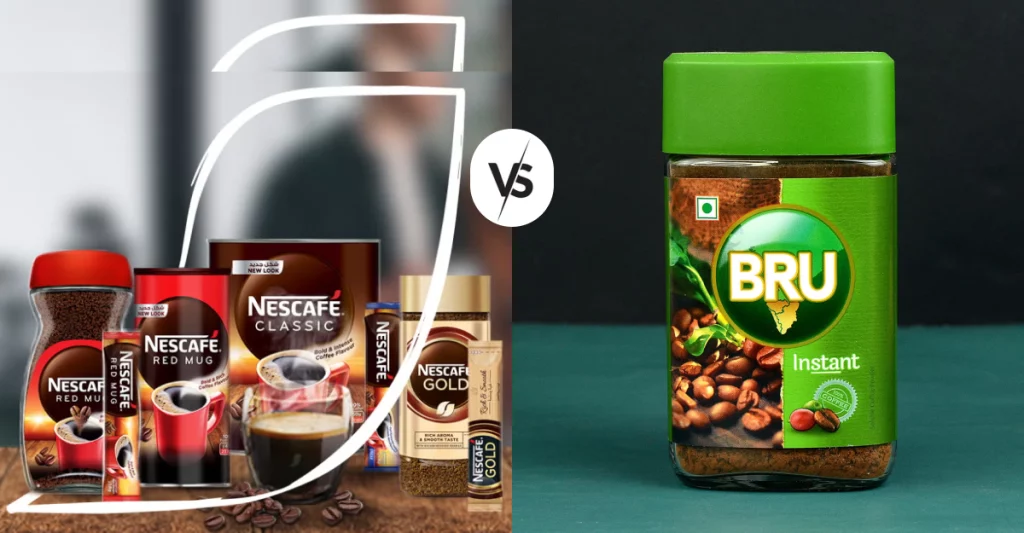
When you start your morning with a warm cup in your hand, the fight between Nescafé vs Bru often plays in your mind. Both brands feel close to your daily life, and both have a special place in Indian homes. You may stick to one out of habit or switch between the two based on your mood, but this comparison always stays in your thoughts.
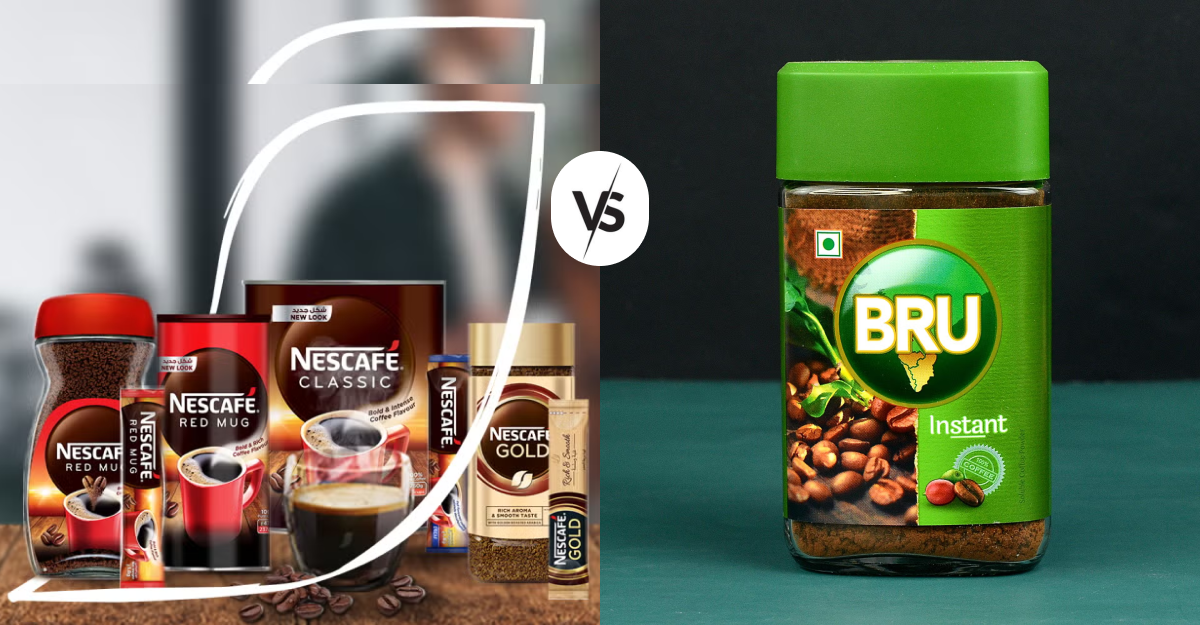
This write-up will offer you a full guide on Nescafé vs Bru. You will also see why this rivalry is so intense and why choosing one can feel like choosing a part of your personality!
Profile Overview
Before anything else, you need a clear sense of how these two brands stand in the real world. The profile table below shows you the story behind Nescafé vs Bru.
| Particulars | Nescafe | Bru |
| Parent Company | Nestlé (Switzerland) | Hindustan Unilever Limited (HUL), under the Brook Bond label (India) |
| Year Launched | 1938 (Switzerland); 1963 (India) | 1968 (India) |
| Product Range | Instant coffee, premium blends, Dolce Gusto machines, espresso, cappuccino, cold/iced coffees | Instant and filter coffee, premixes (including cappuccino), premium and conventional blends, freeze-dried options |
| Market Position | Global leader in instant coffee; strong pan-India presence, especially popular in northern India | Market leader in southern India; “India’s No. 1 coffee brand” by volume and popularity in the south |
| Brand Image | Youthful, trendy, urban-focused; emphasizes innovation, convenience, sustainability | Family-oriented, rich aroma, tradition, and strong loyalty; “makes every moment come alive” |
| Sustainability | Strong programs (NESCAFÉ Plan), pioneered Fairtrade-certified blends | Focus on quality sourcing and Indian traditions; less global sustainability communication |
| Popular Variants | Classic, Gold, Sunrise, Dolce Gusto blends, Cappuccino, Cold Coffee | Bru Instant, Bru Gold, BRU Select, Bru Lite, Bru Exotica, filter coffee blends, mixes |
| Target Audience | Urban youth, professionals, global audience | Indian families, traditional coffee drinkers, especially in southern India |
| Tagline/Brand Value | “It all starts with NESCAFÉ”, focus on starting your day | “Happiness begins with Bru”, family moments, morning rituals |
Nescafé comes from a long global legacy that started in Switzerland in 1938. When it entered India in 1963, it changed the way you looked at instant coffee.
You now associate it with a youthful, modern, and stylish feeling. Its product range is wide and bold, from Classic and Gold to Sunrise, Dolce Gusto blends, and cold coffee options. If you love starting your day with energy and convenience, Nescafé speaks to you.
On the other side of the Nescafé vs Bru battle, Bru carries a deep Indian identity. Launched in 1968 by HUL, Bru quickly became the heart of many kitchens, especially in South India. Its brand image feels warm and family-centered. You can sense that when you smell its rich aroma. It reminds you of tradition, of steady routines, and of comfort. With Bru Instant, Bru Gold, Bru Select, filter coffee blends, and premixes, the brand stays close to the classic Indian coffee experience.
In short, when you look at both profiles, you feel that Nescafé vs Bru is not only a comparison of two products but a contrast between global flair and Indian tradition.
Features Comparison of Nescafé vs Bru
Now, here comes the part that plays a big role in your buying decision. The following table describes the strengths of Nescafé vs Bru in the Indian market.
| Feature | Nescafe | Bru |
| Market Share (India, 2025) | Approximately 40% market share in the Indian coffee market; dominant leader with widespread urban and rural reach | Around 32.45% market share; strong presence especially in southern India; positioned as a family brand |
| Product Diversification | Extensive diversification, including instant coffee, RTD (ready-to-drink) beverages, premium blends, single-serve pods, and coffee machines; focus on premiumization and lifestyle branding | Limited diversification mostly around instant coffee and some RTD options; lacks premium or specialty blends and on-the-go product formats |
| Pricing Strategy | Premium and varied pricing reflecting product range; targeted at aspirational, urban consumers willing to pay more for quality and convenience | More affordable, price-sensitive positioning catering to family and mass market segments, especially in South India |
| Distribution Channels | Aggressive omnichannel distribution, including retail, e-commerce, vending machines, cafes, and urban commercial locations | Predominantly traditional retail with focus on availability in kirana stores and supermarkets; less penetration in modern retail and vending |
| Marketing Focus | Lifestyle, innovation, and emotional connect with urban youth; campaigns highlight a modern, aspirational coffee drinking experience | Focus on tradition, taste, and family moments; campaigns emphasize familiarity and everyday consumption over lifestyle appeal |
| Innovation & Technology | Heavy investment in coffee machine technology (Dolce Gusto, Nescafé Gold Barista); promotion of convenience and variety through tech-enabled products | Minimal focus on technology and innovation; mainly traditional instant coffee format preferred |
| Urban vs Rural Penetration | Strong presence in urban and emerging rural markets with strategic expansion and wide product formats | Strong in southern Indian rural and urban markets but limited beyond that demographic |
| Consumer Perception | Seen as a premium, trendy, and modern coffee brand; often associated with quality and global standards | Perceived as a value-for-money, family-friendly brand; traditional taste appeal |
| Market Challenges | Faces competition from emerging brands and niche coffee cafes; needs to maintain premium positioning while expanding reach | Limited premium appeal and urban lifestyle alignment restricts growth; lacks diversity in product portfolio |
Nescafé leads with its 40 percent share and delivers products that suit your busy life. If you like coffee machines, ready-to-drink bottles, and premium blends, Nescafé gives you plenty of choices. You may notice that Nescafé focuses on innovation, technology, modern retail, vending, and online presence. This gives you easy access to your favorite coffee, no matter where you are.
Bru takes a different route. With a 32.45 percent market share, it stays closer to families and everyday drinkers. You may rely on Bru when you want value for money and a fuller coffee body due to its chicory content. Bru focuses on kirana stores, supermarkets, and traditional retail. You see it more often in South Indian homes, small shops, and local cafes.
The feature comparison in the Nescafé vs Bru journey shows you one thing clearly. Nescafé targets your lifestyle and aspirations, while Bru targets your comfort and routine.
After reading the features, you might already feel which brand fits your personality. Some days you want modern coffee energy, and other days you want the familiar warmth of home.
Nescafé vs Bru: Which Coffee is Better?
This is the part where your taste buds jump in. The table covers everything from taste and purity to aroma and aftertaste.
| Aspect | Nescafe | Bru |
| Taste | Smooth, bold, slightly acidic; strong aroma of roasted beans; preferred for black coffee drinkers seeking pure coffee taste | Fuller body due to chicory content; smoother and less acidic; preferred with milk; richer aroma, especially liked in South India |
| Purity | 100% coffee in most variants, especially gold range | Mix of coffee and chicory (e.g., Bru Gold contains robusta and arabica coffee with chicory) |
| Product Variety in Taste | Slightly premium priced (Nescafé Gold approx ₹300 for 100g) but perceived as value for money | A wide range from strong to mild and specialty blends like Nescafé Gold, Nescafé Classic, and flavored cappuccinos |
| Consumer Preference | Offers Bru Instant, Bru Gold, Bru Select, Bru Exotica (premium freeze-dried coffee), and Bru Lite for a less bitter taste | Strong loyalty in southern India and among family-oriented consumers; noted for traditional taste |
| Pricing | High internationally, Urban India prefers Nescafe for daily premium coffee | More affordable (Bru Instant approx ₹250 for 100g) with good value, especially in price-sensitive markets |
| Brand Perception | Viewed as earthy, traditional, and family-friendly, the strong regional identity in India | Seen as cosmopolitan and aspirational, popular for innovation and convenience |
| Aroma | Strong roasted coffee aroma, lighter than Bru’s punchy aroma | Strong, rich, and lingering aroma due to chicory; enhances coffee flavor |
| Aftertaste | Slightly acidic and bitter for some; leaves a clean finish | Less bitter aftertaste; mild and smooth ending preferred by many |
| Overall Score (Consumer Ratings) | Better suited for black coffee lovers and those who prefer a pure coffee experience | Highly rated in South India; considered better for milk-based beverages |
| Special Note | Better suited for black coffee lovers and those who prefer pure coffee experience | Better suited for milk coffee drinkers and those who appreciate traditional Indian coffee flavors |
If you enjoy smooth, bold, and slightly acidic notes, Nescafé suits you well. Many black coffee drinkers choose Nescafé because it has 100 percent coffee in most variants, especially in the Gold range. Its aroma is strong but still lighter than what Bru offers. The aftertaste is clean with a bit of acidity that some people love.
Bru brings a fuller and richer experience because it mixes coffee with chicory. If you drink coffee with milk, Bru feels perfect with its strong aroma and mild aftertaste. Many South Indian families stay loyal to Bru because it matches their traditional brewing style. You may also like how Bru smells the moment you open the jar. It fills your kitchen instantly and makes your morning feel warm.
This taste comparison in Nescafé vs Bru helps you see that one brand fits your black coffee moments while the other fits your milk coffee routine. Both stand strong in their own space and both satisfy different moods.
After comparing them, you may even feel that both brands have a place in your life. One for busy workdays and one for slow mornings.
Nescafé vs Bru: Business Comparison
Next comes the business side of Nescafé vs Bru, where numbers speak loud and clear.
| Business Aspects | Nescafe | Bru |
| Market Capitalisation | Nestlé India: ₹2.46 trillion (parent company) | HUL: ₹6.13 lakh crore (parent company) |
| Market Share in India | ~55.5% | ~32.45% |
| Global Market Share | Leading global instant coffee brand | Primarily India-focused |
| Audience Base (Number of Customers) | 700+ million cups consumed daily in India | Millions (exact numbers N/A), strong South India presence |
| Revenue Earned (2025) | Nestlé India: ₹14,500 crore (overall) | HUL: ₹56,000 crore (overall) |
| Expenses (2025) | ~75-80% of revenue (Nestlé India estimate) | ~80-85% of revenue (HUL estimate) |
| Profit/loss (2025) | ₹2,500+ crore net profit (Nestlé India) | ₹9,000+ crore net profit (HUL overall) |
| Competitors | Bru, Tata Coffee, Café Coffee Day, Blue Tokai, etc. | Nescafé, Tata Coffee, Café Coffee Day, others |
Nescafé is backed by Nestlé India, which has a market capitalisation of ₹2.46 trillion. It holds about 40 percent of the Indian coffee market and is the leading global instant coffee brand. With more than 700 million cups consumed daily in India, Nescafé sits in a powerful position. Nestlé India earns around ₹14,500 crore in 2025 revenue with expenses of about 75 to 80 percent and a profit of more than ₹2,500 crore.
Bru stands strong under Hindustan Unilever Limited, a company valued at ₹6.13 lakh crore. It holds around 35 percent of the Indian coffee market and focuses more on India than the rest of the world. HUL recorded a huge overall revenue of ₹56,000 crore in 2025 with profits of around ₹9,000 crore.
These numbers show you how big the Nescafé vs Bru rivalry is. Both parent companies are giants, and both invest heavily to stay close to you. The difference lies in strategy. Nescafé aims at global standards while Bru stays close to Indian culture.
Judgement: Who’s the winner?
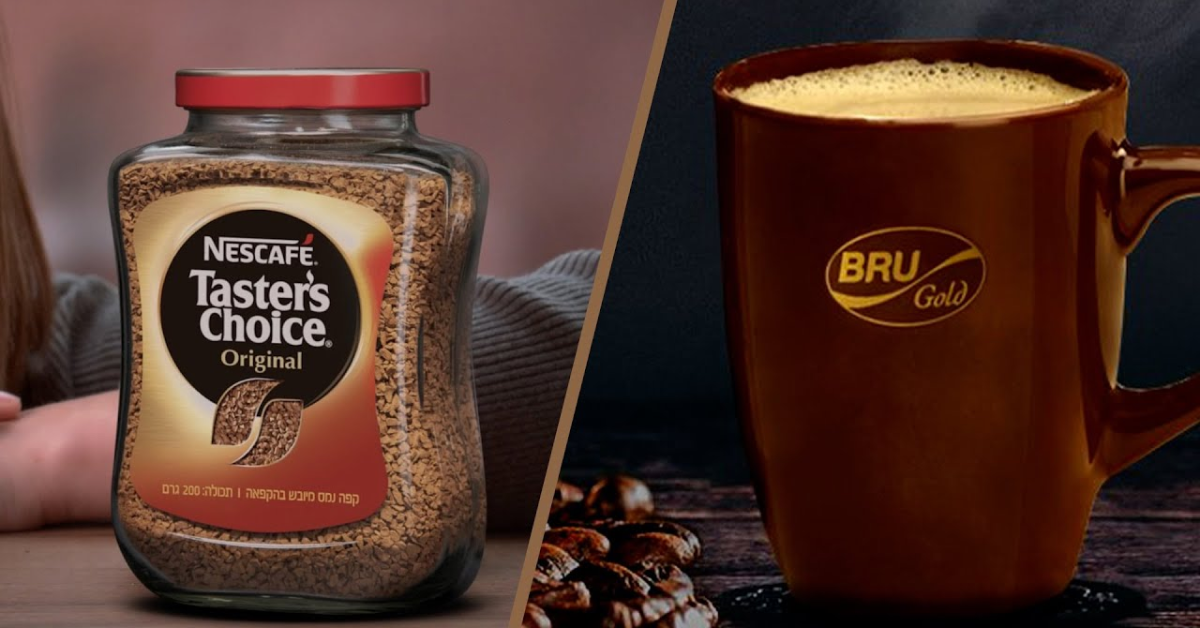
You have reached the most emotional part of the Nescafé vs Bru debate. You want a single winner, but the honest answer depends on your taste, your routine, and your personality.
If you love pure coffee, black coffee, and a modern experience, Nescafé fits you. If you love milk coffee, strong aroma, and a homely feel, Bru wins for you.
In simple words, the winner is the brand that makes your day feel better. Your coffee cup is personal, and your choice reflects your comfort. Both brands have the potential to be winners, depending on what your heart and taste buds want.
FAQs
1. Which coffee is stronger in flavor in the Nescafé vs Bru comparison?
Bru is stronger because of its chicory mix, while Nescafé has a smoother pure coffee taste.
2. Which one is best for black coffee?
Nescafé works better because many variants contain 100 percent coffee without chicory.
3. Which brand is more affordable?
Bru is generally cheaper and suits family budgets.
4. Which coffee has a richer aroma?
Bru has a richer and heavier aroma because of the chicory blend.
5. Which brand is more popular in India?
Nescafé leads in urban areas while Bru dominates South India.
6. Is chicory safe?
Yes, chicory is safe and widely used in Indian coffee blends.
7. Which brand has more product variety?
Nescafé has a wider range, including machines, pods, ready-to-drink bottles, and premium blends.
8. Which one tastes better with milk?
Bru tastes better with milk due to its fuller body and rich aroma.
Note: We have also covered the 6 Biggest Nestlé Company Crimes & Surrounding Controversies. You can go through the article for detailed information.
Final Words
When you put all the facts of Nescafé vs Bru together, you see that these two brands are more than competitors. They shape how you start your mornings and how you relax in the evening. Nescafé gives you premium quality, global appeal, and modern energy. Bru gives you tradition, comfort, and a rich aroma that feels like home.
Both brands have their own strengths, and both hold a solid place in India. Your final choice depends on how you like your coffee, how much you want to spend, and what kind of feeling you want from every sip.
This comparison helps you pick the cup that suits your lifestyle. Whether you choose Nescafé or Bru, the real winner is the one that makes your morning feel complete!
