

A popular saying- “Gen Z is wise beyond their years…” seems to fade way in today’s real world! Reason? Because the so-called digital savvy wisdom is rubbing the employers negatively… especially in the corporate world!

GenZ make 25% of the workforce…. Yet they’re at the top when it comes to the rate of being dismissed in a company.
Even the employers seem to be rolling out the “welcome mat” but with a lot of hesitation and crossed fingers. Despite being tech-savvy and ambitious, Gen Z is finding that their entrance into the job market is more like a case of “hitting a brick wall.” From worries about their work ethic to fears of them being glued to their phones, companies are questioning if this new generation is up to snuff. So, what’s really going on here?
Let’s dig into what’s going on with GenZs at work and the reasons why companies don’t want to hire GenZ.
Insights: Values of Each Generation at Workplace
Before jumping into the weird and annoying habits of GenZs that make the majority of employers worried, let’s compare the core values of each generation at the workplace (Source: Medium)-
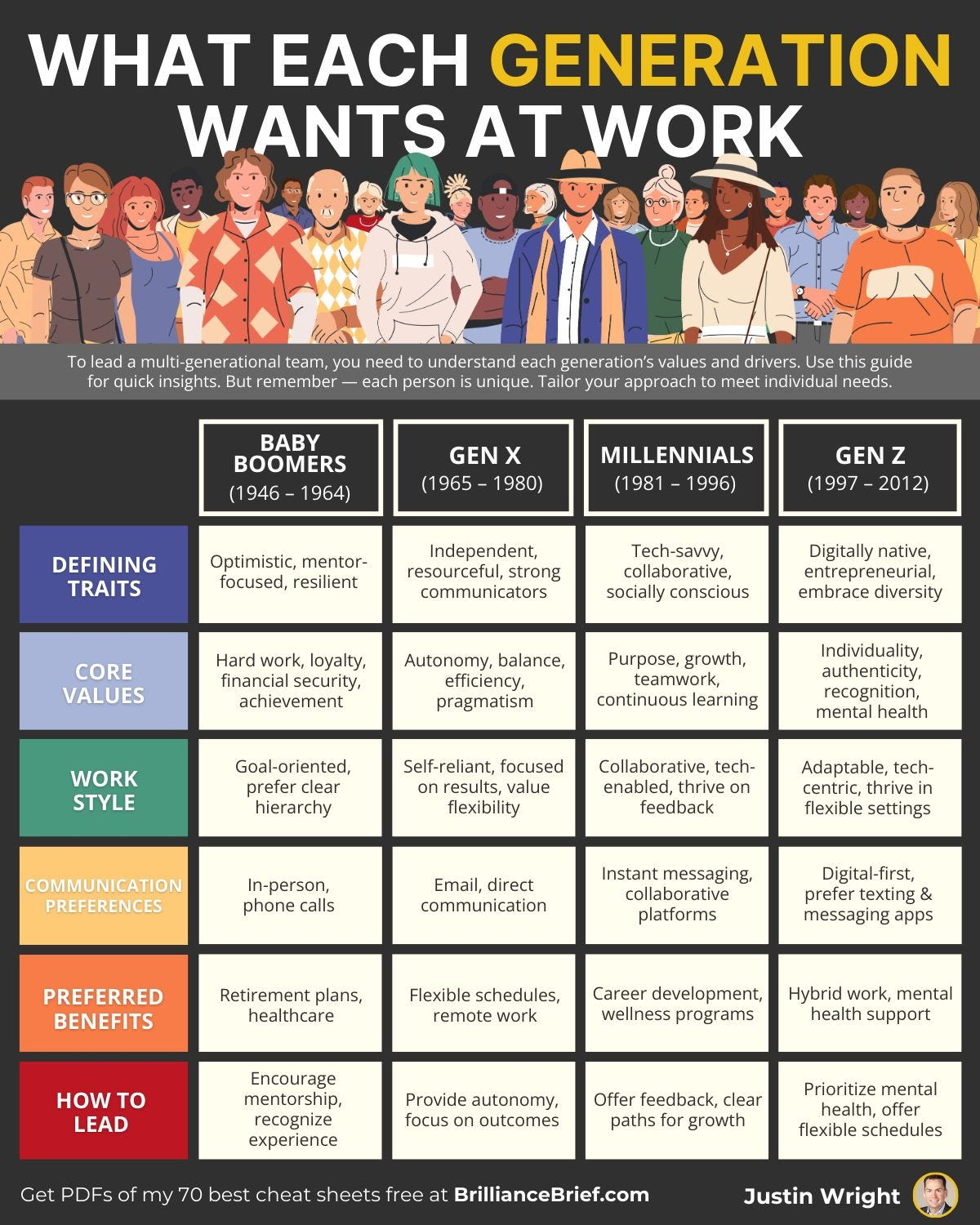
That looks quite interesting. This comparison describes only the bright side of GenZs and other generations. But how come only the GenZs are getting into the nerves of employers, unlike other previous generations?
Well, that’s the topic of discussion in this article. However, you’ll be able to understand the dark side of GenZ at the workplace better only if you know the standard qualities required in a workplace.
Expectations: Employers’ Expectations from GenZ
This section describes the top qualities that employers and entrepreneurs look for while hiring recent university graduates. The following data is based on the study conducted by intelligent.com–
| Qualities | Expecations |
| Show initiative | 57% |
| Positive attitude | 56% |
| Strong work ethic | 54% |
| Adaptable | 53% |
| Open to feedback | 50% |
| Punctual and reliable | 49% |
| Solid technical skills | 47% |
| Good interpersonal skills | 47% |
| Internship experience | 34% |
| Work experience | 33% |
| Work-appropriate social media | 23% |
| Avoid politics | 16% |
Intelligent’s chief education and career development advisor said that “Recent graduates starting their first job should demonstrate professionalism, not by conforming to outdated norms, but by being respectful and committed to their work.”
But that’s not the case in reality….
Reality: What do the employers actually get in GenZs?
When it comes to GenZ in the workforce, here is a striking reality of Expecation vs Reality as per the study–
| Negative Qualities in GenZ | Amount |
| Lack of motivation or initiative | 50% |
| Lack of professionalism | 46% |
| Poor organizational skills | 42% |
| Poor communication skills | 39% |
| Challenges with feedback | 38% |
| Lack of relevant work experience | 38% |
| Poor problem-solving skills | 34% |
| Insufficient technical skills | 31% |
| Bad culture fit | 31% |
| Difficulty working in a team | 30% |
Do you know, that 1 in 6 hiring managers is hesitant to hire GenZ candidates in the future? Some business leaders claim that the negative qualities in GenZ developed mainly due to being high mobile addiction and Covid-19 pandemic.
How?
Well, here’s what Diane Gayeski, Professor of Strategic Communications at Ithaca College said- “Gen Z especially has become used to working in a very flexible manner because they experienced so much of their education either totally remote or hybrid.”
Why Companies don’t want to hire GenZ?
While every new generation brings its own set of strengths and challenges, many employers are voicing concerns about hiring Gen Z. Let’s break down why this age group might not be getting the warmest welcome—and what it means for both sides of the hiring equation.
1. Lack of Ambition and Job Readiness
GenZ is considered as one of the most pampered generations after Gen-alpha… For many Gen Z workers, especially those in metro cities, ambition can seem in short supply. Growing up with access to top-tier education, internships, and job opportunities, they’re often used to things coming relatively easy.
For some, this environment has led to a mindset that treats stable corporate jobs as stepping stones or mere options rather than real commitments. They’re less inclined to see these roles as paths to growth and success; instead, they take them for granted and sometimes lack the hustle to truly excel. Employers feel this in attitudes that often lack long-term vision, where commitment and loyalty are rarer traits.
For companies, it’s frustrating—what they interpret as a “lack of ambition” among some Gen Z workers can make the generation seem uninterested in the usual demands of corporate life, raising concerns about how dedicated or driven they’ll be over the long haul.
Many employers feel that recent graduates, particularly those who entered the workforce around the pandemic, missed out on the chance to build essential workplace skills. A survey by ResumeBuilder found that 40% of hiring managers were hesitant to hire Gen Z due to age-based concerns. Nearly 80% worried about the lack of experience Gen Z candidates bring to the table.
2. Questionable Professionalism
Professionalism is one of those qualities that’s hard to define but easy to spot. And for Gen Z, this has become a major sticking point. Many hiring managers are unsure if Gen Z hires are ready to behave professionally in a work setting. In fact, over half of surveyed hiring managers reported issues with professionalism among Gen Z workers. According to Intelligent’s survey, these managers noted frequent complaints of tardiness, poor communication skills, and even issues with how young employees dress and speak at work.
But here’s the catch- the definition of “professionalism” is changing.
Gen Z has grown up in an era where casual communication styles, digital interactions, and flexible norms are the norm. What may feel like a minor slip to a young professional might be seen as disrespectful or unpolished by an older manager. In short, generational differences in what’s considered “professional” play a huge role in the disconnect here.
3. Fragile Work Ethic and Taking Mental Health as a Joke

A strong work ethic is something employers look for in every employee. However, according to recent surveys, over half of employers feel that Gen Z lacks the hard-nosed work ethic seen in previous generations. Gen Z is often stereotyped as “entitled” or “easily offended,” traits that don’t sit well with managers. Around 58% of hiring managers said they believed Gen Z could be unprofessional, while 46% noted they felt these younger workers lacked motivation.
This could be because Gen Z has different expectations of the workplace. Most of them take mental health as a joke. For instance, they are highly conscious about their image in social media while they’re lonely in reality. As per GenZ, they prioritize work-life balance, mental health, and ethical practices. However, this stuff may not align with the fast-paced world.
4. Frequent Job Hopping
Job loyalty is a gold standard. But with Gen Z, there’s a noticeable trend towards “job hopping”—changing jobs frequently in pursuit of better opportunities, work environments, or pay. According to a survey by ResumeBuilder, 63% of hiring managers said they were concerned about Gen Z’s reputation for job hopping. In other words, companies worry that after investing time, money, and training into a young worker, they might leave for greener pastures just as they’re starting to hit their stride.
Employers fear this turnover because it’s costly. Replacing a worker can be expensive, both in terms of recruitment and lost productivity. In fact, nearly half of hiring managers with Gen Z biases believe avoiding these candidates ultimately benefits the company.
5. Difficulty accepting Feedback
Constructive criticism is essential to growth in any field. However, Gen Z workers are reportedly more sensitive to feedback compared to previous generations. According to a survey conducted by Intelligent, 38% of hiring managers reported challenges with Gen Z’s ability to handle feedback.
This may stem from the social media age, where constant validation (likes, comments, shares) shapes expectations. While older workers may be accustomed to taking feedback in stride, younger workers might see it as a personal attack, which can make management difficult. If you’re a manager who has to repeatedly soften your approach, it can feel like a hassle—especially in high-stress environments.
6. Reluctance to Embrace Hierarchical Structures
Many Gen Z employees expect to work in casual flat environments rather than traditional hierarchical ones. This expectation clashes with established workplace norms, where clear roles and structures govern interactions. According to hiring consultants, Gen Z’s desire for autonomy leads to a lack of respect for seniority.
A balanced approach, where they feel heard yet understand the chain of command, can work wonders. But if you’re a hiring manager with tight deadlines, the back-and-forth can seem like more effort than it’s worth.
Solutions & Way Forward
As Gen Z grows to comprise nearly 30% of the global workforce by 2025, companies may need to rethink their approach. Some of the friction we’re seeing today could be due to both sides misunderstanding each other’s values and expectations. With open communication and willingness to adapt, hiring managers and Gen Zers might just find they have more common ground than they realize. After all, every generation had its critics—only time will tell if Gen Z will transform the workplace for the better.
In a world where flexibility, empathy, and mutual understanding can go a long way, perhaps companies could give Gen Z a little more credit—and Gen Z might surprise them in return.
By the way, have you worked with GenZ, or currently working with GenZ? If yes, then don’t forget to share your thoughts in the comment section below 🙂

First time i read each and every word in this article and it feels relatable 🙂