
When you think about value-for-money retail in India, names like DMart and Trent may come to mind. But there’s another contender rapidly making waves—Vishal Mega Mart. With its recent ₹8,000 crore IPO grabbing headlines and its presence in Tier-2 and Tier-3 cities growing stronger, this 23-year-old retail chain is becoming a household name.
But how did Vishal Mega Mart achieve this success, and what makes it a standout in India’s highly competitive retail market?
Let’s uncover the Vishal Mega Mart success story to uncover the journey, strategies, and challenges behind this retail powerhouse!
Vishal Mega Mart Business Model: How It Stands Out in India’s Retail Sector?
Vishal Mega Mart has carved its niche in India’s retail landscape with a business model that uniquely blends affordability, efficiency, and localization.
Building a Foundation in the Heartland
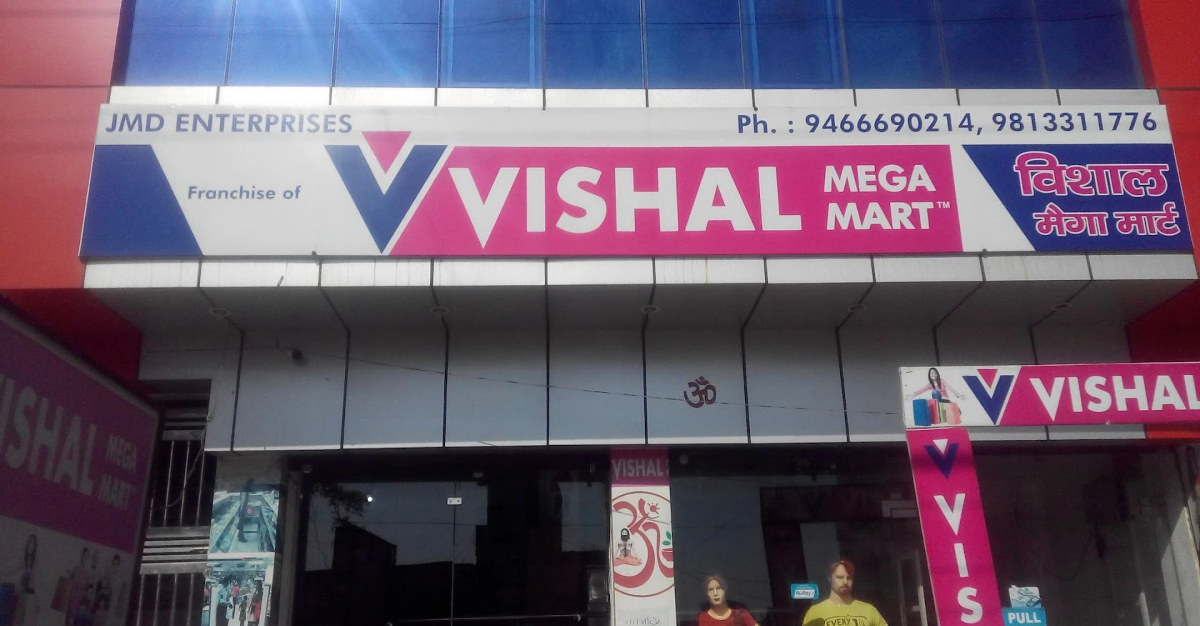
Unlike its competitors DMart and Trent, Vishal Mega Mart focused on regions often overlooked—Tier-2 and Tier-3 cities. These smaller towns are home to India’s growing middle class, and Vishal understood their needs better than most. Today, 70% of Vishal Mega Mart’s 645 stores operate in these cities, making it the go-to shopping destination for budget-conscious consumers.
This regional dominance is no accident. By offering products that suit local tastes at affordable prices, Vishal carved out a loyal customer base in areas where bigger players had less presence.
Key Fact: In FY24, Vishal Mega Mart reported sales of ₹8,900 crore, showcasing its rising influence in India’s retail market.
Product Mix: A Balanced Approach
One of the most distinctive features of Vishal Mega Mart’s business model is its well-curated product mix. The company operates across three main categories-
- Apparel (50% of total sales): High-margin clothing items form the backbone of its product offerings, making it a go-to destination for affordable fashion.
- General Merchandise (25% of total sales): Items like home essentials, furnishings, and small appliances cater to everyday needs.
- FMCG (25% of total sales): Basic groceries and consumables round out the product portfolio, ensuring a comprehensive shopping experience.
This product mix ensures higher profitability through apparel sales while providing everyday essentials to attract repeat customers.
Private Label Strategy: Cutting Costs, Maximising Profits
A key pillar of Vishal Mega Mart’s success lies in its reliance on private labels. Over 70% of its inventory is sourced directly from manufacturers, cutting out intermediaries and allowing for tighter control over costs and margins.
- Apparel: Partnered with manufacturers like Rishab Oswal to provide cost-effective yet stylish clothing.
- FMCG and Consumable: Collaborates with supplies such as Bikanervala Foods for private-label consumables.
This strategy enables Vishal to offer competitive prices while maintaining healthy profit margins.
Efficient Space Utilization
While DMart generates ₹32,000 per square foot annually, Vishal’s ₹8,100 per square foot is still impressive for a value retailer focusing on smaller towns. Unlike DMart’s large stores in urban areas, Vishal Mega Mart operates smaller outlets averaging 17,812 square feet. This allows it to penetrate smaller towns while keeping operational costs low. By strategically selecting locations in high-footfall areas, Vishal optimizes its store layout to maximize sales per square foot.
Tech-Enabled Supply Chain
Vishal leverages technology to streamline its supply chain, ensuring efficient inventory management and reducing waste. The company’s central distribution centers serve as hubs for replenishing store stock, minimizing delays and optimizing logistics.
The IPO That Turned Heads
Vishal Mega Mart’s December 2024 IPO was a blockbuster. Oversubscribed by 27 times, the ₹8,000 crore offering attracted both retail and institutional investors, culminating in a premium stock market debut.
Why it matters?
The IPO was entirely an offer for sale (OFS), allowing private equity backers like Kedaara Capital to exit with a whopping 7X return on investment. The company didn’t raise fresh funds, highlighting its strong cash flow and profitability.
Vishal Mega Mart vs Dmart vs Trent
To truly understand the Vishal Mega Mart success story, you need to see how it stacks up against its bigger rivals (source)-
| Metric | Vishal Mega Mart | DMart | Trent |
| FY24 Sales | Rs.8,900 Cr | Rs.45,000 Cr | Rs.12,000 Cr |
| Stores | 645 | 377 | ~450 |
| Avg. Store Size (sq. ft) | 17,812 | 41,910 | 20,000 (approx.) |
| EBITDA Margin | 12-14% | 8% | 18% |
| Private Label Sales (%) | 72% | 50% | 80% |
Challenges and Opportunities
Here are some key challenges and opportunities for Vishal Mega Mart-
Challenges
- Rising Competition: Brands like Reliance’s Yousta and Trent’s Zudio are rapidly expanding into Tier-2 and Tier-3 cities, targeting the same customer base.
- Profit Margins: While Vishal’s 12-14% EBITDA margin is respectable, it lags behind Trent’s 18%.
Opportunities
- Retail Market Boom: India’s retail sector, valued at ₹72 trillion in 2023, is expected to grow at a 9% CAGR.
- Consolidation: The fragmented retail market may consolidate to 4-5 major players in the coming years, giving Vishal a chance to secure a top spot.
The Bigger Picture: India’s Retail Revolution
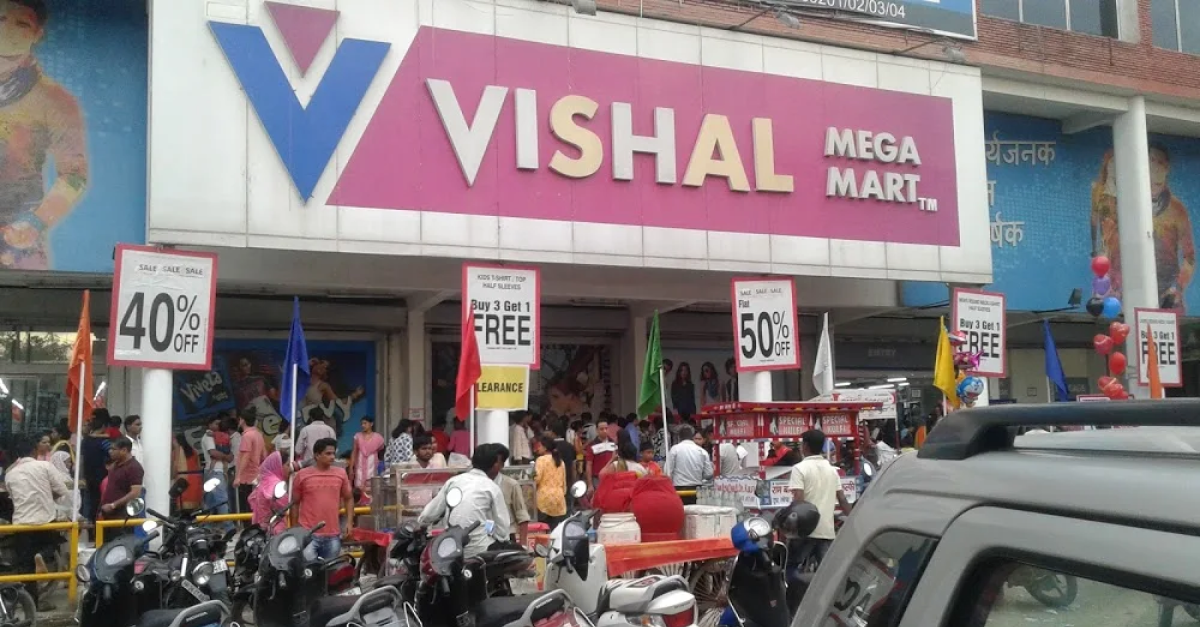
India’s retail landscape is undergoing a seismic shift. With middle-class incomes rising and online shopping gaining traction, the market is ripe for innovation. Vishal Mega Mart’s focus on smaller cities, high-margin categories, and private labels positions it well to ride this wave.
Note: We have also covered D-Mart’s success story. Go through the article for detailed information.
Lessons from Vishal Mega Mart’s Success
- Know your Audience: Vishal’s deep understanding of Tier-2 and Tier-3 city consumers gave it an edge over urban-centric competitors.
- Focus on Profitability: High-margin apparel and private labels allowed Vishal to maintain profitability even in a competitive market.
- Strategic Growth: Expanding into underserved regions helped Vishal build a loyal customer base without direct competition from larger players.
The Road Ahead
As Vishal Mega Mart continues to grow, it faces the dual challenge of improving profitability while fending off competitors. To sustain its momentum, the company must-
- Expand its product categories to cater to diverse consumer needs.
- Leverage technology for supply chain efficiency and customer engagement.
The question remains- Can Vishal Mega Mart achieve the scale of DMart or Trent’s profitability? While only time will tell, the foundation it has laid is undoubtedly strong.
Wrap-Up
The Vishal Mega Mart success story is a testament to the power of understanding your audience, leveraging private labels, and strategically expanding into untapped markets. As India’s retail landscape evolves, Vishal is well-poised to become a major player, proving that even in a crowded market, there’s always room for those who dare to think differently.
If you’re looking for inspiration on how to build a business that caters to the masses while maintaining profitability, Vishal Mega Mart offers plenty of valuable lessons. Their journey isn’t just a success story—it’s a masterclass in resilience, strategy, and innovation!
