
The manufacturing world is changing fast, and PepsiCo partners with Nvidia and Siemens to stay ahead of that shift. Announced at CES 2026, this collaboration brings digital twin technology and AI directly into PepsiCo’s factories and warehouses. For you, this means a smarter way of planning, testing, and improving operations before real-world changes are made.
Stay with this story to understand why this move matters, how it works in real life, and what it means for the future of large-scale manufacturing!
Why This Partnership Matters to You?
When you pick up a bag of chips or a bottle of soda, you rarely think about the massive system behind it. But demand is rising fast, and traditional factory expansion is slow, expensive, and risky. PepsiCo knew it needed a smarter way.
By choosing a digital-first strategy, PepsiCo is now able to simulate entire facilities virtually before making real-world changes. This means fewer mistakes, faster decisions, and better use of money.
And yes, this affects you directly through faster supply, better availability, and smarter operations that can adapt to what customers want.
The Big Names Behind the Collaboration
Before going deeper, here is a quick snapshot of the three giants involved. This table helps you grasp the scale and credibility of this partnership at a glance.
| Aspect | PepsiCo | Nvidia | Siemens |
| Founded | 1965 (via merger of Pepsi-Cola and Frito-Lay) | 1993 | 1847 |
| Headquarters | Purchase, New York, USA | Santa Clara, California, USA | Munich, Germany |
| Industry Focus | Beverages, snacks, food products (e.g., Pepsi, Lay’s) | GPUs, AI chips, gaming, data centers, autonomous tech | Automation, infrastructure, healthcare, mobility (e.g., trains, MRI scanners) |
| Employees (approx.) | 318,000 | 29,600 | 327,000 |
| Key Brands/Products | Pepsi, Gatorade, Doritos, Quaker | GeForce, Tesla (AI platform), CUDA software | Siemens Healthineers, Mendix, rail systems |
| Global Reach | 200+ countries | 50+ countries | Nearly every country |
| Recent Highlight | Partnering with Siemens/Nvidia on AI for plants | Leading AI boom with chips for ChatGPT etc. | Digital twins, sustainability in industry |
| Revenue (FY latest) | ~$92 billion (2024) | ~$61 billion (FY2025) | ~€75 billion (FY2024) |
| Market Cap (approx.) | ~$230 billion | ~$3.3 trillion | ~€130 billion |
| CEO | Ramon Laguarta | Jensen Huang | Roland Busch |
| Stock Ticker | PEP (NASDAQ) | NVDA (NASDAQ) | SIE (XETRA) |
PepsiCo’s Problem: Growing Demand, Limited Flexibility
As a global food and beverage leader operating in over 200 countries, PepsiCo runs extremely complex supply chains. Increasing demand means more pressure on factories and warehouses.
Earlier methods involved physical trials, manual redesigns, and long approval cycles. These approaches were not only costly but also limited PepsiCo’s ability to scale quickly. You can think of it like renovating a house without seeing the final design until everything is built. Risky and expensive.
This is where digital twins and AI changed the game.
What is Digital Twin Technology?
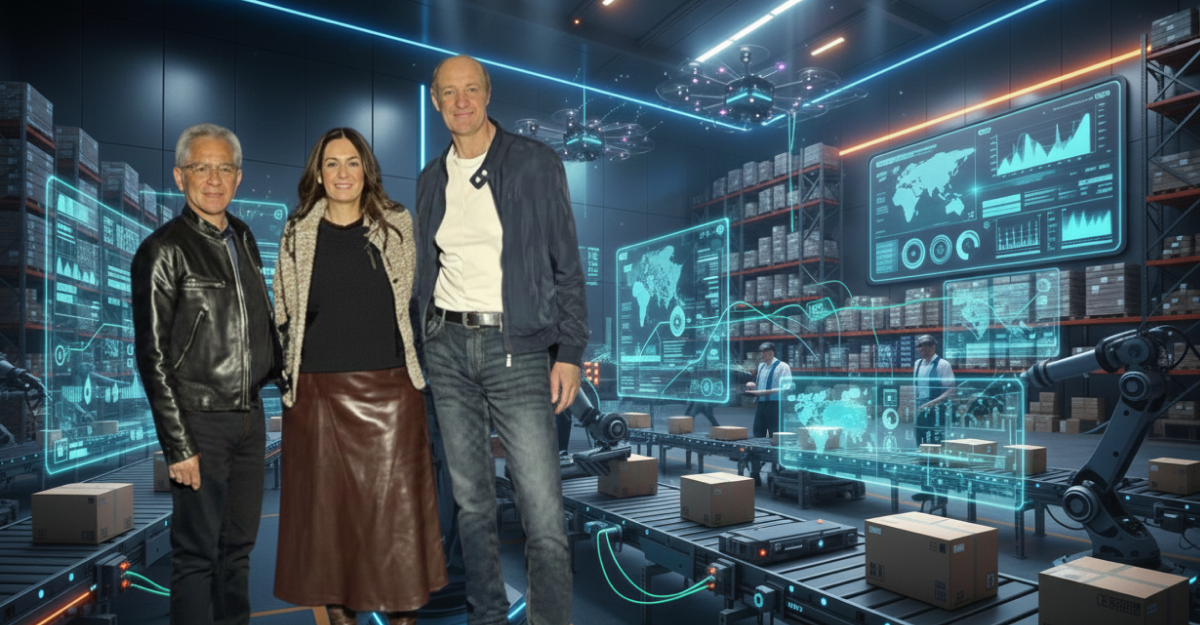
A digital twin is a virtual copy of a real-world object. In PepsiCo’s case, it is a full 3D digital version of a factory or warehouse.
Every machine, conveyor belt, pallet route, and even worker movement is recreated with physics-level accuracy. You can test ideas, predict problems, and optimize layouts on a screen before spending money in the real world.
Because PepsiCo partners with Nvidia and Siemens, this digital twin is not just a model. It is intelligent, realistic, and powered by AI.
The Tools Powering This Transformation
PepsiCo is using Siemens Digital Twin Composer, which is built on NVIDIA Omniverse libraries. Together, these tools allow PepsiCo to:
- Combine 2D and 3D factory data
- Use real-time physical data securely
- Build photorealistic virtual environments
- Simulate operations across the entire supply chain
This system supports the full lifecycle of a facility, from design and engineering to daily operations.
Early Pilots Already Showing Results
The partnership is not theoretical. PepsiCo has already started pilots in select manufacturing and warehouse facilities in the United States.
Within just weeks, teams were able to test new layouts, validate designs, and optimize workflows. These virtual trials established a clear performance baseline and opened doors for AI-driven improvements over time.
The results speak loudly!
Measurable Gains Achieved So Far
Here is a clear breakdown of what PepsiCo has achieved using digital twins and AI.
| Key Metric | Result Achieved |
| Throughput Increase | 20% |
| Issues Identified Before Build | Up to 90% |
| Design Validation | Nearly 100% |
| Capex Reduction | 10% to 15% |
| Design Cycle Speed | Significantly Faster |
By spotting problems early, PepsiCo avoided costly physical changes and uncovered hidden capacity inside existing facilities.
How AI Agents Act Like Co-Designers?
One of the most exciting parts of this collaboration is how AI is used. AI agents act like digital co-designers.
They simulate thousands of scenarios, test system changes, and suggest improvements. These agents can see bottlenecks, predict failures, and recommend fixes long before humans notice them.
Because PepsiCo partners with Nvidia and Siemens, these AI agents operate inside physics-based digital twins, making their insights far more accurate and reliable.
What Industry Leaders Are Saying?
PepsiCo’s Chairman and CEO Ramon Laguarta highlighted how massive the company’s operations are, from farms to store shelves. He emphasized that embedding AI across operations is essential to meet rising consumer demand and to operate with foresight and agility.
NVIDIA CEO Jensen Huang pointed out that digital twins are the foundation of AI for physical industries. According to him, PepsiCo is rethinking how global operations are designed and run by using accurate simulations and AI together.
Siemens CEO Roland Busch shared that this collaboration sets a new standard for industrial transformation. By combining industrial AI, deep expertise, and strong partnerships, Siemens is helping companies turn ideas into real-world impact faster and more efficiently.
A Step Toward the Industrial Metaverse
Siemens’ Digital Twin Composer also supports large-scale Industrial Metaverse environments. This means companies can make decisions virtually, using real-time data and simulations.
For you, this signals the future of manufacturing. Factories will no longer react after problems occur. They will predict, prepare, and adapt in advance.
PepsiCo is among the first global consumer packaged goods companies to take this step at scale.
One Unified Digital Ecosystem
Athina Kanioura, PepsiCo’s Global Chief Strategy and Transformation Officer, described this initiative as the first digital blueprint of its kind in the industry.
The goal is clear. Every plant and warehouse should operate as part of one intelligent ecosystem. Facilities will not just respond to demand. They will anticipate it and adjust automatically.
This vision becomes possible only because PepsiCo partners with Nvidia and Siemens on a shared AI-powered digital foundation.
Why CES 2026 Was the Perfect Stage?
The announcement was made during the opening keynote at CES 2026. This was not a random choice.
CES (Consumer Electronics Show) is where future-defining technologies are unveiled. By announcing the partnership here, PepsiCo showed its serious commitment to digital transformation and supply chain innovation.
It also sent a strong message to the industry that traditional manufacturing models are changing fast.
Note: We have also explained “Coca Cola vs Pepsi: Which Brand Is More Popular In The Drinks Industry?” Go through it for more details.
What does this mean for the Future of Manufacturing?
This collaboration is not just about PepsiCo. It sets a benchmark for other industries.
If digital twins and AI can deliver such results in food and beverage manufacturing, imagine their impact across healthcare, logistics, energy, and infrastructure.
You are witnessing the early stages of factories that think, learn, and adapt.
A Quick Look at PepsiCo’s Global Scale
To understand the weight of this move, here are a few key facts about PepsiCo.
| Metric | Detail |
| Daily Consumer Interactions | Over 1 billion |
| Countries Served | 200+ |
| Net Revenue (2024) | Nearly $92 billion |
| Billion Dollar Brands | Multiple iconic products |
| Sustainability Strategy | Pep+ (PepsiCo Positive) |
PepsiCo’s pep+ strategy places sustainability and resilience at the center of its growth plans, and digital transformation plays a key role in achieving that.
Final Thoughts: Why This Story Stands Out?
Many companies talk about AI and digital transformation. Very few apply it at this scale with measurable results.
Because PepsiCo partners with Nvidia and Siemens, you are seeing a real-world example of how advanced technology can reshape industries quietly but powerfully.
This is not hype. It is a working model that delivers higher output, lower costs, and smarter decisions. And it is only the beginning.
If the future of manufacturing had a preview, this partnership would be it!
