

TAP Air Portugal is not just another midsized European carrier trying to hold its ground. It sits at a geographic sweet spot. From Lisbon, aircraft head north into Europe’s capitals, west across the Atlantic to North America, and south toward Brazil and Africa.
Few airlines of comparable size command such a natural bridge between continents.
That geography explains why TAP Air Portugal now finds itself at the center of a high stakes contest among Europe’s largest airline groups. Consolidation across the continent is no longer theoretical.

Margins are thin, aircraft are expensive, and long haul networks depend on scale. For Air France-KLM, IAG, and Lufthansa, TAP Portugal represents both a growth opportunity and a defensive move in a crowded transatlantic market.
For travelers passing through Lisbon with a boarding pass in hand, this might feel distant. Yet ownership shapes everything from route maps to cabin upgrades and even the consistency of tap air portugal customer service. The chessboard matters because it influences the flight experience.
Backstory
TAP Air Portugal has become one of the most strategically important airline assets currently available in Europe. The Portuguese government’s plan to sell up to 49.9 percent, including a portion reserved for employees, has drawn serious attention from the continent’s three dominant airline groups.
Why the interest?
TAP Airlines controls a valuable niche. Its network between Europe and Brazil is unmatched by most peers. It has deep roots in Lusophone Africa. It also provides efficient connections between secondary European cities and North America through Lisbon, an airport that is busy but still more manageable than Paris or Frankfurt.
For Air France-KLM, IAG, and Lufthansa, acquiring a stake in air portugal is about more than adding aircraft. It is about plugging Lisbon into their broader systems and strengthening their long haul reach. In a Europe where airport slots are scarce and organic growth is difficult, buying access can be faster than building it.
Origins and Evolution of TAP Air Portugal
Founded in 1945 as Transportes Aéreos Portugueses, TAP Air Portugal began with a modest Lisbon to Madrid service. Portugal was emerging from isolation, and the airline quickly became a symbol of outward connection.
Over time, TAP positioned itself as the country’s global carrier. It embraced jet aircraft early and steadily expanded toward Brazil and Africa, reflecting Portugal’s historical and cultural ties. Lisbon became its anchor, and Humberto Delgado Airport evolved into a compact but effective hub.
The airline has faced turbulence, including financial strain and state intervention. A partial privatization in 2016 helped stabilize operations and modernize the fleet. That period set the foundation for today’s debate. TAP Portugal is no longer simply a state supported carrier. It is a modern network airline with strategic leverage.
Modern Fleet Powering Global Reach
Fleet renewal has quietly transformed TAP Air Portugal. The airline operates an all Airbus lineup, balancing narrowbody flexibility with long haul capability. The table below outlines the current fleet composition and its deployment across short haul, medium haul, and intercontinental routes.
| Aircraft Model | Quantity | Range (km) | Seats (Typical) | Key Routes |
| A319-100 | 5 | 6,700 | 156 | Short-haul Europe |
| A320-200 | 15 | 6,100 | 174 | Intra-Europe |
| A320neo | 11 | 6,500 | 174 | Medium-haul |
| A321-200 | 3 | 5,950 | 198 | High-density Europe |
| A321neo | 20 | 7,400 | 219 | Europe to Africa |
| A330-200 | 3 | 13,450 | 288 | Legacy long-haul |
| A330-900 neo | 19 | 15,200 | 298 | Brazil, Angola, US |
Rather than dwell on each aircraft type, it is more useful to consider what this mix allows. Narrowbodies connect dozens of European cities into Lisbon. The A321neo stretches into Africa. The A330-900neo underpins the long haul network to Brazil, Angola, and the United States.
On board, the newer widebodies have improved the passenger experience noticeably. Tap air portugal business class on the A330neo offers fully flat seats and a cabin that feels contemporary, even if understated. For many travelers asking how is tap air portugal on long haul routes, the answer often depends on whether they are on the newer fleet.
The configuration also supports the airline’s heavy Brazil schedule, with multiple daily flights that reinforce Lisbon’s Atlantic role.
Inside the Air France-KLM Powerhouse
Air France-KLM approaches TAP Air Portugal with a clear strategic lens. The Franco Dutch group already operates powerful hubs at Paris Charles de Gaulle and Amsterdam Schiphol, but both face slot constraints and political scrutiny over expansion.
Lisbon offers breathing room and geographic balance. Integrating TAP into a multi hub structure could allow Air France-KLM to channel additional traffic into South America and Africa without overloading its primary airports.
The group’s experience with selective investments, including its stake in SAS, suggests it prefers influence combined with local identity. For TAP, that could mean retaining its brand while aligning schedules, loyalty programs, and procurement with a larger network.
Privatization: A High-Stakes Auction
The Portuguese government launched the latest privatization effort in 2025, aiming to recover billions in pandemic support and place TAP Air Portugal on firmer financial footing. Safeguards around Lisbon’s hub status and employment levels reflect political sensitivity.
This is not merely a financial transaction. For Portugal, the flag carrier is tied to national connectivity and tourism strategy. Binding bids are expected by April 2026, reviving a process that had stalled during the pandemic years.
The government must balance price with long term commitments. A higher bid may come with stricter demands for control. A lower bid might promise more autonomy. These trade offs will shape TAP’s future.
Air France-KLM’s Aggressive Play
Air France-KLM has been publicly confident. Meetings with TAP leadership have focused on governance, profitability, and long haul coordination. The group is reportedly targeting stronger margins and sees TAP Air Portugal as central to its South Atlantic ambitions.
Yet integration is delicate. Lisbon cannot simply become a feeder for Paris or Amsterdam. Portuguese officials are wary of losing strategic influence. Air France-KLM must therefore frame its offer as partnership rather than absorption.
The tone of negotiations suggests realism on both sides. Profitability targets matter, but so does preserving TAP’s identity in Portugal.
IAG and Lufthansa Enter the Fray
IAG brings a different angle. Through Iberia, it already has deep ties to Latin America. Adding TAP Portugal could solidify dominance on routes to Brazil and reinforce the Iberian Peninsula as a dual hub system centered on Madrid and Lisbon.
Lufthansa Group sees value in extending its reach south and west. Frankfurt and Munich are powerful but geographically central. Lisbon would provide a western Atlantic gateway and diversify traffic flows.
The competitive landscape is summarized in the following table, which outlines core assets, stipulations, and ambitions. It highlights how each bidder views TAP Air Portugal within a broader strategic puzzle.
| Competitor | Core Assets | Bid Stipulations | Growth Ambitions |
| Air France-KLM | SkyTeam, dual hubs, SAS stake | 8% margin, governance talks | Angola/Brazil |
| IAG | oneworld, Iberia Brazil routes | Full control guarantees | Transatlantic |
| Lufthansa | Star Alliance, Europe network | Non-binding submitted | Africa-Latin |
Each path would reshape alliance dynamics across Europe.
Why TAP Commands Premium Value?
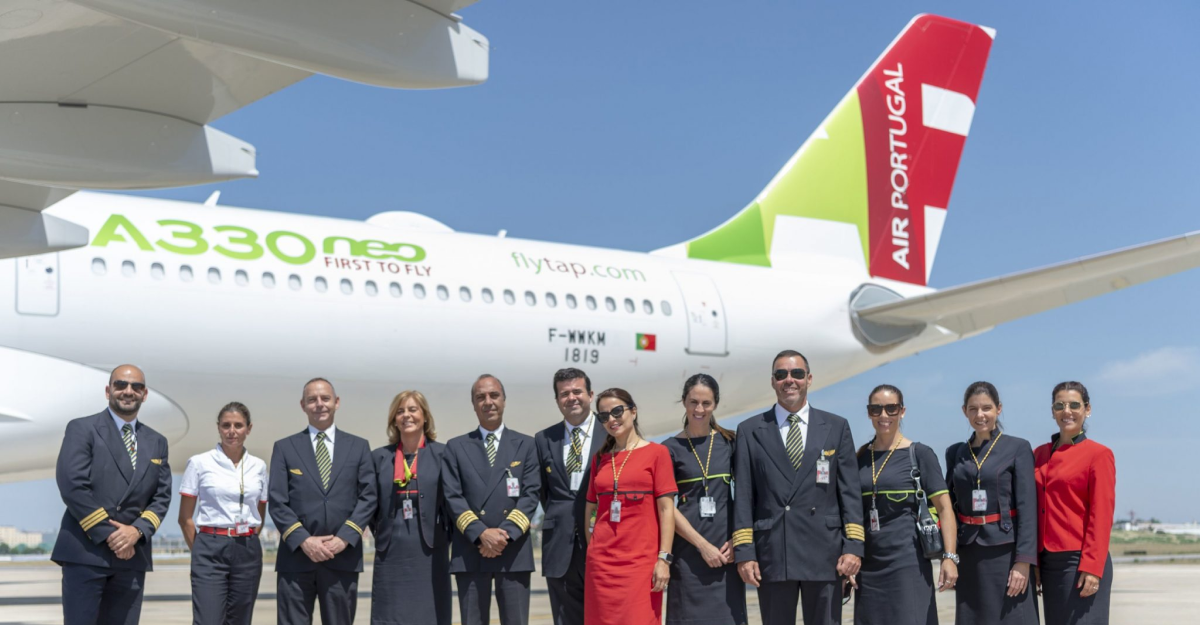
TAP Air Portugal’s strength lies in its focus. Brazil is not an afterthought. It is central to the network. Multiple daily flights to São Paulo and Rio de Janeiro anchor the schedule, supported by strong diaspora and business demand.
North American routes to cities such as Newark and Boston add another layer. Lisbon’s relatively compact layout makes transfers efficient, which many travelers appreciate after checking a flight tracker and seeing tight connection times elsewhere.
In a consolidated market, acquiring TAP airlines would instantly enhance any group’s transatlantic position. That strategic boost justifies a premium valuation.
Tourism Engine for Portugal
Tourism is one of Portugal’s economic pillars, and TAP Air Portugal plays a significant role in sustaining it. Direct flights from Brazil and the United States funnel visitors into Lisbon, Porto, and the Algarve.
Route decisions have tangible effects. When frequencies increase, hotels fill more easily. When new cities gain direct connections, visitor patterns shift. Tap airlines is therefore not just a transport provider but an economic lever.
A strong strategic partner could expand that reach. A misaligned one could prioritize other hubs. The stakes are practical, not abstract.
Negotiation Minefields
Labor unions, fleet commitments, and political guarantees complicate any deal. Employees will want assurances on jobs and working conditions. The government will insist that Lisbon remain the core hub.
Public perception also matters. Tap air portugal reviews often reflect seasonal disruption during peak summer travel. Improving operational resilience and customer service consistency will be part of any credible long term plan.
Buyers must convince both investors and passengers that stability will follow.
Projected Network Evolution
If TAP Air Portugal joins one of Europe’s major groups, network evolution is likely to be gradual. Additional North American destinations are plausible, especially where Portuguese communities are strong. Brazil frequencies could expand further if aircraft utilization improves.
Within Europe, tighter coordination could optimize schedules and reduce overlap. Lisbon may emerge more clearly as a specialized Atlantic hub within a broader group structure.
European Skies Consolidation Wave
The contest for TAP fits into a wider consolidation pattern. Europe’s big three groups continue to absorb or partner with smaller carriers to build scale and defend margins.
Low cost carriers dominate short haul markets. Gulf and Turkish airlines compete aggressively on long haul. In that environment, mid sized independent airlines face structural pressure. TAP Air Portugal’s sale is part of that broader realignment.
Note: We have also covered this sensational case study- “How Jazeera Airways Built a Profitable Low-Cost Model in the Middle East?” Go through the article for more details.
Financial Imperatives Driving Deals
Airlines operate in a capital intensive industry with volatile fuel costs and narrow margins. Long haul routes can be profitable, but only with sufficient feed and disciplined cost control.
For bidders, acquiring TAP Portugal is about improving network economics and spreading fixed costs across a larger system. For Portugal, it is about ensuring that the airline remains financially sustainable without repeated state intervention.
The numbers matter, but so does execution.
Global Ramifications
For travelers, the implications are concrete. Many ask whether is tap air portugal good or whether is tap air portugal safe. The airline operates modern aircraft and meets European regulatory standards. Safety oversight is robust. Service quality, as reflected in tap air portugal reviews, can vary by route and season, which is true of many carriers.
Ownership may influence investment in cabins, digital tools, and reliability. It may also shift alliance loyalties, affecting frequent flyer benefits and code share options.
For long haul competition, the outcome could reshape transatlantic pricing and capacity. For Portugal, it will determine how firmly Lisbon holds its place as a gateway between Europe, Brazil, Africa, and North America.
TAP Air Portugal stands at a crossroads. From the terminal in Lisbon, watching aircraft depart in steady sequence, the airline looks stable and purposeful. On Europe’s strategic map, however, it is a pivotal piece. Who secures it will help define the next phase of consolidation in European skies.
