

For thousands of Indian students, studying abroad has always been more than just getting a degree. It is often seen as a ticket to better careers, global exposure, and financial security. Parents save for years, students take education loans, and entire families emotionally invest in this dream.
But in 2026, many Indian families are asking the same question: why has studying overseas suddenly become so expensive?

The answer is not simple. Tuition fees are rising, the Indian rupee is weakening, rent and food costs abroad are shooting up, and visa uncertainty is making students rethink their choices.
Today, the question- Is Studying Abroad more expensive? trending everywhere. This is not just a trending discussion online. It is something families are experiencing in real life when they calculate university fees, loan amounts, and daily living costs.
A course that looked affordable two years ago may now cost lakhs more, even if the university did not increase its fees.
Let us understand the top reasons behind this growing financial pressure.
1. The Falling Rupee Is Making Everything Costlier
One of the biggest reasons for why is studying abroad more expensive is- the depreciating value of the Indian Rupee! Yes, it has become a serious issue due to the sharp fall in the value of the Indian rupee.
In 2022, the US dollar was trading around ₹78.6. By May 21, 2026, it crossed ₹96.81.
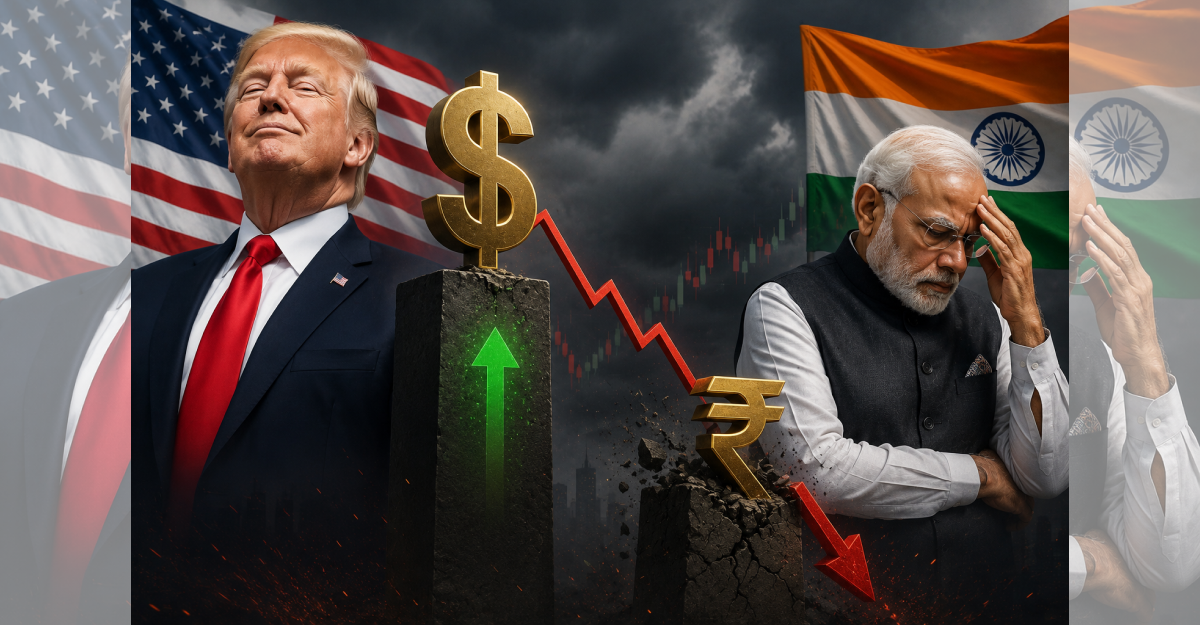
That means Indian students now need much more money in rupees to pay the same tuition fees abroad.
For example:
- A US university charging $40,000 annually would have cost around ₹31-33 lakh in 2022.
- In 2026, the same course costs over ₹36 lakh, even if the university fee remains unchanged.
This increase is purely because the rupee has weakened against foreign currencies.
The same pressure is visible in countries like:
- United Kingdom
- Canada
- Australia
- Germany
Even small daily expenses now hurt Indian budgets more than before.
A simple £2 bus ride in the UK or a $10 fast-food meal in Canada now costs significantly more when converted into rupees.
According to currency experts, Indian students abroad are spending ₹8,000 to ₹18,000 extra every month on:
- Rent
- Food
- Transport
- Utilities
- Grocery bills
For middle-class families already managing EMIs and education loans, this difference is huge.
2. Universities Abroad Are Also Increasing Their Fees
Currency depreciation is only one side of the problem.
Another major reason for studying abroad is more expensive is the rise in university fees!
The university fees are revenue streams of developed countries. Global inflation has affected universities too. Institutions abroad are spending more on:
- Campus operations
- Faculty salaries
- Infrastructure
- Technology
- Student services
As a result, international student fees are rising almost everywhere.
Data from Gyandhan shows that Indian students are now borrowing far more money than they did four years ago.
Overseas Education Borrowing Trends of Indian Students
How Much Indian Students Are Borrowing (in lakh)?
| Destination | 2022 | 2023 | 2024 | 2025 | 2026 YTD | 4-yr Δ |
| USA | ₹35 | ₹40 | ₹40 | ₹50 | ₹66 | +89% |
| UK | ₹20 | ₹25 | ₹30 | ₹30 | ₹35 | +75% |
| Australia | ₹25 | ₹30 | ₹35 | ₹44 | ₹50 | +100% |
| Canada | ₹20 | ₹20 | ₹25 | ₹26 | ₹30 | +50% |
| Germany | ₹15 | ₹18 | ₹20 | ₹20 | ₹24 | +60% |
| UAE | ₹19 | ₹15 | ₹20 | ₹25 | ₹27 | +42% |
The numbers are shocking.
Students heading to Australia are now borrowing almost double compared to 2022. US-bound students are borrowing nearly ₹66 lakh on average.
This clearly shows how “Studyibg Abroad more expensive” is affecting education financing in India.
3. Living Abroad Has Become Extremely Expensive
Tuition fees are not the only concern anymore.
Living expenses in major student destinations have exploded after the pandemic and global inflation crisis.
In cities like:
- London
- Toronto
- Sydney
- New York
- Dublin
Students are struggling with rising:
- Rent
- Electricity bills
- Public transport costs
- Grocery expenses
Housing shortages in countries like Canada and the UK have made student accommodation particularly expensive.
Many students now share rooms with multiple people just to reduce costs.
Parents who earlier budgeted ₹10-12 lakh annually for living expenses are now spending much more.
This is especially difficult because most Indian families calculate study-abroad budgets years in advance. Sudden inflation completely changes those plans.
4. Education Loans Are Rising Because Costs Are Rising
Another reason why Studying Abroad is more expensive is the increasing dependence on education loans.
Earlier, a family might have managed overseas education using savings plus a moderate loan.
Now, students are taking massive loans because:
- Tuition fees are higher
- Currency exchange rates are worse
- Living costs are increasing
- Air travel and insurance are costlier
The rupee depreciation alone has increased the education burden significantly.
Why Loan Amounts Are Rising: Rupee Effect vs Cost Effect
| Currency | 2022 avg vs INR | 21 May 2026 | Rupee depreciation |
| USD | ~78.6 | 96.81 | -23% |
| GBP | ~97.1 | 129.36 | -33% |
| EUR | ~82.6 | 111.98 | -36% |
| AUD | ~54.6 | 68.64 | -26% |
| CAD | ~60.4 | 70 | -16% |
| AED | ~21.4 | 26.36 | -23% |
But there is another interesting detail.
In many countries, the actual rise in tuition and living costs is contributing even more than currency depreciation.
The Decomposition
| Destination | 2022 (₹L) | 2026 (₹L) | Rupee effect | Other effects | Split |
| USA | 35 | 66 | ₹8L | ₹23L | 26% / 74% |
| UK | 20 | 35 | ₹7L | ₹8L | 44% / 56% |
| Australia | 25 | 50 | ₹6L | ₹19L | 26% / 74% |
| Canada | 20 | 30 | ₹3L | ₹7L | 32% / 68% |
| Germany | 15 | 24 | ₹5L | ₹4L | 59% / 41% |
| UAE | 19 | 27 | ₹4L | ₹4L | 55% / 45% |
This means rising education costs abroad are now becoming a bigger issue than just the weak rupee.
5. Students Are Changing Countries Based on Cost and Job Opportunities
A few years ago, the USA and Canada dominated Indian students’ preferences.
That is changing quickly.
Students are now choosing countries more carefully based on:
- Total cost
- Visa policies
- Job opportunities
- Post-study work rights
- Course duration
For example:
- UK one-year master’s programs are becoming popular because they reduce living expenses.
- Germany is attracting students due to lower tuition fees.
- Ireland is emerging as a strong alternative because of growing tech opportunities.
Meanwhile, uncertainty around:
- Canada’s work permit policies
- US H1B visa rules
has made students rethink long-term plans.
Where Are Indian Students Going?
| Destination | 2022 | 2023 | 2024 | 2025 | 2026 YTD |
| UK | 26% | 23% | 28% | 36% | 31% |
| USA | 29% | 37% | 25% | 14% | 13% |
| Canada | 21% | 15% | 9% | 4% | 4% |
| Australia | 6% | 9% | 8% | 11% | 12% |
| Germany | 6% | 6% | 9% | 9% | 10% |
| Ireland | 2% | 3% | 4% | 4% | 6% |
| UAE | <1% | <1% | <1% | 2% | 2% |
The data clearly shows that students are adapting instead of giving up on overseas education.
Families are now becoming smarter with their choices.
Is Studying Abroad Still Worth It?
Despite rising costs, lakhs of Indian students still want international degrees.
But the mindset has changed.
Earlier, many families believed any foreign degree guaranteed a successful career and high salary.
That is no longer true.
Today, students must carefully evaluate:
- Return on investment (ROI)
- Employability
- Job market demand
- Immigration opportunities
- Total education debt
Courses in technology, healthcare, finance, AI, and engineering still offer strong career opportunities globally.
However, blindly choosing expensive programs without planning can create massive financial pressure later.
That is why financial planning has become more important than ever before.
FAQs
Is it cheaper or more expensive to study abroad?
In 2026, studying abroad has become significantly more expensive for Indian students. A weaker rupee, rising tuition fees, higher rent, and increased living expenses in countries like the US, UK, Canada, and Australia have pushed overall costs much higher than they were a few years ago. This is one of the biggest reasons why “Studyibg Abroad more expensive” is trending among Indian families.
Is 20 lakhs enough to study in Germany?
Yes, in many cases, ₹20 lakh can still be enough for studying in Germany, especially for public universities with low or no tuition fees. However, students must still budget carefully for:
- Living expenses
- Health insurance
- Accommodation
- Travel costs
- Blocked account requirements
Cities like Munich and Berlin are more expensive compared to smaller German cities.
Which country is the cheapest to study abroad?
Germany is considered one of the cheapest study-abroad destinations for Indian students because many public universities charge very low tuition fees. Other relatively affordable options include:
- Ireland
- UAE
- Poland
- Hungary
- Malaysia
However, total costs depend on the course, city, and lifestyle.
Why is studying abroad becoming costlier for Indians?
There are several major reasons:
- Rupee depreciation against the dollar, pound, and euro
- Rising tuition fees globally
- Higher accommodation and food costs
- Inflation in foreign countries
- Expensive visa and travel expenses
Together, these factors have made Studying Abroad more expensive for middle-class Indian families.
Which country is better for Indian students in 2026?
The answer depends on career goals and budget.
- UK is becoming popular because of 1-year master’s programs.
- Germany is attracting students because of affordability.
- Australia offers good work opportunities.
- USA remains strong for STEM careers but is expensive.
Students are now focusing more on ROI and employability rather than simply choosing famous destinations.
Can Indian students still get education loans easily?
Yes, education loans are still widely available in India through banks and NBFCs. However, loan amounts have increased sharply because overseas education costs have risen. Many students are now borrowing ₹30 lakh to ₹60 lakh depending on the destination and course.
विदेश में पढ़ाई करना सस्ता है या ज्यादा महंगा?
2026 में विदेश में पढ़ाई करना पहले की तुलना में काफी ज्यादा महंगा हो गया है। डॉलर, पाउंड और यूरो के मुकाबले रुपये की कमजोरी, बढ़ती यूनिवर्सिटी फीस, महंगा किराया और रोजमर्रा के खर्चों ने भारतीय छात्रों पर आर्थिक दबाव बढ़ा दिया है।
क्या मैं 10 लाख से विदेश में पढ़ाई कर सकता हूं?
हाँ, कुछ देशों में ₹10 लाख के बजट में पढ़ाई संभव है, खासकर अगर:
- आप कम फीस वाले देशों का चुनाव करें
- स्कॉलरशिप मिले
- पब्लिक यूनिवर्सिटी चुनें
- पार्ट टाइम काम करें
जर्मनी, कुछ यूरोपीय देश, और एशिया के कुछ देशों में कम बजट में पढ़ाई की संभावना रहती है। However, countries like the US, UK, and Australia usually require a much bigger budget.
Final Thoughts
There is no doubt that studying abroad is more expensive in 2026. And it’s a harsh reality.
The weak rupee, rising university fees, inflation abroad, expensive accommodation, and changing immigration rules have together increased the financial burden on Indian families.
Still, the dream of global education is not disappearing.
Instead, Indian students are becoming more practical, more research-driven, and more selective about where and what they study.
The focus is slowly shifting from “foreign degree at any cost” to “smart international education with better value.”
And perhaps, that shift may ultimately help students make better career and financial decisions in the long run.
Bonus Tip: Did you know that the dream of studying in Canada started fading in 2023? We have explained it here- Why Immigrants are Leaving Canada & The Surprising Exodus. Give it a read and let me know your thoughts in the comments below.
Thanks for reading 🙂
