
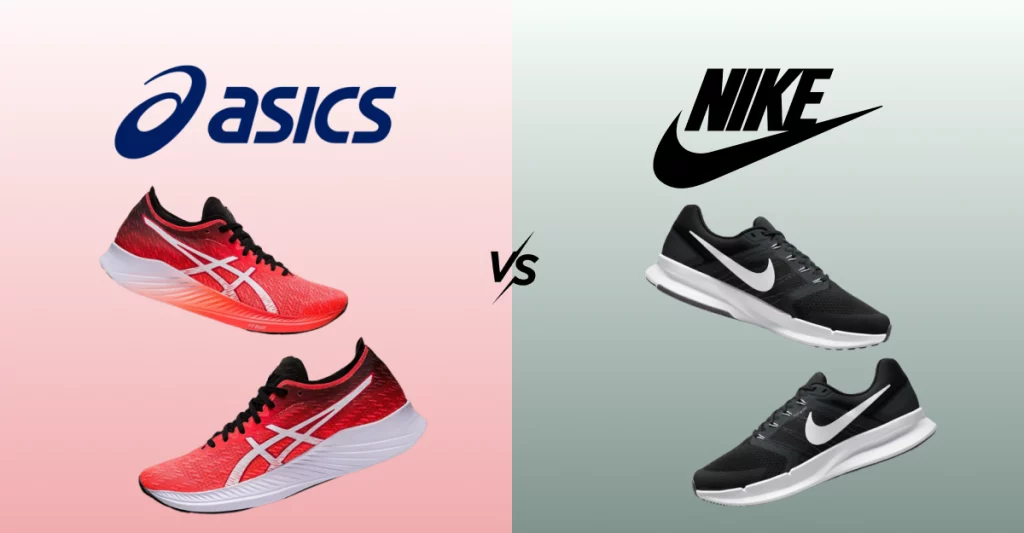
If you’ve ever stood confused in front of a sports shoe wall or spent hours scrolling through online stores wondering, “Asics or Nike?”, trust us, you’re not alone. The Asics vs Nike battle is a big one, especially here in India where sportswear is booming. Both brands promise comfort, technology, and style, but which one truly fits better in the Indian context?

Let’s dig deep and walk you through everything you need to know in the most friendly, easygoing way, like a conversation with a buddy who just wants to help you find the perfect pair of shoes!
Asics vs Nike: Brand Background and Profile Comparison
Let’s start with a bit of a history lesson, but don’t worry, we’ll keep it fun.
Asics, born in Japan in 1949 as Onitsuka Tiger, is all about performance. The name ASICS itself means “A Sound Mind in a Sound Body”. Pretty inspiring, right? It was later rebranded in 1977 but stuck to its roots, helping athletes perform better and avoid injury.
Nike, on the other hand, was founded in the U.S. in 1963 by Phil Knight and Bill Bowerman. It’s a global trendsetter, mixing athletic innovation with bold streetwear vibes. Think of it as the rockstar of sports brands.
Here’s the table for detailed comparison-
| Particulars | Asics | Nike |
| Operating Industry | Sports equipment, Textile | Apparel, Accessories, Sports equipment |
| Founded | September 1, 1949 (as Onitsuka Tiger); 1977 (renamed to Asics) | January 25, 1963 |
| Founder | Kihachiro Onitsuka | Bill Bowerman, Phil Knight |
| Headquarters | Kobe, Japan | Beaverton, Oregon, United States |
| Number of Locations | 65 locations ≈ 1,900 outlet stores worldwide (2017) | 1,045 locations ≈ 365 outlets worldwide (2025) |
| Area Served | Worldwide | Worldwide |
| Key People | Motoi Oyama (Chairman and CEO) | Philip Knight (Chairman Emeritus); Mark Parker (Executive Chairman); Elliott Hill (President & CEO); John Hoke III (Chief Innovation Officer) |
| Products | Trainers, Clothing | Athletic Shoes; Athletic Apparel; Sporting Goods; Accessories |
| Brands | Onitsuka Tiger | – |
| Subsidiaries | Race Roster; Runkeeper | Converse |
| Subsidiaries in India | Asics India Pvt. Ltd. | Nike India Pvt. Ltd. |
| Competitors | Nike, Adidas, Puma, Brooks, Decathlon | Adidas, Asics, Under Armour, New Balance, Puma, |
From this table, it’s clear that Nike is a much bigger player globally, with a broader product range, famous collaborations, and strong branding. But Asics stays true to performance, especially for running and athletic training.
Nike is more diverse, venturing into basketball, lifestyle, and fashion, while Asics keeps things tighter and more focused. Both serve the global market and are present in India through official subsidiaries.
So, if you’re looking for focused performance and heritage, Asics has the edge. If you want flashy, famous, and widespread appeal, Nike wins!
Features Comparison of Asics vs Nike
Now, this is where things get fun. What makes their products different? Their features!
| Aspect | Asics | Nike |
| Brand Focus | Performance running and athletic wear. Focus on technical excellence and injury prevention. | Innovation, performance, and style. Emphasizes sports lifestyle and fashion. |
| Latest Technologies | GEL™ technology, FlyteFoam™, Trusstic System™ (per product highlights and previous site data). | Nike Air, Zoom Air, React Foam, Flyknit, and sustainability initiatives (e.g., Nike Move to Zero). |
| Product Range | Primarily running, training, and tennis shoes. Also offers apparel and accessories. | Extensive: running, training, basketball, football, golf, lifestyle, and more. |
| Design Philosophy | Classic, performance-oriented, understated designs. | Trend-driven, bold colors, collaborations (e.g., Jordan, Air Max, Dunk). |
| Customization | No official customization option is listed on the Indian site. | Nike By You: Customization available for selected shoes. |
| Sustainability | No current sustainability campaign visible on site (as of maintenance notice). | “Move to Zero” campaign: focus on recycled materials and carbon reduction. |
| Highlight Models | GEL-Kayano, GEL-Nimbus, GEL-Cumulus, GT Series (per previous listings and global site). | Air Max, Pegasus, ZoomX, Alphafly, Jordan Air Rev (golf), Dunk, React Infinity. |
| Shopping Experience | Site currently under upgrade; customer service available via email. | Advanced filtering, virtual try-on, member benefits, and fast delivery. |
| Community & Events | Community events and running clubs (per previous site data). | Nike Run Club, Training Club, and frequent brand events. |
| Availability | Temporarily unavailable online; customer service support offered. | Full e-commerce experience, regular new launches, and exclusive drops. |
Some other Characteristic features
| Characteristics | Asics | Nike |
| Fit | Generally snug and secure, especially in stability models like Gel-Kayano. Narrow fit in heel and midsole. Sizing is similar to Nike, but some users find Asics slightly roomier in the toe box. | Tends to run narrow, especially in the heel and midsole. Often runs smaller in both width and length. Flyknit uppers offer a more adaptive, sock-like fit. |
| Cushioning | Famous for GEL technology, providing excellent shock absorption and durability. Flytefoam used for lighter, springier feel. GEL is heavier but lasts longer. | Uses Air cushioning (Nike Air, Zoom Air) for responsiveness and lightweight feel. React foam and ZoomX for energy return. Generally lighter than Asics GEL. |
| Stability | Focus on injury prevention. Features like external heel clutch and Duomax midsole for pronation control and support. | Stability via wider base, heel flare, and stiffer sole. Gentle S-shape for lateral stability. |
| Technology | Research-driven, precise engineering. GEL, Flytefoam, and Trusstic System for structure and support. | Trend-driven, cutting-edge tech (Flyknit, React, ZoomX). Emphasis on innovation and performance enhancement. |
| Durability | GEL cushioning tends to last longer; shoes known for longevity, especially for distance running. | Foam-based cushioning may compress faster; durability varies by model but generally less than Asics for high-mileage runners. |
| Performance Focus | Prioritizes structure, support, and injury prevention. Popular among runners needing stability and cushioning for long distances | Focuses on lightweight, energetic performance and speed. Popular with elite athletes and for racing |
| Aesthetics | Classic, understated designs; less emphasis on fashion | Bold, trendy, and high-fashion appeal. Highly visible in sports and casual wear |
| Popular Models | Gel-Kayano, Gel-Cumulus, Gel-Nimbus | Pegasus, Zoom Fly, React Infinity Run, Alphafly Next% |
| Sizing | Sizing is similar to Nike; both follow standard US/EU/UK conversions. Some models may feel slightly roomier in Asics | Sizing runs true to standard, but often feels narrower and shorter than some competitors |
| Price Range | Typically mid to high, depending on technology and model. | Wide range, but high-performance and fashion models can be more expensive. |
In short, Asics focuses on serious runners and athletes. With technologies like GEL™, FlyteFoam™, and the Trusstic System™, the brand designs shoes that keep your feet supported and stable. Their philosophy is simple: protect you from injury and keep you running longer.
Nike, on the flip side, is all about energy and innovation. Ever heard of Zoom Air, React Foam, or Flyknit?
These are tech names that make Nike shoes feel like feathers on your feet. Plus, their shoes aren’t just comfy, they’re stylish and street-ready.
Asics doesn’t offer customization in India, while Nike By You lets you tweak select shoes to your taste. Nike also takes the lead in sustainability with its “Move to Zero” campaign.
Asics seems more purpose-driven, while Nike is about expression, innovation, and mass appeal. Your choice depends on whether you’re training for a marathon or just want to look good while walking the mall.
Asics vs Nike: Business in India & Abroad
Let’s talk money, it tells a bigger story than you might think.
Nike’s numbers are mind-blowing. In FY24 alone, Nike India made ₹1,200 Cr in revenue, while Asics earned ₹431 Cr. That’s almost three times the difference. Nike also has a massive global user base of 300 million people, while Asics has 20 million loyal members and 3.8 million active users monthly.
Asics may not be as big yet, but it’s growing rapidly, especially in India. It has locally produced 30% of its shoes and plans to increase that to 40%. That means lower prices and better availability in the future.
The following table shows a detailed comparison of Asics vs Nike in terms of business-
| Business Aspects (2025) | Asics | Nike |
| Market Capitalization | ¥2.50 trillion ($17.25 billion) | $88.59 billion |
| Net Worth | $16.07 billion | $82.48 billion |
| User Base | 20 million people with OneASICS membership; 3.8 million active monthly users | 300 million |
| Revenue Earned (Global) | ¥208.3 ($1.44 billion in the first quarter of 2025); ¥780 billion ($5.38 billion in full year expected net sales of 2025) | $47.818 billion (FY25) |
| Revenue Earned in India | ₹431 Cr (FY24) | ₹1,200 Cr (FY24) |
| Shared Capital (India) | ₹100 Cr (FY24) | ₹609.55 Cr (FY24) |
| Paid Up Capital (India) | ₹92.48 Cr (FY24) | ₹609.50 Cr (FY24) |
| Expenses (Global) | ¥ 5 billion ($34.5 million in FY25) | $45.051 billion (FY24) |
| Profit/Loss | ¥44.5 billion ($307 million in Q1 FY25) | $20.955 billion (FY25) |
From this business data, we see that Nike is a powerhouse, both globally and in India. Its massive revenue, user base, and capital investment show its strength. But Asics is the underdog with momentum. With 37% growth in Indian revenue and efforts to localize production, Asics is becoming more accessible and affordable.
Nike has brand dominance, but Asics is laying the foundation for sustainable, long-term growth. It’s a classic case of David vs Goliath, only here, David is wearing running shoes.
Market Share & Growth in India: Asics vs Nike
Asics
Asics is playing the long game in India, growing steadily with a 35–37% growth target for 2025. It’s building a strong foundation with more local manufacturing, deeper retail reach, and a big focus on the running community.
Sponsoring major Indian marathons is helping it connect with passionate athletes.
Nike
In India, Nike currently holds the highest market share at 30%, followed by Adidas and Puma. Asics doesn’t have a large share yet, but it’s making big moves.
They’re aiming to become the top running shoe brand in India by 2026, and their strategy is smart: expand to tier III and IV cities, sponsor top marathons (like Mumbai, Delhi, and Bangalore), double store count, and reach runners on digital platforms.
Nike is also adapting. They’ve introduced India-friendly products like cricket shoes and are increasing local presence. But India still accounts for just 1% of Nike’s global sales.
So while Nike leads now, Asics is making all the right moves to catch up.
Note: We have also compared the following sports brands-
Conclusion: Which Offers Better Products & Services?
Alright, we’ve covered it all, history, tech, comfort, shopping, and business. So what’s the final answer to the big question: Asics vs Nike- Which fits better in India?
Well, if you’re a runner, athlete, or someone who prioritizes comfort, durability, and injury prevention, then Asics fits better for you. The brand is truly committed to helping your feet go the distance. It may not be as flashy, but it’s dependable and designed with care. Plus, it’s growing fast in India, making it a future-proof choice.
But if you’re someone who wants trend-setting design, customization, easy online access, and broad sports/lifestyle options, Nike is hard to beat. It offers a world-class digital experience and caters to both the athlete and the fashion-lover.
So the answer is: Both fit, but in different ways.
If you want performance, go with Asics.
If you want performance + style, go with Nike.
And if your budget allows, grab a pair of both. One for your morning run, the other for your evening hangout. Because why not?
Now that you know all about Asics vs Nike, it’s your move. Choose what fits you.
