
When it comes to Indian sweets and snacks, there are two names that always spark debate—Haldiram vs Bikanervala. If you grew up with mithai boxes during Diwali, namkeens on train journeys, or stopping by family restaurants for a plate of chole bhature, chances are you’ve tasted both brands.
These aren’t just food companies—they’re a part of Indian food culture itself. You’ll find them in shopping malls, airports, busy markets, and even abroad. But when it comes down to the question—which brand is better for you, your taste buds, and your pocket—the Haldiram vs Bikanervala battle gets real.
Let’s go through their story, features, and business strengths to see who can rule India’s sweets and snacks market worth ₹85,000 Cr.
Profile Comparison
If you’re wondering where these giants started, you’ll be surprised to know that both share roots in Bikaner, the land of bhujia. Haldiram began in 1937 under Ganga Bhishen Agarwal, while Bikanervala goes back to 1905 with Kedarnath Aggarwal. That’s over a century of legacy!
Here’s where things get interesting:
- Haldiram is a global namkeen brand with over 400 outlets across India and abroad.
- Bikanervala, on the other hand, mixes tradition with hospitality, running sweet shops, cafes, and even hotels in over 150 locations.
Both have their loyal customer base, but in the Haldiram vs Bikanervala brand story, you can see how one focused more on becoming a packaged snack leader, while the other leaned into full-service outlets and mithai shops in Delhi and beyond.
Look at the following table-
| Particulars | Haldiram | Bikanervala |
| Operating Industry | Food | Food |
| Founded | 1937 (Bikaner, Rajasthan, India) | 1905 |
| Founder | Ganga Bhishen Agarwal (Haldiram Ji) | Kedarnath Aggarwal |
| Headquarters | Noida (Uttar Pradesh, India) | Delhi (India) |
| Area Served | India, USA, UK, Middle East, Canada, Japan, Australia, New Zealand, Thailand, and Sri Lanka. | India, UAE, Qatar, USA, Singapore, Nepal |
| Brand Legacy | Renowned for Bikaneri bhujia, the largest snack company | Heritage from Bikaner Bhujia Bhandar, sweets & snacks |
| Types of Stores | Retail shops, quick service restaurants, packaged foods | Sweet shops, restaurants, quick service cafes, and hotels |
| Outlet Count | 400+ outlets India & abroad | 150+ outlets India & abroad |
| Key People | Shiv Kishan Agarwal, Manohar Lal Agarwal | Shyam Sundar Aggarwal (Owner) |
| Brands | Haldiram’s | Bikanervala, Bikano, Bikano Chat Cafe |
| Parent Company | Multiple family entities, recently merged as Haldiram Snacks Food | Bikanervala Foods Pvt Ltd |
| Competitors | Bikanervala, Bikaji, Haldiram’s Nagpur, PepsiCo (Lehar), regional brands | Haldiram, Bikaji, regional sweet brands, PepsiCo (Lehar) |
After looking at the profile, you notice that Haldiram has a wider international presence, but Bikanervala shines when it comes to authentic sweet shop vibes and traditional service.
Features Comparison: Haldiram vs Bikanervala
Now let’s get to the part you really care about—the taste, product quality, and experience. This is where the Haldiram vs Bikanervala comparison feels like a real “taste test.”
Before you glance at the table, here’s what you should know:
- Haldiram review: People love the variety—over 410 products including sweets, frozen food, bakery items, and even ready-to-eat curries.
- Bikanervala review: They’re praised for superior hygiene standards and authentic flavours, especially in sweets like rasgullas and pedas.
Let’s look at the features comparison-
| Features | Haldiram | Bikanervala |
| Product Range | Extensive portfolio of 410+ items, including sweets, namkeens, bakery, beverages, ready-to-eat & frozen snacks | Broad assortment of sweets, snacks, namkeens, bakeries, and full-service outlets, including chat cafes |
| Signature Products | Iconic Bikaneri Bhujia, Gulab Jamun, Soan Papdi, Rajbhog, Kaju Katli, ready-to-eat curries, Pav Bhaji | Renowned Bikaneri Bhujia, Rasgulla, Pedas, Samosas, and diverse traditional sweets and snacks |
| Product Quality | Globally trusted for stringent hygiene and consistent freshness | Celebrated for authentic flavours and superior hygiene, slightly higher cleanliness ratings |
| Pricing | Positioned at a premium tier targeting middle to upper-income groups | More affordable, favoured for value-conscious consumers |
| Outlet Ambience | Modern, convenience-driven outlets with high customer satisfaction | Traditional sweet shop vibe with cafes and restaurants; praised for cleanliness |
| Customer Preference | Slightly more preferred for snacks and sweets; strong nationwide brand loyalty | Favoured for affordability and hygiene, it poses strong competition |
| Service Delivery | Efficient distribution via extensive retail, supermarkets & online; growing international footprint | Reliable dine-in and takeaway service; expanding cafes and restaurant presence |
| Packaging | Eye-catching, freshness-preserving, user-friendly packaging | Attractive packaging blending traditional and modern aesthetics, ideal for gifting |
| Innovation | Regularly refreshes offerings with ready-to-eat and frozen food innovations | Incorporates new varieties and fusion foods; expanding chat cafe concept |
| Hygiene & Cleanliness | Mode3rate ratings; ongoing improvements needed per customer feedback | Rated superior in hygiene and outlet cleanliness by consumers |
So what’s the takeaway?
If you’re looking for innovation, global-style packaging, and consistent taste, Haldiram is your go-to. But if your heart longs for traditional mithai with a clean, family-restaurant ambience, Bikanervala wins your vote.
Business Comparison of Haldiram vs Bikanervala: Who Earns More?
The Haldiram vs Bikanervala battle isn’t just about taste—it’s a big game of numbers.
Look at this:
- Haldiram is valued at a whopping $10 billion and earned ₹12,800 crore in FY24. That makes it one of the largest Indian snack manufacturers in the world.
- Bikanervala, though smaller, pulled in ₹3,000 crore in FY24, with its Bikano brand contributing the bulk.
| Business Aspects | Haldiram | Bikanervala |
| Market Valuation | $10 billion (₹85,000 crore) | Moderate; not publicly disclosed, targets IPO by 2028, aiming ₹10,000 crore revenue by 2030 |
| Latest Funding Received | Temasek (10% stake for $1 billion in Mar 2025); Alpha Wave and IHC (6% stake, ₹5,600 crore) | Ongoing discussions for PE funding; previously raised approx ₹200 crore |
| Revenue Earned | ₹12,800 crore (FY24) ; Combined Nagpur & Delhi units | Over ₹3,000 crore (FY24); Bikano contributes major share |
| Expenses | Not publicly specified; EBITDA ₹2,580 crore (FY24) | Operating margins 10–12%; stable expenses with recent expansion |
| Profits | ₹1,400 crore (PAT, FY24) | Not public; estimated PAT margin 6–9% |
| Market Share | ~13% of the Indian snacks market | ~4% of the organized sweets & snacks market |
| Expansion Plans | International (US, UK, Middle East); domestic retail push | Aggressive outlet/franchise expansion domestically and abroad |
| Brand Recognition | Strong pan-India & global; 250+ products in 80+ countries | High, especially in North India; 100+ outlets globally |
| Operating Margins | Gross: 40–45%; Net: 8–12% | Net: 6–9% |
| Return on Equity (ROE) | 12-18% | 8-13% |
| Sustainability Initiatives | Eco-friendly packaging investment | Limited disclosures |
| Risk Factors | Supply chain, competition, and regulatory | Similar: raw materials, franchise management |
| Working Capital Intensity | Low, due to the cash-and-carry model | Low, similar structure |
| International Operations | Strong: major presence in US, UK, Middle East | Moderate: mostly Middle East and limited other regions |
In simple terms, Haldiram plays the global scale game, while Bikanervala is focusing on expanding its cafes, restaurants, and export footprint. When it comes to market share, Haldiram is the clear leader, but Bikanervala is no small player—it’s loved across North India and is aiming for IPO-level growth soon.
Who is the Winner?
So who wins the Haldiram vs Bikanervala contest? The answer depends on you.
- If you value global reach, wide product range, and modern snacks, Haldiram takes the trophy.
- If you prefer affordable sweets, hygienic dine-in outlets, and traditional vibes, Bikanervala steals the show.
From a business perspective, Haldiram dominates in scale, exports, and revenue. But from a customer satisfaction angle, Bikanervala often gets better reviews for hygiene and affordability.
So really, there’s no single winner—it depends on what matters more to you: global dominance or traditional charm.
This is not the end. You must analyse how these brands work to understand their strategy in business.
Note: We have also thrown light on-
Business Model Comparison
When you think of Haldiram vs Bikanervala, the real difference lies in how they run their businesses. Even though both brands serve you sweets and snacks, their business models are quite distinct—and this is what decides how far they can grow.
Before you look at the table, here’s the big picture:
- Haldiram business model functions more like a packaged food FMCG giant with global reach.
- Bikanervala business model is more of a restaurant-first, sweet shop-driven brand, with packaged foods (through Bikano) as a side arm.
This table compares their business model side by side-
| Aspects of Business Model | Haldiram | Bikanervala |
| Product Range | Extensive: Namkeen, sweets, bakery, instant meals, health snacks, ethnic foods | Wide: Namkeen, sweets, fast food, meals, bakery; less diversified vs. Haldiram |
| Market Presence | 80+ countries, major exports, strong in India (esp. North & West) | Mostly India & the Middle East; smaller export business |
| Retail Outlets | 400+ outlets, including QSRs, cafes, and flagship stores | ~100 outlets (restaurants, cafés, shops) |
| Franchise Model | Aggressive national & international franchising | Expanding, but more limited franchise approach |
| Distribution Network | Pan-India, online, organized retail, quick commerce, airports | Focus on physical outlets, moderate e-commerce |
| Product Pricing | Premium pricing relative to local competitors | Generally more affordable than Haldiram |
| Quality Focus | Strong QC, modern plants, investment in automation & food safety | Good quality, fewer tech upgrades, and hygiene praised |
| Brand Recognition | High, “household name”, heavy ad spend, global reach | High in North India, locally bolstered, less international |
| Customer Experience | Focus on ambience, fast service, consistent taste, and décor | Cleanliness and hygiene rated better; family-friendly |
| Innovation | Product innovation: millet/health snacks, meal kits, packaging | Traditional focus, some café/shop innovation |
| Revenue Drivers | FMCG (snacks & sweets), QSR (restaurants), strong exports | Offline restaurant/café sales, moderate FMCG via “Bikano” |
Now, what does this mean for you as a customer?
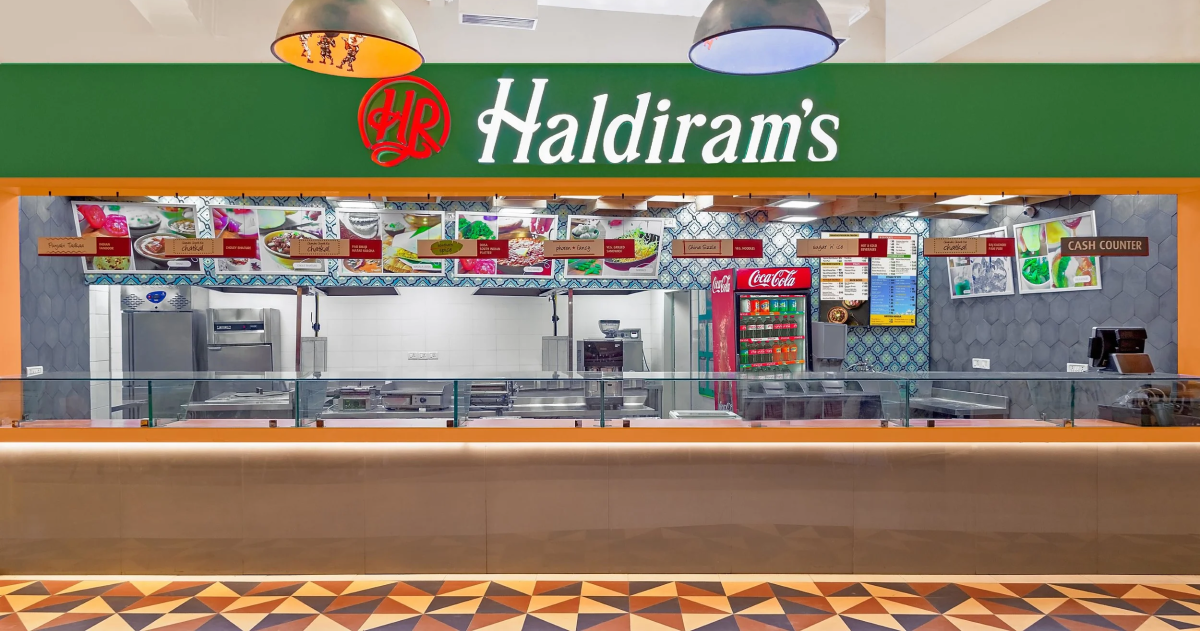
If you step into a Haldiram outlet, you’ll notice its modern retail focus—quick service restaurants, international-standard packaging, and aggressive franchising. Haldiram thrives on being everywhere: in supermarkets, airports, online delivery apps, and even in foreign grocery stores. Their revenue engine is powered by snacks, sweets, and exports.
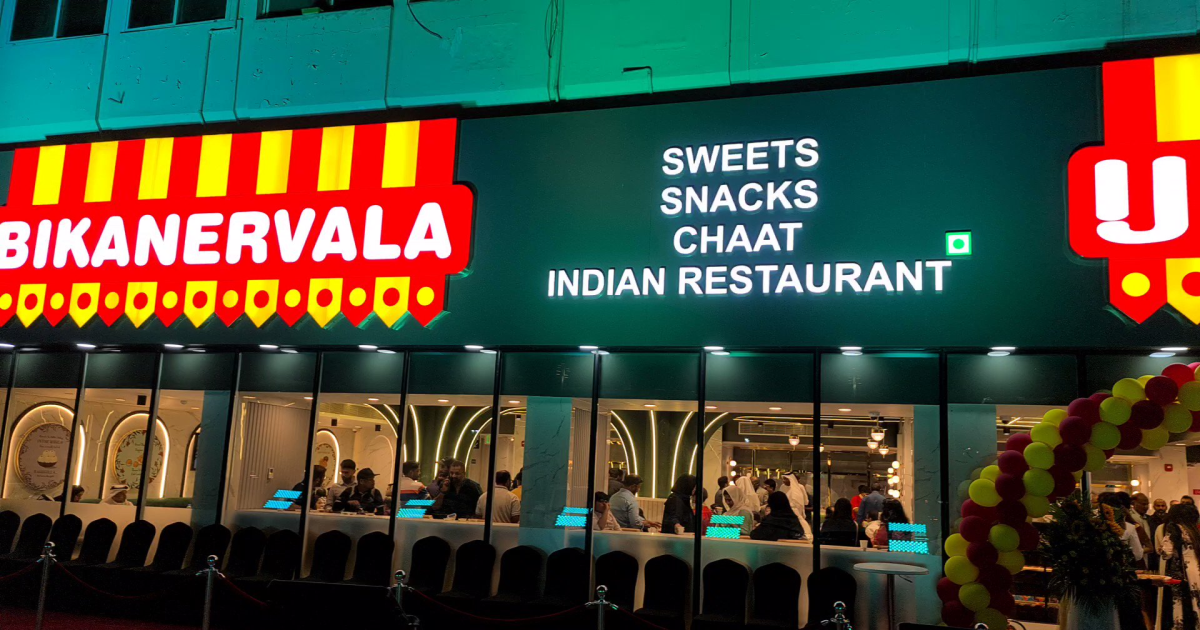
Bikanervala, on the other hand, still carries the essence of a family restaurant chain. It shines in dine-in experiences, cleanliness, and authentic food vibes. While its Bikano division brings namkeens and sweets into supermarkets, its core strength lies in outlet-driven sales rather than mass exports.
In short:
- Haldiram behaves like a global FMCG + QSR hybrid, using automation, exports, and premium pricing.
- Bikanervala stays closer to its roots—restaurants and mithai shops with affordable pricing and hygiene as its USP.
So, if you’re asking who has the scalable business model, the answer is Haldiram. But if you’re asking who offers the traditional sweet shop experience at scale, that crown goes to Bikanervala.
Conclusion on Haldiram vs Bikanervala
At the heart of the Haldiram vs Bikanervala rivalry is more than just sweets, snacks, or taste—it’s about two very different business models shaping the future of India’s ₹85,000 crore sweets and snacks market.
On one side, Haldiram is steadily evolving into a global FMCG powerhouse, blending packaged foods with quick-service restaurants, heavy exports, and innovation in health-oriented products. Its scalability and premium branding make it the front-runner for capturing larger international markets.
On the other side, Bikanervala remains deeply connected to the traditional sweet shop and family restaurant model, with a strong presence in North India and growing ambitions through its Bikano FMCG arm. Its focus on hygiene, affordability, and authentic flavours makes it a trusted choice for customers who value tradition over expansion.
So, when you look at Haldiram vs Bikanervala, you’re really looking at two different futures:
- One aiming to be the global face of Indian snacks,
- The other preserves the soul of Indian mithai and dining culture.
For you as a customer, the winner depends on what you value more—innovation and scale, or tradition and experience. But for India as a whole, having both brands thrive means you get the best of both worlds—modern FMCG convenience and timeless sweet shop nostalgia.
FAQs (Frequently Asked Questions)
Q1. Are Bikanervala and Haldiram the same?
No, they are separate companies. Both started in Bikaner but grew into different businesses—Haldiram as a packaged food giant and Bikanervala as a sweet shop and restaurant chain.
Q2. Who are the competitors of Bikanervala?
Haldiram, Bikaji, and regional sweet brands are its main competitors.
Q3. What is the alternative to Haldiram?
Alternatives include Bikanervala, Bikaji, and regional namkeen brands.
Q4. Which is better, Haldiram or Bikaner?
It depends. Haldiram has wider reach and product variety, while Bikanervala excels in hygiene and traditional sweets.
Q5. Who is the CEO of Bikanervala?
Shyam Sundar Aggarwal leads Bikanervala Foods Pvt Ltd.
Q6. Is Bikanervala in the USA?
Yes, Bikanervala has outlets in multiple countries, including the USA.
Q7. Is Bikaner part of Haldiram?
No, but both brands originated in Bikaner, Rajasthan.
Q8. Why is Bikanervala famous?
For its authentic sweets, chaat, and hygienic family-friendly outlets.
Q9. Which is better, Haldiram or Bikaji?
Haldiram is bigger and more global, while Bikaji focuses on value-for-money packaged snacks.
Q10. Who is buying Haldirams?
In 2025, Temasek acquired a 10% stake, while Alpha Wave and IHC bought 6%.
Q11. What is the alternative to DMart?
Alternatives include Reliance Smart, Big Bazaar, and Spencer’s.
Q12. Which countries banned Haldirams?
In the past, some shipments faced bans due to food safety issues, but the brand has since improved quality standards.
Q13. Who is the owner of Bikaner?
The Aggarwal family owns Bikanervala.
Q14. What are Haldiram’s biggest challenges?
Supply chain issues, regulatory hurdles, and growing competition.
Q15. Why is Bikaji falling?
Market competition and margin pressures have impacted its growth.
Q16. Is Haldiram bigger than McDonald’s?
In India, yes—Haldiram’s revenue is higher than McDonald’s India operations.
Q17. Are there two Haldirams?
Yes, Haldiram Delhi and Haldiram Nagpur existed separately but merged recently.
Q18. Are there two Bikanervala?
No, Bikanervala operates under a single corporate entity.
Ending Note
Thanks for reading our Haldiram vs Bikanervala comparison 🙂
If you enjoyed it, don’t miss our other articles on the Haldiram success story, the journey of Hippo Chips in India, and more insights into profitable franchises in India!
