
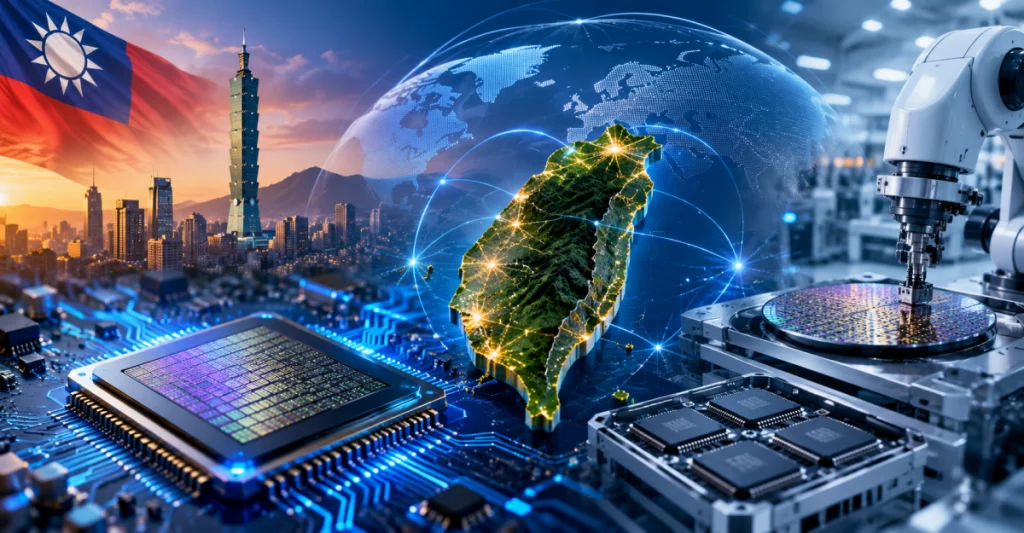
Almost every smartphone, AI chatbot, laptop, electric vehicle, gaming console, cloud server, and even many medical devices depend on tiny semiconductor chips. These chips are often called the “brains” of modern electronics because they process information, store data, and enable devices to perform complex tasks within seconds.
What surprises many people is where these powerful chips are made.
A small island with a population of just around 23 million people has become the backbone of the world’s technology industry. That island is Taiwan.
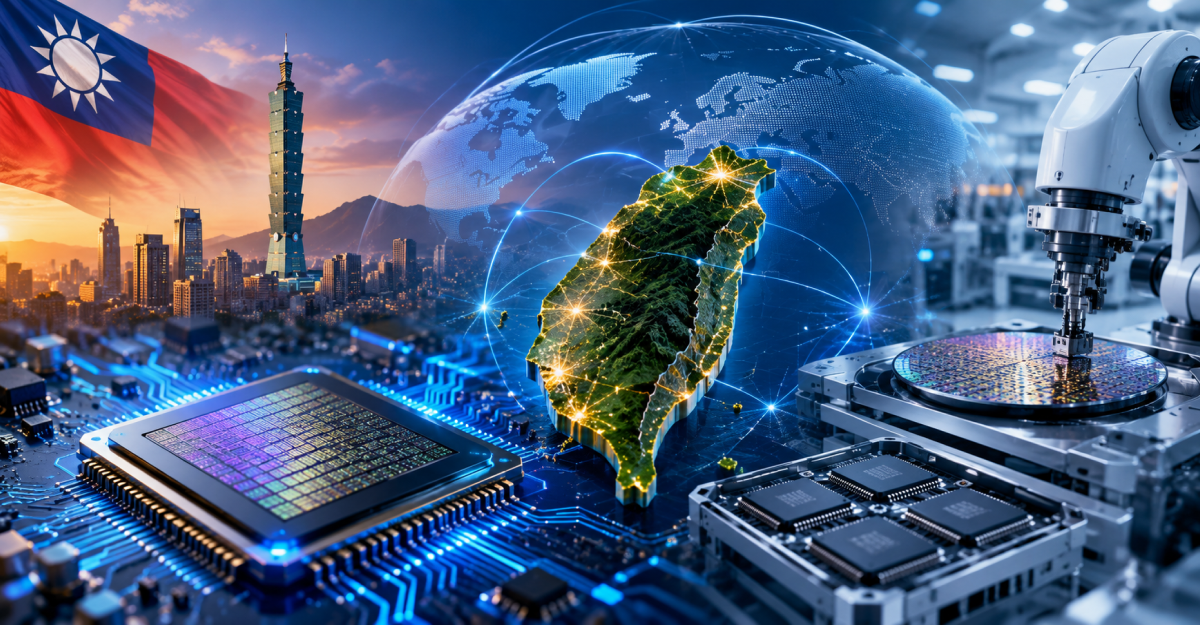
Today, Taiwan manufactures the overwhelming majority of the world’s most advanced logic chips. Companies behind Artificial Intelligence, cloud computing, smartphones, and high-performance computing all rely on Taiwan’s semiconductor ecosystem. This has made the island one of the most strategically important economies in the world despite its relatively small size.
This story is about Taiwan Semiconductor Hub Supremacy: How Taiwan Became Semiconductor Hub? It is not simply the story of one company called TSMC. It is the story of decades of government planning, world-class engineering education, research institutions, industrial policy, entrepreneurship, and relentless manufacturing excellence.
In this article, you’ll see how they transformed Taiwan into the world’s most important semiconductor powerhouse.
Stay tuned!
What Are Semiconductors? What Makes Semiconductors So Important?
First of all, let’s clear the concept of “Semiconductors”. I’m sure you must have read about conductors, insulators, and semiconductors back in your school days. Let’s revise them again!
- Conductors let electricity flow easily, which is why metals like copper are used in charging cables and power lines.
- Insulators stop electricity from passing through, so materials like rubber and plastic keep us safe from electric shocks.
- Semiconductors sit in between. They can control when electricity flows and when it doesn’t, making them perfect for the chips inside phones, laptops, cars, and AI servers.
In short, Semiconductors are tiny electronic components that control the flow of electricity. They are made primarily from silicon and form the foundation of integrated circuits, commonly known as computer chips.
Without semiconductors, modern life would look very different. Smartphones could not connect to the internet. Artificial Intelligence systems such as ChatGPT could not process billions of calculations. Electric vehicles would lose their advanced driving systems, while hospitals would struggle to operate modern diagnostic equipment.
Manufacturing advanced chips is among the world’s most difficult industrial processes. A single chip may contain tens of billions of transistors packed into an area no larger than a fingernail. Producing them requires extreme precision, ultra-clean manufacturing facilities, highly skilled engineers, and equipment worth hundreds of millions of dollars.
This complexity explains why only a handful of companies worldwide can manufacture cutting-edge chips.
| Industry | Example Products | Importance |
| Smartphones | iPhone, Android devices | Processing, connectivity, cameras |
| Artificial Intelligence | AI accelerators, GPUs | Model training and inference |
| Data Centres | Cloud servers | Large-scale computing |
| Automobiles | EVs, ADAS systems | Safety, navigation, battery management |
| Defence | Radar, missiles, communications | National security technologies |
| Healthcare | MRI scanners, medical monitors | Diagnosis and patient care |
| Consumer Electronics | TVs, gaming consoles | Entertainment and smart features |
| Telecommunications | 5G infrastructure | Fast wireless communication |
How Taiwan Became Semiconductor Hub? Taiwan Semiconductor Hub Supremacy
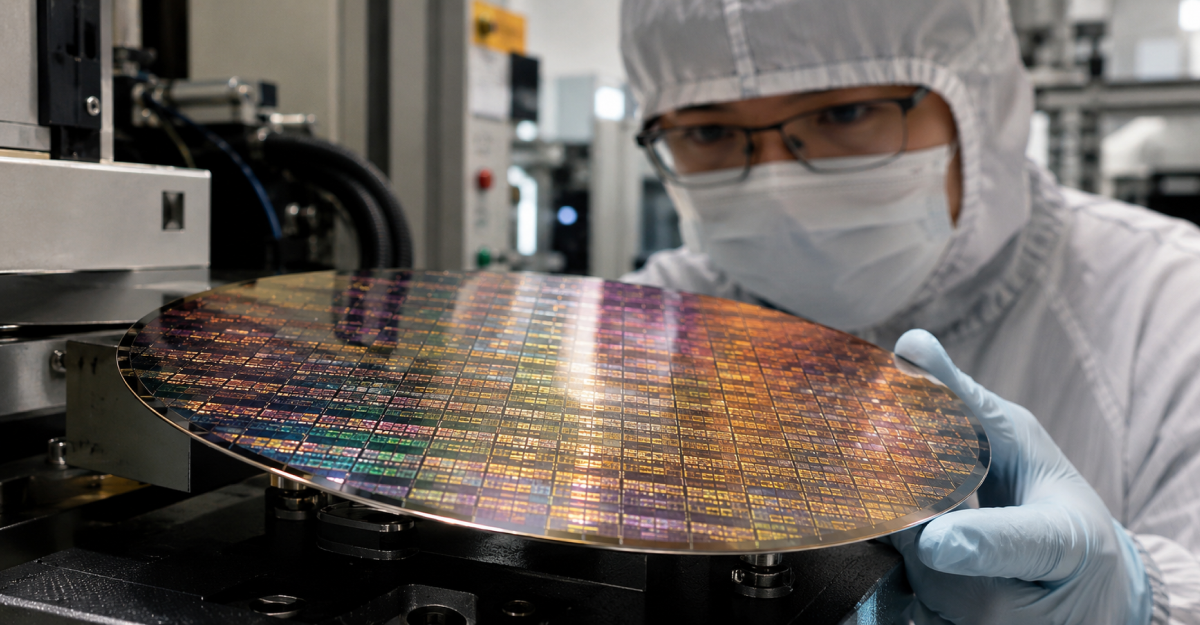
Many people ask, How Taiwan became semiconductor hub? The answer begins long before smartphones or Artificial Intelligence existed.
During the 1960s and early 1970s, Taiwan’s economy depended heavily on labour-intensive manufacturing such as textiles, footwear, and basic consumer goods. Government leaders understood that competing on cheap labour alone would not guarantee long-term prosperity.
Instead, Taiwan made a bold decision. It would invest in high-value technology industries.
One of the most important milestones came in 1973 with the establishment of the Industrial Technology Research Institute, better known as ITRI. Rather than focusing only on academic research, ITRI was designed to bridge scientific innovation and commercial manufacturing.
Soon after, Taiwan acquired semiconductor manufacturing knowledge through a technology transfer agreement with the American company RCA. Taiwanese engineers travelled abroad, received advanced training, and returned home with valuable expertise that became the foundation of a domestic semiconductor industry.
The government continued supporting the sector through research funding, tax incentives, infrastructure investment, and favourable industrial policies. Universities expanded engineering programmes, producing thousands of highly skilled graduates every year.
Unlike many countries that concentrated on product branding, Taiwan focused on becoming the world’s most reliable manufacturing partner. Companies learned how to produce high-quality chips efficiently, consistently, and at massive scale.
This manufacturing-first strategy proved remarkably successful.
Another reason Why Taiwan is leader in semiconductor? is its long-term commitment. Governments changed over the decades, but support for semiconductor development remained consistent. Public institutions, universities, private companies, and investors worked toward the same national objective.
Rather than chasing quick profits, Taiwan spent decades patiently building an ecosystem where every part of the semiconductor supply chain could thrive. Equipment suppliers, material manufacturers, chip designers, testing companies, packaging firms, logistics providers, and research institutions gradually clustered together.
That concentration created powerful network effects. Engineers could easily move between companies, suppliers could quickly solve manufacturing problems, and new technologies spread faster than in many competing regions.
By the early 1980s, Taiwan had laid the groundwork for something far bigger than anyone imagined. The island had built not just semiconductor factories but an entire innovation ecosystem capable of competing with the world’s largest economies.
The next breakthrough would come from a visionary entrepreneur who changed the semiconductor business forever. His name was Morris Chang, and the company he founded would reshape global technology.
The Birth of TSMC Changed Everything
Taiwan’s semiconductor ambitions reached a turning point in 1987 with the creation of Taiwan Semiconductor Manufacturing Company, better known as TSMC.
The company was founded by Morris Chang, an engineer with decades of experience in the American semiconductor industry. Before moving to Taiwan, Chang had worked at Texas Instruments and understood both the technical and business challenges of chip manufacturing.
His biggest insight was surprisingly simple.
Most technology companies wanted to design innovative chips, but very few wanted to spend billions of dollars building and operating semiconductor fabrication plants. Chip factories, also called fabs, required enormous capital investment, highly specialized talent, and constant upgrades to remain competitive.
Instead of designing its own chips, TSMC introduced the world’s first large-scale pure-play foundry business model. It would manufacture chips designed by other companies while remaining a neutral production partner.
This approach transformed the semiconductor industry.
Companies such as Apple, NVIDIA, AMD, Qualcomm, Broadcom, and many emerging chip designers could now focus on innovation without worrying about manufacturing. TSMC handled wafer fabrication, process improvements, quality control, and production at an unmatched scale.
As more customers joined, TSMC gained larger production volumes. Those volumes generated higher profits, which were reinvested into better factories, more advanced manufacturing processes, and cutting-edge equipment. This created a powerful cycle that competitors struggled to match.
Today, TSMC is the world’s largest dedicated semiconductor foundry and manufactures many of the most advanced chips powering Artificial Intelligence, cloud computing, smartphones, and high-performance computing.
| Year | Milestone | Why It Matters |
| 1973 | Industrial Technology Research Institute (ITRI) established | Created Taiwan’s semiconductor research foundation |
| 1976 | RCA technology transfer begins | Helped train Taiwanese engineers in semiconductor manufacturing |
| 1980 | Hsinchu Science Park inaugurated | Built a dedicated technology and semiconductor ecosystem |
| 1987 | TSMC founded | Introduced the pure-play foundry business model |
| 1994 | TSMC listed on Taiwan Stock Exchange | Expanded access to investment capital |
| 2018 | High-volume EUV lithography development begins | Enabled production of leading-edge chips |
| 2022 | Mass production of 3nm chips | Strengthened Taiwan’s leadership in advanced manufacturing |
| 2025 | Preparation for 2nm production | Positioned Taiwan for the next generation of AI chips |
Why Hsinchu Science Park Became Taiwan’s Silicon Valley?
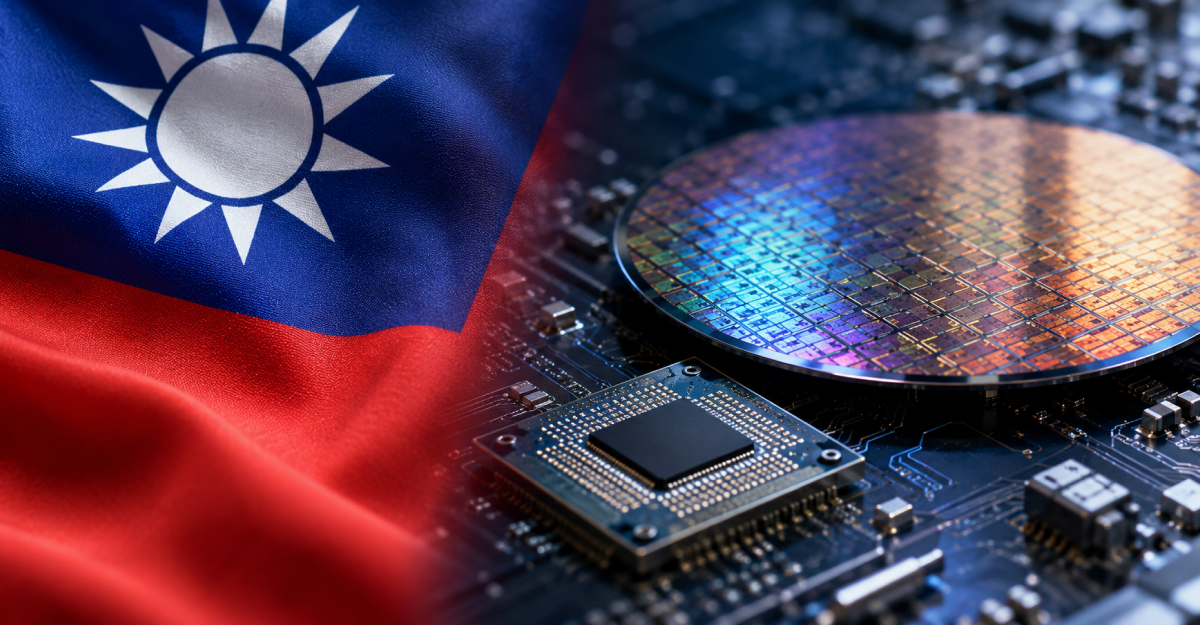
A successful semiconductor industry needs much more than factories.
It requires universities, research laboratories, suppliers, skilled engineers, logistics companies, equipment manufacturers, and investors working closely together.
Taiwan achieved exactly that through Hsinchu Science Park semiconductor hub Taiwan.
Established in 1980, Hsinchu Science Park was inspired by Silicon Valley but adapted to Taiwan’s manufacturing strengths. It brought together companies, research institutions, and universities within a single innovation cluster.
National Yang Ming Chiao Tung University and National Tsing Hua University became major sources of engineering talent. Thousands of graduates entered semiconductor companies every year with strong technical skills and practical training.
The park also reduced collaboration barriers.
Instead of waiting weeks for international suppliers, companies could often solve technical challenges by meeting nearby partners on the same day. Equipment vendors, chemical suppliers, packaging firms, testing companies, and logistics providers all operated within the same ecosystem.
This clustering reduced costs, accelerated innovation, and improved manufacturing efficiency.
Today, Hsinchu Science Park hosts hundreds of technology companies and remains one of the world’s most productive semiconductor clusters. Its success has inspired similar industrial parks across Taiwan, further strengthening the country’s semiconductor manufacturing companies.
Why Does the World Depend So Much on Taiwan?
The modern technology industry depends on specialization.
Most global technology companies excel at designing chips, creating software, or building consumer products. Manufacturing those advanced chips, however, is an entirely different challenge.
Building a leading-edge semiconductor factory can cost tens of billions of dollars. Maintaining it requires continuous investment in clean rooms, advanced equipment, process development, and thousands of skilled engineers.
As a result, many companies rely on Taiwan instead of manufacturing chips themselves.
TSMC produces processors for Apple’s iPhones and Macs, NVIDIA’s AI GPUs, AMD’s CPUs and graphics processors, Qualcomm’s smartphone chips, and Broadcom’s networking products. Even companies that compete fiercely in the marketplace often depend on the same Taiwanese manufacturing ecosystem.
This concentration has made Taiwan central to the global semiconductor supply chain map Taiwan hub.
Disruptions affecting Taiwan would influence industries ranging from consumer electronics and automobiles to Artificial Intelligence, telecommunications, and defence.
| Company | Chips Manufactured By | Products |
| Apple | TSMC | iPhone, iPad, Mac processors |
| NVIDIA | TSMC | AI GPUs and data centre accelerators |
| AMD | TSMC | Ryzen processors, EPYC servers, Radeon graphics |
| Qualcomm | TSMC | Snapdragon mobile processors |
| Broadcom | TSMC | Networking and connectivity chips |
Taiwan’s importance extends beyond manufacturing capacity.
The island has spent decades refining production techniques, improving yields, and reducing defects. Manufacturing at advanced process nodes demands extraordinary precision, and experience plays a major role in achieving consistent quality.
This accumulated expertise explains this query- Why is Taiwan the semiconductor hub? It remains one of the most frequently asked questions in global technology. The answer is not simply scale. It is the combination of talent, research, infrastructure, trusted partnerships, and continuous innovation that few countries have been able to replicate.
As Artificial Intelligence drives demand for increasingly powerful processors, Taiwan’s position within the global technology ecosystem has become even more significant than it was during the smartphone revolution.
Why Are Around 90% of the World’s Advanced Semiconductors Made in Taiwan?
One statistic is repeated frequently in discussions about the global chip industry: around 90% of the world’s advanced semiconductors are made in Taiwan. But what does this figure actually mean?
It does not mean Taiwan manufactures 90% of every semiconductor used worldwide. Millions of chips for appliances, industrial equipment, and vehicles are produced in countries including the United States, South Korea, China, Japan, Singapore, and across Europe.
The statistic refers mainly to leading-edge logic chips, which are used in Artificial Intelligence, premium smartphones, advanced data centres, and high-performance computing. Independent industry analyses consistently show that TSMC accounts for the overwhelming majority of production at the most advanced manufacturing nodes.
These chips are manufactured using technologies such as 3nm and the upcoming 2nm process. Shrinking transistor sizes allows more computing power while reducing energy consumption, making them ideal for AI applications and modern consumer electronics.
Producing these chips requires years of research, exceptional manufacturing expertise, and billions of dollars in investment. TSMC also relies on Extreme Ultraviolet, or EUV lithography, a technology supplied by Dutch company ASML. EUV machines project incredibly short wavelengths of light to create microscopic circuit patterns on silicon wafers with extraordinary precision.
Developing stable production at advanced nodes is difficult. Even tiny defects can ruin an entire wafer. TSMC’s ability to achieve high manufacturing yields has become one of its greatest competitive advantages.
This helps answer another common question: Percentage of semiconductors made in Taiwan depends on the category being measured. Taiwan dominates leading-edge logic manufacturing, while overall global semiconductor production is distributed across several countries and technologies.
Who Is TSMC’s Biggest Rival?
People often ask, Who is TSMC biggest rival? or TSMC सबसे बड़ा प्रतिद्वंद्वी कौन है?
The answer depends on the market segment.
Samsung Foundry is TSMC’s closest competitor in advanced contract manufacturing. Samsung has extensive semiconductor experience, develops cutting-edge process technologies, and benefits from strong memory chip expertise. However, TSMC continues to lead in customer trust, manufacturing scale, and production yields.
Intel Foundry Services represents another important challenger. Intel is investing heavily to manufacture chips for external customers while expanding production capacity in the United States and Europe. Although Intel possesses deep engineering expertise, its foundry business is still developing compared with TSMC’s decades of experience.
GlobalFoundries focuses mainly on mature manufacturing processes rather than the newest technology nodes. These chips remain essential for automobiles, industrial systems, and communication equipment.
China’s SMIC has expanded significantly despite export restrictions. However, access to advanced semiconductor manufacturing equipment remains limited, making it difficult to compete directly at the leading edge.
| Company | Country | Main Strength | Market Position |
| TSMC | Taiwan | Advanced logic manufacturing and foundry leadership | Global leader in advanced foundry services |
| Samsung Foundry | South Korea | Advanced process technology and memory expertise | Strongest advanced manufacturing competitor |
| Intel Foundry Services | United States | Integrated design and manufacturing experience | Expanding contract manufacturing business |
| GlobalFoundries | United States | Mature process technologies | Leading supplier for legacy nodes |
| SMIC | China | Domestic semiconductor manufacturing | Growing regional player with technology constraints |
Although competition is increasing, TSMC’s ecosystem, manufacturing consistency, and customer relationships continue to provide a significant advantage.
Where Does Taiwan Semiconductor Get Their Materials?
Another frequently searched question is, Where does Taiwan semiconductor get their materials?
Taiwan manufactures chips, but the semiconductor supply chain is truly global.
Silicon wafers are sourced from specialist producers, many based in Japan and Taiwan. High-purity chemicals and photoresists come largely from Japanese suppliers. Specialty gases are supplied by international industrial gas companies with production spread across several countries.
The world’s most advanced EUV lithography machines are built by ASML in the Netherlands using components sourced from Europe, the United States, and Japan.
Precision manufacturing equipment also comes from American, Japanese, Dutch, and German companies. Electronic design software is dominated by firms based in the United States.
This interconnected supply chain means no single country can produce every part of a modern semiconductor independently. Taiwan’s strength lies in bringing together these global inputs and transforming them into the world’s most advanced chips with remarkable efficiency.
Why Taiwan Matters in the AI Era?
Artificial Intelligence has dramatically increased Taiwan’s strategic importance.
Training advanced AI models requires enormous computing power. That computing power depends on high-performance graphics processing units, or GPUs, and AI accelerators manufactured using the world’s most advanced semiconductor technologies.
Companies such as NVIDIA design these processors, but many are manufactured by TSMC.
Every major cloud provider building AI data centres depends on advanced chips to train and run large language models, recommendation systems, autonomous driving software, robotics, and scientific simulations.
The rapid growth of generative AI has therefore strengthened Taiwan’s position within the global technology economy. As demand for AI infrastructure continues rising, semiconductor manufacturing has become even more critical than during the smartphone era.
This is one reason investors, governments, and technology companies closely monitor developments in Taiwan. The island is no longer just an important manufacturing centre. It has become a cornerstone of the global AI revolution.
Challenges to Taiwan’s Semiconductor Leadership
Taiwan’s leadership is remarkable, but it is not guaranteed forever. The semiconductor industry evolves rapidly, and maintaining an advantage requires continuous investment, innovation, and international cooperation.
The biggest concern is geopolitical tension across the Taiwan Strait. Because so much of the world’s advanced chip production is concentrated in Taiwan, governments and businesses are working to make supply chains more resilient. TSMC is expanding manufacturing in countries such as the United States, Japan, and Germany, while the US, Japan, South Korea, and the European Union are investing billions of dollars to strengthen their own semiconductor industries.
Natural resources also present challenges. Semiconductor fabrication consumes enormous amounts of ultra-pure water and electricity. Taiwan has faced periodic droughts in recent years, prompting chipmakers to invest in water recycling and conservation technologies. As AI data centres increase demand for advanced chips, energy requirements are also rising.
Another challenge is talent. Building leading-edge chips requires highly trained engineers, scientists, and technicians. Taiwan continues to invest heavily in education, but competition for skilled semiconductor professionals is becoming increasingly global.
Despite these hurdles, Taiwan retains significant advantages. Decades of manufacturing experience, a deeply integrated supply chain, trusted customer relationships, and a culture of continuous process improvement are difficult to replicate quickly.
Which Country Is No. 1 in Semiconductors?
There is no single country that dominates every part of the semiconductor industry. Instead, leadership is divided across different areas of the global value chain.
The United States leads in semiconductor design. Companies such as NVIDIA, AMD, Qualcomm, Broadcom, and many others develop some of the world’s most advanced chip architectures. American firms also dominate electronic design automation software used to create modern chips.
Taiwan leads advanced semiconductor manufacturing. TSMC remains the world’s most important contract chip manufacturer, producing many of the leading-edge processors used in AI, smartphones, and cloud computing.
The Netherlands plays a unique role through ASML, the only company currently producing extreme ultraviolet lithography systems needed to manufacture the most advanced logic chips.
Japan remains indispensable because it supplies many of the high-purity chemicals, silicon wafers, photoresists, and advanced materials used throughout semiconductor fabrication.
South Korea is the global leader in memory chips, with companies such as Samsung Electronics and SK hynix producing much of the world’s DRAM and NAND flash memory.
Meanwhile, China continues investing heavily to strengthen domestic semiconductor manufacturing, although export controls and equipment restrictions have slowed progress at the leading edge.
Rather than asking, Which country is no. 1 in semiconductors?, it is more accurate to ask who leads each part of the semiconductor ecosystem. The answer depends on whether the focus is chip design, manufacturing, equipment, materials, or memory technology.
Note: We have also covered the Top 5 Semiconductor Companies in India. Go through the article to understand where India stands in the global semiconductor industry.
Final Words
The story behind our topic- Taiwan Semiconductor Hub Supremacy: How Taiwan Became Semiconductor Hub? is not one of luck or geography. It is the result of decades of careful planning, consistent government policy, investment in engineering education, world-class research institutions, and an unwavering commitment to manufacturing excellence.
The establishment of ITRI, the creation of Hsinchu Science Park, the vision of Morris Chang, and the rise of TSMC combined to create an ecosystem that few countries have been able to match. Instead of trying to do everything, Taiwan focused on becoming the world’s most trusted semiconductor manufacturing partner. That decision reshaped the global technology industry.
Today, smartphones, AI systems, cloud computing platforms, electric vehicles, advanced medical devices, telecommunications networks, and defence technologies all depend, directly or indirectly, on Taiwan’s semiconductor industry. As Artificial Intelligence accelerates demand for increasingly powerful processors, Taiwan’s strategic importance is only expected to grow.
The modern world runs on tiny silicon chips. Yet behind many of those microscopic circuits stands a small island whose influence extends far beyond its borders. Taiwan proves that with long-term vision, relentless innovation, and an unmatched manufacturing ecosystem, even a relatively small economy can become indispensable to global technology.
Thanks for sticking with us! We hope this article helped you understand how a small island became the world’s semiconductor powerhouse and why its influence on technology will only continue to grow 🙂
