
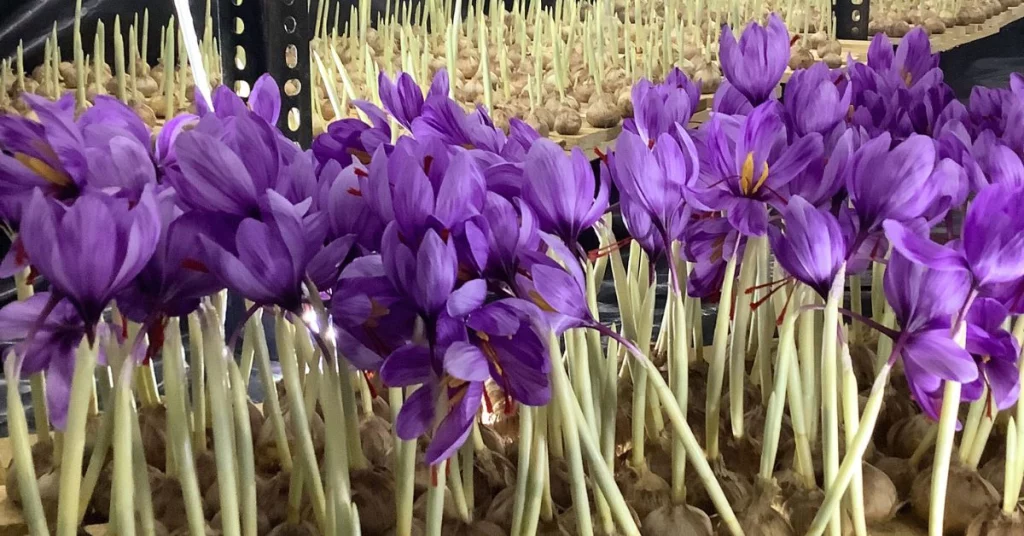
Saffron, famously known as “red gold,” is one of the world’s most luxurious spices, with prices soaring up to ₹3 lakh per kilogram. Let me tell you an interesting fact. Now you can have the power to cultivate this high-value crop right in your home or workspace, regardless of the weather outside!
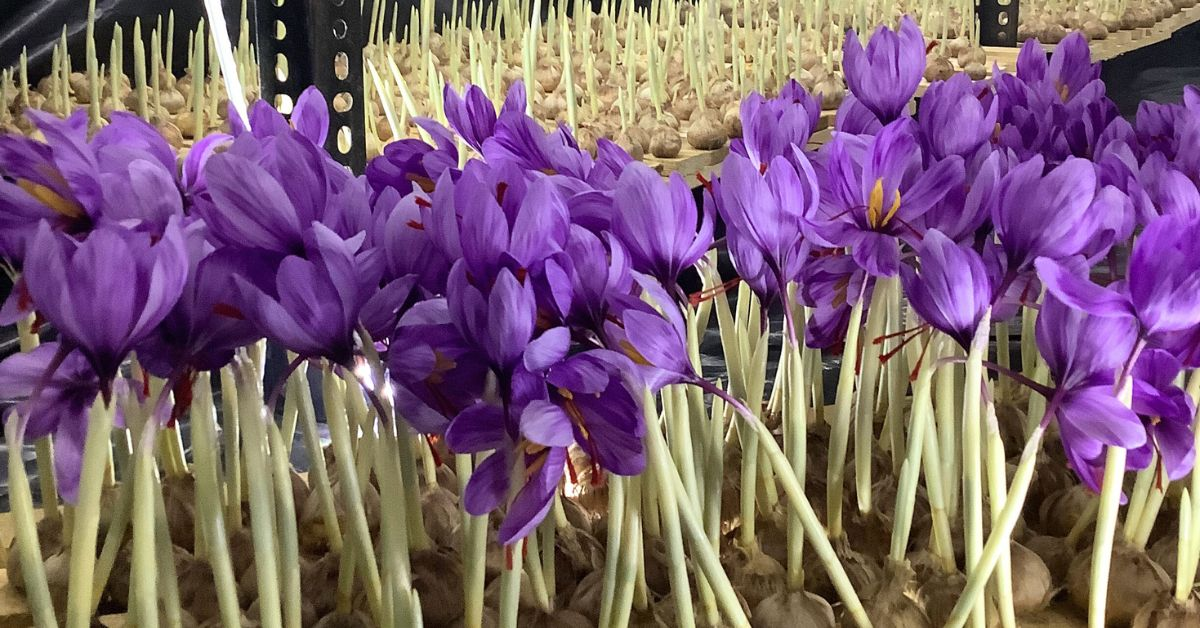
Thanks to agricultural technology advancements which give you complete control over the quality, and eliminate climate dependency. Thus, you can ensure a steady, year-round harvest.
If this exciting opportunity sparks your interest, here’s a detailed Indoor Saffron Farming Business Plan to guide you through every step of the process!
What is Indoor Saffron Farming?
Indoor saffron farming involves cultivating saffron (Crocus sativus) in controlled environments like greenhouses, grow rooms, or hydroponic systems. Unlike traditional outdoor farming, this method gives you full control over light, temperature, and humidity, ensuring optimal growth and yield.
Why Consider Indoor Saffron Farming?
Due to the following reasons-
- High Returns: Saffron’s market price ranges between ₹2.5 lakh to ₹3 lakh per kilogram due to its labor-intensive cultivation and limited supply.
- Controlled Environment: You’re not at the mercy of unpredictable weather conditions.
- Year-Round Production: Unlike traditional seasonal farming, you can cultivate and harvest saffron throughout the year.
- Eco-Friendly Practices: Indoor farming uses resources like water and soil more efficiently, reducing environmental impact.
How to Set Up Your Indoor Saffron Farming Business?
Conduct Market Research
Before you dive in, research the saffron market-
- Demand Analysis: Study the local, national, and international demand for saffron.
- Competition: Identify competitors and analyze their pricing and marketing strategies.
- Target Audience: Cater to specific buyers, such as luxury restaurants, Ayurvedic medicine producers, or international exporters.
Choose the Right Location
Your grow room can be set up in a spare room, basement, or greenhouse. Ensure the space is insulated to maintain consistent environmental conditions.
Procure High-Quality Saffron Corms
Saffron corms (bulbs) are the foundation of your business. Look for disease-free, mature corms from trusted suppliers. A single corm can produce saffron for up to five years with proper care.
- Initial Investment: A quintal (100 kg) of saffron corms costs around ₹3-5 lakh.
- Yield Potential: From 100 kg of corms, you can harvest approximately 1-2 kg of saffron in the first year.
Create an Ideal Growing Environment
- Light: Saffron requires 12-14 hours of light daily. Use LED grow lights for energy efficiency and adjust light intensity to mimic natural sunlight.
- Temperature: Maintain a cool temperature between 10-21°C (50-70°F). This range is ideal for healthy flowering.
- Humidity: Keep humidity levels between 40-60%. Invest in dehumidifiers to prevent fungal growth.
- Soil & Water: Use a well-draining soil mix of sand, perlite, and peat moss. Maintain soil pH between 6-8. Water sparingly to keep the soil slightly moist but not waterlogged.
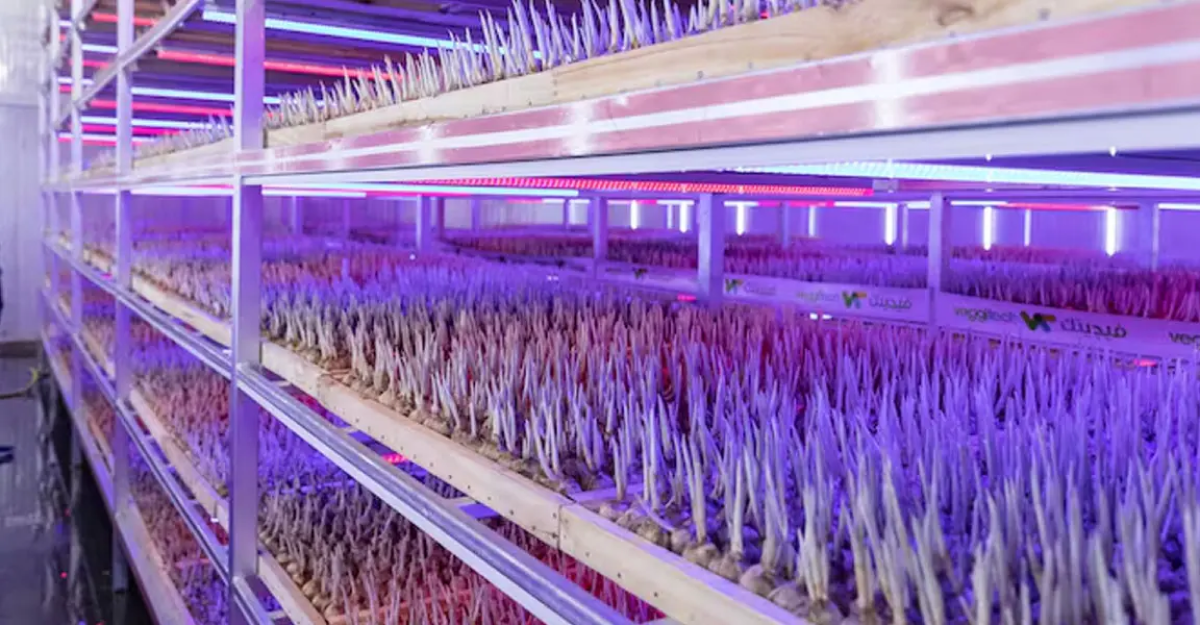
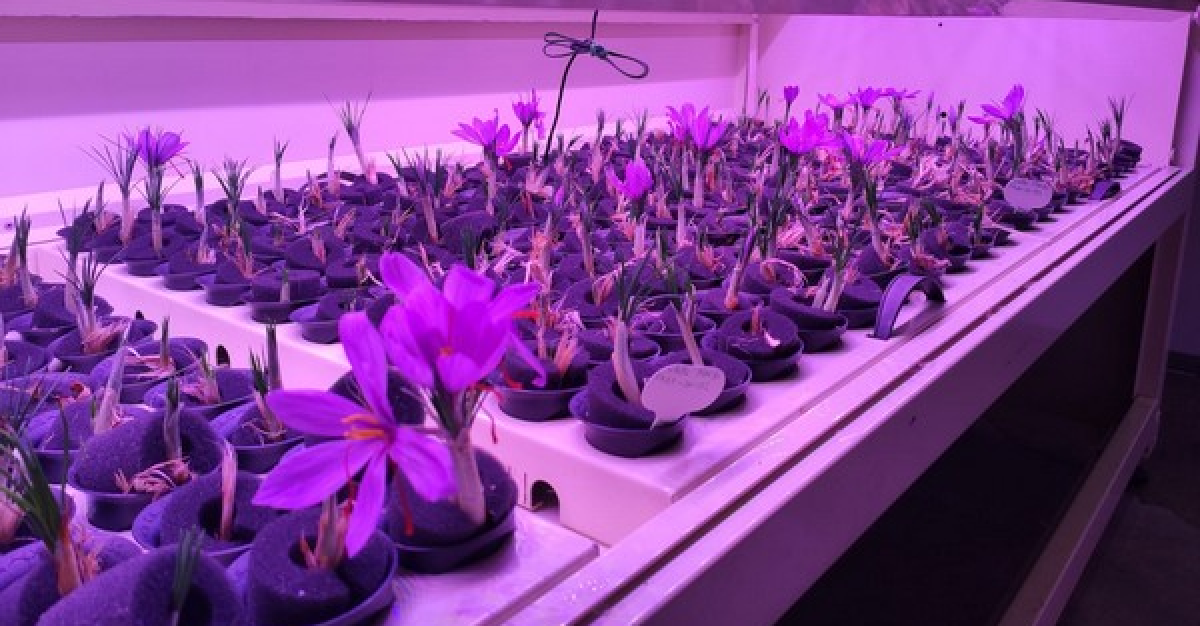
Multi-Tier Racks & Trays
Maximize space by using multi-tier racks and trays. This allows you to grow more plants in a smaller area, reducing overhead costs.
Cultivation Process
- Planting the Corms: Plant corms in rows, ensuring adequate spacing for airflow. Cover them lightly with soil to allow proper root growth.
- Monitoring: Regularly check for pests or diseases. Remove any infected plants immediately to prevent contamination.
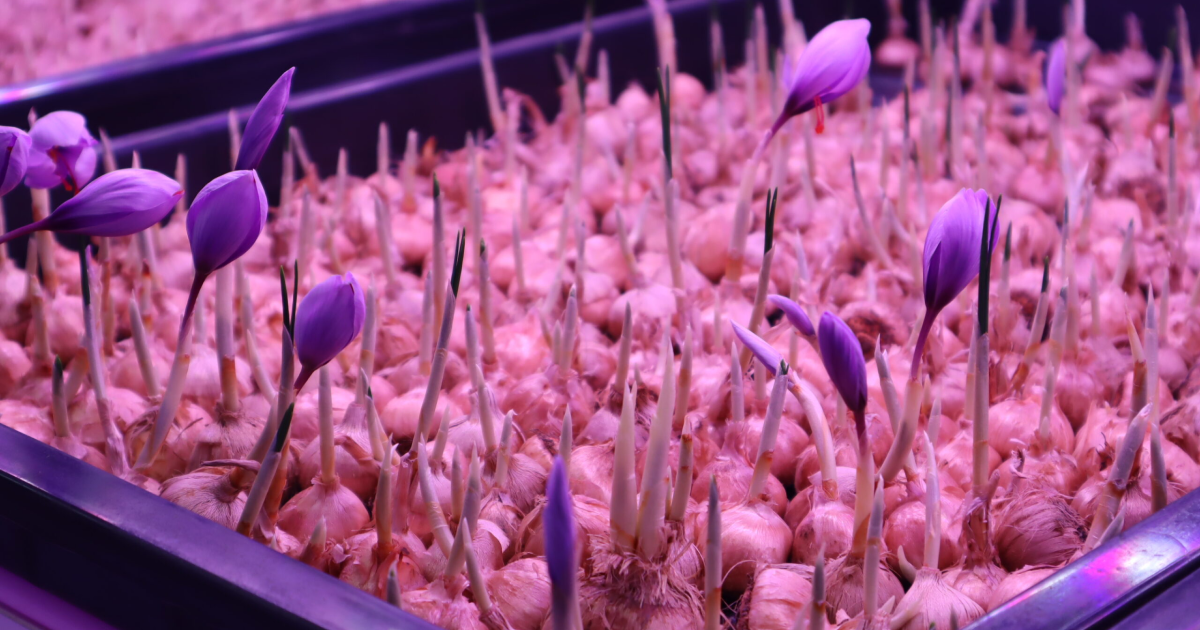
- Flowering Period: Saffron flowers usually appear 6-8 weeks after planting. Each flower produces three red stigmas, which are the valuable saffron threads.
Harvesting
Harvest the flowers early in the morning when the blooms are fresh. Be gentle while plucking the flowers to avoid damaging the stigmas.
Processing
Separate the red stigmas from the flowers by hand. Dry the stigmas using a food dehydrator or low-temperature oven (30-40°C). Store the dried saffron in airtight containers in a cool, dark place to preserve its aroma and color.
Business Strategy and Financials
Let’s look at the business aspects of Indor Saffron farming-
Startup Costs
| Expense | Estimated Cost (₹) |
| Saffron corms (100 kg) | 3,00,000 – 5,00,000 |
| LED grow lights | 50,000 – 1,00,000 |
| Racks and trays | 30,000 – 50,000 |
| Climate control systems | 1,50,000 – 2,00,000 |
| Miscellaneous (soil, tools) | 20,000 – 30,000 |
| Total | 5,50,000 – 9,00,000 |
Revenue Potential
| Yield (kg) | Price per kg (₹) | Total Revenue (₹) |
| 1.5 | 3,00,000 | 4,50,000 |
| 2.0 | 3,00,000 | 6,00,000 |
With proper care and increased yield in subsequent years, your profits can skyrocket.
Marketing and Sales
- Online Presence: Build a website and use social media platforms to showcase your saffron.
- Collaborate: Partner with local chefs, gourmet stores, and Ayurveda practitioners.
- Export Opportunities: Explore export markets in countries like the UAE, USA, and Europe.
Legal and Regulatory Compliance
- Register your business under the required agricultural and food safety regulations.
- Label your saffron accurately, mentioning its purity and origin.
Sustainability Practices
- Use organic fertilizers to enhance soil quality.
- Recycle water to minimize waste.
- Avoid chemical pesticides to maintain an eco-friendly approach
Advantages of Indoor Saffron Farming
- Consistent Quality: You can ensure uniform color, aroma, and taste.
- Scalability: Expand easily by adding more racks or grow rooms.
- High Market Demand: Saffron is used in cooking, cosmetics, and medicine, ensuring a broad customer base.
- Eco-Friendly: Requires minimal water and avoids harmful chemicals.
Challenges in Indoor Saffron Farming
- High Initial Investment: Setting up a grow room involves significant costs.
- Labor-Intensive: Harvesting and processing saffron threads require meticulous work.
- Disease Management: Proper monitoring is essential to prevent fungal infections.
Case Studies on Indoor Saffron Farming
Let’s look at some case studies-
Case Study 1: From BTech Graduates to Saffron Pioneers in Gujarat
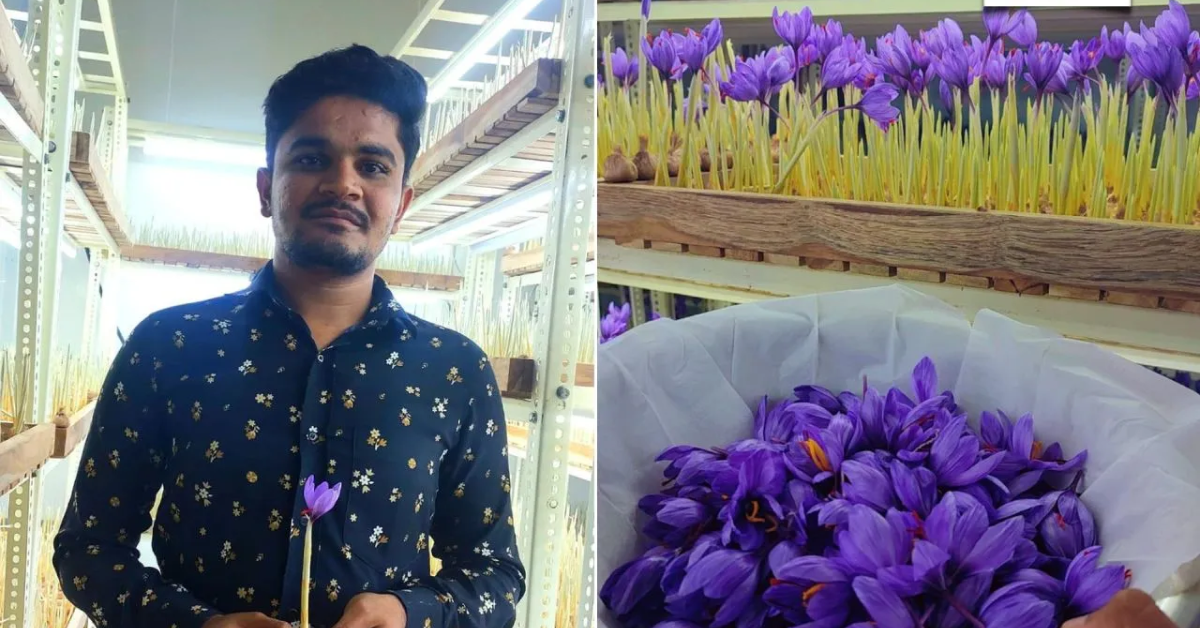
Two fresh BTech graduates, Subhash Kanetiya and Ashish Bavaliya, ditched the corporate rat race to cultivate saffron in Gujarat—a state known for its dry climate. After three years of rigorous research, they founded Hightech Agribiotech in 2023, investing ₹15 lakh in an aeroponic farming setup.
With just a 216 sq. ft. cold storage room, the duo mimicked Kashmir’s cool climate using humidifiers, air conditioning, and grow lights. They now harvest 2 kg of organic saffron annually, earning a whopping ₹20 lakh turnover.
Their journey wasn’t without challenges—importing pricey bulbs (₹900–₹1,000/kg) and perfecting bulb multiplication techniques were just the beginning. Yet, their innovation and determination are now setting an example for farmers across India.
Why it matters?
Gujarat is traditionally a chemical farming hub, but these entrepreneurs are proving that cutting-edge tech and eco-friendly methods can transform agriculture.
Case Study 2: A 22-Year-Old’s Leap from Cotton to Crocus in Maharashtra

Harsh Patil, a computer science student from Maharashtra, faced a dilemma when unseasonal rains damaged his family’s cotton crop. Rather than follow a corporate career, he experimented with aeroponic saffron farming in his 15×15 ft room.
His setup included insulated walls, chillers, and humidifiers to maintain the perfect growing temperature. In his first attempt, Harsh harvested 350 grams of saffron worth ₹1 lakh. Today, he conducts workshops, empowering over 50 farmers to replicate his success.
Why it matters?
Harsh’s journey highlights how climate-controlled farming can overcome unpredictable weather, ensuring stable yields and income for farmers.
Case Study 3: Indoor Saffron Farming- A New Dawn for Declining Saffron Production in Kashmir
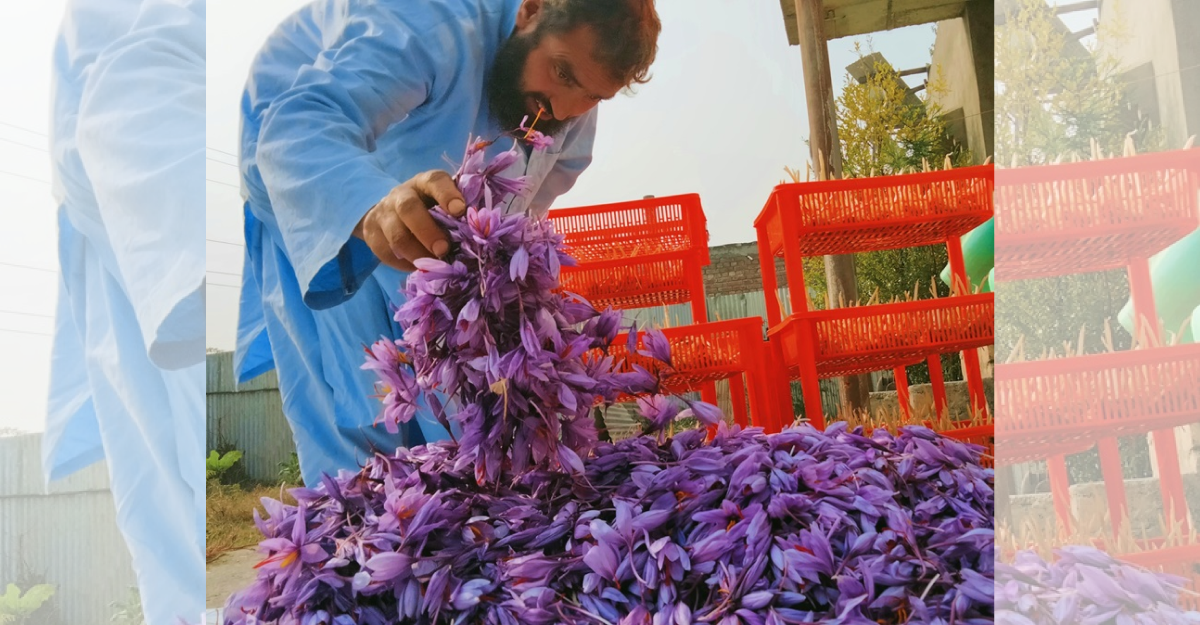
Saffron has long been a symbol of Kashmir’s agricultural heritage. However, with production declining by 68% over the last two decades, traditional saffron farming faces mounting challenges. Erratic weather, urbanization, and outdated methods have left farmers struggling. Amidst this crisis, indoor saffron farming has emerged as a ray of hope, combining innovation and tradition to revive the industry.
The Challenge
Once spread across 5,707 hectares in the 1990s, saffron cultivation in Kashmir shrank to 2,387 hectares by 2018-19. Production dipped alarmingly from 15.95 metric tonnes to 2.6 metric tonnes in 2023-24. Farmers abandoned saffron for higher-yield crops like apples, driven by erratic weather, water scarcity, and pest invasions.
Shift to Indoor Farming
Introduced in 2018 by SKUAST-Kashmir, indoor farming uses controlled environments to boost yields. By adopting multi-tier aeroponic systems, farmers like Abdul Majeed Wani achieved promising results-
- In a 20 ft x 20 ft room, Wani harvested 600 grams of saffron from the same quantity of corms that yielded 1.2 kg traditionally over 1.25 acres.
- Indoor farming significantly reduces labor, minimizes wastage, and ensures protection against adverse weather.
How It Works?
- Sowing: Saffron corms (8g+) are planted in trays on vertical racks in darkened rooms for 90-100 days.
- Flowering: After the dark period, light triggers flowering, which occurs from late October to early November.
- Post Harvest: Corms undergo a chilling phase in open fields to ensure multiplication for the next cycle.
Benefits and Challenges
While the model shows potential, scalability remains a concern. Key challenges include-
- Corm Multiplication: Essential for long-term viability, it’s still dependent on outdoor conditions.
- Cost: Initial investment for corms, racks, and labor (~₹1 lakh) limits accessibility for small farmers.
Note: Do you know what’s so special about Kashmiri Saffron? Go through the article for detailed information.
What Makes Indoor Saffron Farming the Future?
- Declining Traditional Yields: Saffron production in Kashmir dropped from 8 tonnes in 2010 to 2.6 tonnes in 2023 due to climate change. Indoor farming offers a reliable alternative.
- High Returns: With saffron priced at ₹1,000/gram, even small-scale production yields significant profits.
- Ease of Market Entry: Advanced techniques like aeroponics and hydroponics simplify the process, making it accessible for beginners.
- Growing Demand: The global saffron market is expected to grow to $1.85 billion by 2031, fueled by its culinary, medicinal, and cosmetic uses.
Future Prospects
With technological advancements like Israeli vertical farming techniques, indoor saffron farming could revolutionize the industry. Large-scale projects, such as the ₹200 million investment facilitated by the Saffron Growers Association, promise yields up to 10 times higher than traditional methods.
Takeaway for Aspiring Entrepreneurs
If you have a passion for agriculture and a willingness to embrace technology, indoor saffron farming can be your gateway to high profits. As Harsh Patil says, “You don’t need to be an expert; you just need the discipline to learn.” Whether you’re a student or a farmer, this red gold opportunity is ripe for the taking.
Conclusion
Indoor saffron farming represents a crucial turning point for Kashmir’s saffron industry. By blending science with tradition, it offers a sustainable path forward, ensuring that Kashmir retains its status as a global saffron hub while empowering local farmers with better yields and profitability!
