

Imagine opening your phone every morning and instantly getting a clean, fast feed of reliable news—without endless scrolling, without clickbait, and without waiting for slow websites to load. That’s the promise of SmartNews, a Japanese-born news aggregator app that quietly turned into one of the most downloaded news apps in the world.
This SmartNews Case Study is important because it shows how a relatively small startup from Tokyo managed to compete with giants like Google News, Apple News, and Facebook. By focusing on AI news curation, publisher partnerships, and a mobile-first experience, SmartNews created a unique position in the crowded digital media industry.

If you’re curious about building apps, understanding the future of digital journalism, or exploring startup growth strategies, you’ll find valuable lessons in this SmartNews business model and growth story.
History & Origin of SmartNews
SmartNews was founded in 2012 in Tokyo by Ken Suzuki (a former journalist) and Kaisei Hamamoto (a machine learning engineer). Their mission was simple yet ambitious: “deliver the world’s quality information to the people who need it.”
The founders saw two major opportunities:-
- Mobile-first news consumption — people wanted a faster way to skim multiple sources on their phones.
- Algorithmic curation — large volumes of content could be processed in real time by AI, surfacing only the most important stories.
From the start, SmartNews positioned itself differently from competitors. Instead of relying on social signals (like Facebook’s trending topics) or purely human editors (like Flipboard), SmartNews combined machine learning with editorial judgment.
One of its biggest early innovations was SmartView, a feature that allowed articles to load instantly in a clean, ad-lite format—even offline. In a country where commuters often deal with patchy mobile internet, this was a game-changer.
SmartNews quickly became a hit in Japan. By 2013, it was named App of the Year by the Japanese App Store. By 2015, just three years after launch, SmartNews already had 10 million global downloads.
Which Problem Statement Became the Trigger for SmartNews?
The founders identified a growing problem: news overload and low-quality information online.
Readers were overwhelmed by thousands of headlines every day. Social media amplified sensationalism and misinformation. Traditional news sites were often slow to load, cluttered with ads, or locked behind paywalls.
So the challenge was clear:
- Could SmartNews create a balanced, trustworthy, and lightning-fast news experience?
- Could it build a bridge between readers and publishers so both sides benefited?
- And most importantly, could it scale internationally in markets dominated by tech giants?
This problem set the stage for the SmartNews growth strategy you’ll read about in this case study.
Objectives / Goals of SmartNews
SmartNews set clear goals from the beginning.
Short-term goals
- Build a user-friendly app optimized for mobile.
- Use AI to curate stories from across the political and cultural spectrum.
- Win credibility with both publishers and readers.
Long-term goals
- Expand beyond Japan and succeed in competitive markets like the U.S.
- Develop a sustainable SmartNews revenue model (mainly ads, later subscriptions).
- Become a global leader in AI-powered news distribution.
In short, SmartNews wanted to solve the pain points of online news consumption while positioning itself as a new kind of media platform—part tech, part journalism.
Market Context & Industry Landscape
To understand the significance of this SmartNews company case study, you need to picture the media landscape of the early 2010s.
- Mobile boom: Smartphones were replacing newspapers as the primary source of daily news.
- Platform wars: Google, Facebook, Apple, and Twitter were all competing for attention.
- Publisher struggles: Traditional news outlets were losing ad revenue and scrambling to adapt to digital.
- Misinformation rise: Social platforms amplified biased or false content.
Here’s a quick comparison of SmartNews vs its major competitors at that time:-
| Competitor | Strenghts | Weaknesses SmartNews Exploited |
| Google News | Scale, global reach, powerful algorithms | Less mobile-friendly, cluttered UX |
| Apple News | Exclusive publisher deals, Apple ecosystem | iOS-only, limited personalization early on |
| Facebook Newsfeed | Viral, social-driven discovery | Clickbait, misinformation, and echo chambers |
| Visual design, magazine-style browsing | Slower, less focused on real-time AI curation |
SmartNews carved its niche by being fast, balanced, mobile-first, and publisher-friendly. It wasn’t trying to be social—it wanted to be trustworthy and useful.
Strategies Adopted & Implementation Process
SmartNews didn’t stumble into success—it earned it. The app’s rise was the result of deliberate choices across product design, technology, marketing, and monetization. Let’s walk through the moves that turned a small Japanese startup into a global news player.
1. Product & Technology: Building the Tech Backbone
When SmartNews first launched, it faced a simple but stubborn problem: most news apps were either too slow or too biased. The founders knew that if they wanted people to make SmartNews part of their daily routine, the app had to feel fast, fair, and reliable.
- AI-driven curation became the heart of the experience. Instead of leaning on clicks, likes, or shares, SmartNews used machine learning trained on massive datasets to surface stories that mattered—while actively balancing perspectives so you weren’t stuck in an echo chamber.
- SmartView gave readers a smooth, instant experience. Articles loaded quickly, even offline, solving one of the biggest frustrations of mobile news consumption.
- Behind the scenes, a solid tech stack powered all of this:
- AWS & Lambda architecture on AWS to process data in real time.
- Milvus vector database to make smarter recommendations and ad targeting.
- Notion for seamless collaboration between its Japan and U.S. teams.
- AWS & Lambda architecture on AWS to process data in real time.
These weren’t just buzzwords—they were carefully chosen tools that allowed SmartNews to scale fast without losing its edge.
2. Marketing & Growth: Letting the Product Speak
SmartNews didn’t rely on flashy marketing gimmicks early on. Instead, it let the product prove its worth.
- Product-led growth: Winning App of the Year in 2013 in Japan gave SmartNews instant credibility and put it on millions of phones. It won this title in 2013 from both Google play store and Apple app Store.
- Publisher partnerships: Unlike competitors that scraped content without permission, SmartNews offered revenue-sharing deals. This not only kept publishers happy but also created a steady pipeline of high-quality content.
- Local channels: By tailoring feeds to city-level trends, the app built strong daily habits among readers who wanted local relevance.
- User acquisition partnerships: SmartNews tapped Aura’s device-level placements to drive millions of installs at cost-efficient rates. This growth hack ensured new users weren’t just downloading the app- they were sticking around.
- Global Team Collaboration: To manage cross-border teams in Japan and the US, SmartNews adopted Notion for project updates and knowledge sharing.
The implementation was systematic: start with Japan success → optimize product → scale to U.S. → strengthen monetization → expand globally.
3. Monetization: Turning Engagement Into Revenue
Of course, no app survives on engagement alone. SmartNews had to find a way to monetize without alienating users.
- It leaned primarily on advertising revenue, but executed it smartly:
- Partnered with InMobi to strengthen native and video ad monetization.
- Worked with Verve to boost demand and increase eCPMs (ad revenue per thousand impressions).
- Built SmartNews Ads, a self-serve platform so advertisers—big or small—could easily buy inventory.
- Partnered with InMobi to strengthen native and video ad monetization.
- In Japan, SmartNews experimented with SmartNews+, a premium subscription bundle offering access to magazines and newspapers. It wasn’t a global play yet, but it showed that the company was thinking beyond ads.
This thoughtful mix helped SmartNews avoid the trap of being over-dependent on one stream, even though advertising still brought in the lion’s share.
4. U.S. Expansion: The Bold Leap
Perhaps the most daring move came in 2014, when SmartNews entered the U.S.—one of the toughest media markets in the world. The risk paid off.
- Within just three months, the app hit 1 million U.S. monthly active users.
- By 2019, it was reporting 20 million monthly actives across Japan and the U.S. combined.
- To win trust, SmartNews:
- Opened offices in San Francisco.
- Partnered with American publishers to expand its content base.
- Invested heavily in PR and branding campaigns, positioning itself as a credible alternative to Google News and Apple News.
- Opened offices in San Francisco.
The speed of adoption in such a competitive market underscored that SmartNews had tapped into something users were missing: a fast, balanced, and clean news experience.
How Does SmartNews Work?
If you’re curious about the engine under the hood, here’s the flow that makes SmartNews tick:
- Content Ingestion
The app collects stories from thousands of publishers—ranging from newspapers to digital-first media—without relying on social signals. - AI & Machine Learning Curation
- AWS Lambda processes millions of articles in real time.
- Milvus helps detect patterns and relevance.
- The system delivers a balanced mix of breaking news and multiple viewpoints.
- AWS Lambda processes millions of articles in real time.
- User Delivery & SmartView
- Personalized feeds based on interests and location.
- SmartView ensures articles load instantly—even offline.
- Balanced Coverage tabs let you compare different publishers’ takes on the same story.
- Personalized feeds based on interests and location.
- Monetization Layer
- Ads appear natively, blending with the feed.
- Publishers earn through ad revenue sharing or licensing fees.
- Advertisers get access to a highly engaged, premium audience.
- Ads appear natively, blending with the feed.
In short, SmartNews works by combining scale, speed, and balance—making it one of the rare apps where both readers and publishers feel like winners.
SmartNews Business Model & Revenue Breakup
SmartNews runs on a hybrid business model anchored in four revenue pillars:-
| Revenue Stream | Share of Total Revenue (Est) | Details |
| Advertising | 75% | Native ads, Video ads, and banners embedded into feeds; AI targeting ensures advertisers reach the right audience; Partnerships with InMobi, Verve, and Aura expanded advertiser demand |
| Publisher Partnerships | 15% | Revenue sharing with publishers for in-app ads; Licensing fees for SmartView-hosted content |
| Subscription Products | 7% | SmartNews+ in Japan offers bundled premium content; Indicates future potential for diversification in global markets |
| Other Partnerships | 3% | Strategic deals, branded content, and experiments in new formats |
This breakdown shows a clear truth: advertising remains SmartNews’ lifeline, but the company has been wise enough to test alternative revenue streams—insurance against the volatility of the global ad market.
SmartNews Revenue Over the Years
- November 2024: $163.8 Million
- October 2024: $56.3 Million
- December 2023: $28.5 Million
- April 2021: $23.2 Million
- 2012: $0.00
Challenges & Roadblocks
Of course, no SmartNews case study analysis would be complete without talking about the roadblocks.
- Editorial Transparency
- Critics questioned the algorithm. Was it truly neutral? Did it avoid bias?
- Like any AI-driven journalism platform, SmartNews struggled to explain how it decided what was “important.”
- Critics questioned the algorithm. Was it truly neutral? Did it avoid bias?
- Dependence on Ad Revenue
- The SmartNews monetization strategy was heavily reliant on ads.
- Market downturns and shifts in digital advertising made revenue volatile.
- The SmartNews monetization strategy was heavily reliant on ads.
- Publisher Complexity
- While SmartNews offered revenue sharing, some publishers hesitated.
- Negotiating formatting, ad placements, and licensing fees wasn’t always smooth.
- While SmartNews offered revenue sharing, some publishers hesitated.
- Scaling in the U.S.
- Rapid growth in the U.S. created operational strain.
- Reports surfaced of leadership challenges, layoffs, and slower momentum after initial success.
- Rapid growth in the U.S. created operational strain.
- User Complaints
- Many users asked: Why did SmartNews fail to load sometimes? Why was it slow?
- Like any app, SmartNews faced performance issues on certain devices or networks.
- Many users asked: Why did SmartNews fail to load sometimes? Why was it slow?
Despite these challenges, the company managed to maintain a strong foothold in both Japan and the U.S.
Results: Exponential Growth of SmartNews
Now, let’s look at what all this effort produced. Here’s a quick snapshot-
| Key Metric | Achievement |
| U.S. Users (2015) | 1M within 3 months of launch |
| Global Downloads (2015) | 10M+ |
| Monthly Active Users (2019) | 20M+ (Japan & US) |
| Valuation (2019) | $1.1B (unicorn status) |
| Current Valuation | $2 Billion |
| Revenue Model | Ads (native, video) + licensing + subscriptions |
Native and video ad monetization significantly boosted revenue. SmartNews Ads gave advertisers direct access to premium segments.
Thousands of publishers partnered globally. Shared licensing and ad revenue made SmartNews a more sustainable partner than some competitors.
Significance of SmartNews Success Story
The SmartNews app’s success impacted multiple stakeholders:-
- For Consumers: Offered a fast, balanced, and clutter-free way to consume news. Features like SmartView and cross-spectrum coverage increased trust.
- For Publishers: New monetization channels through licensing and revenue share. Higher traffic from SmartNews’ discovery engine.
- For the Media Industry: Pioneered AI-powered news distribution. Proved that startups could compete with Big Tech in news aggregation.
As of 2025, SmartNews remains a key player in the digital media industry and is still dominant in Japan.
Future Outlook for SmartNews
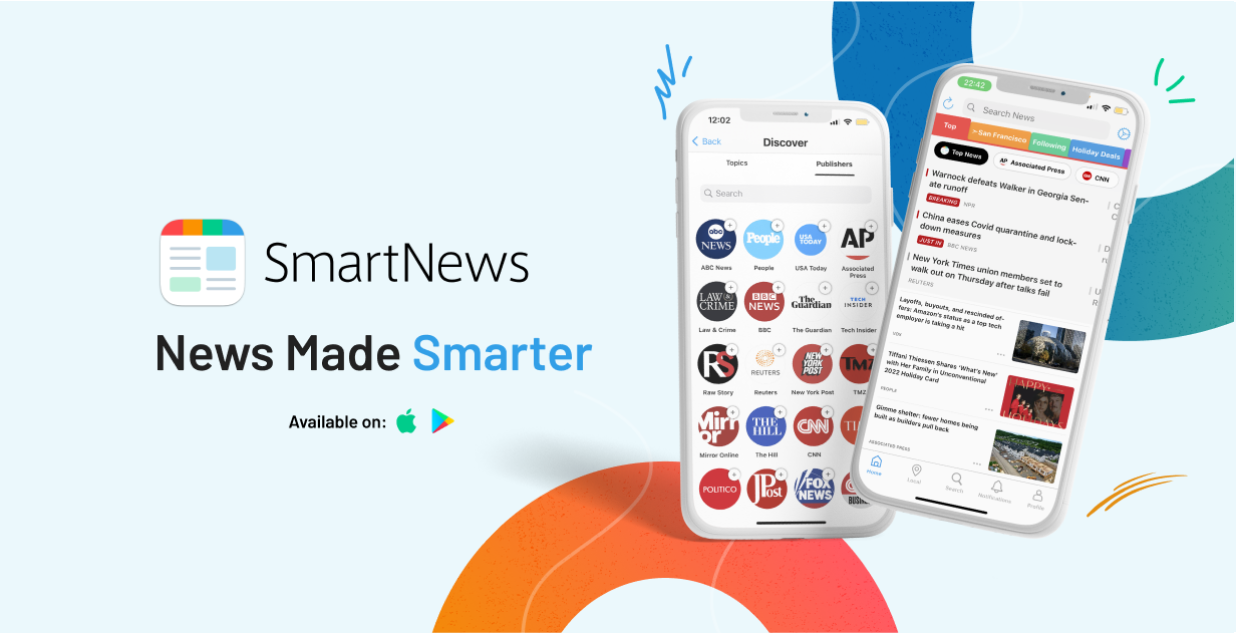
As we look ahead, SmartNews stands at a crossroads. The media landscape in 2025 looks tougher than ever. Competition from Apple News, Google News, Flipboard, and AI-first startups is fierce.
Here’s where SmartNews could evolve-
- Diversified Monetization: Moving beyond ads into subscriptions, bundles, and premium features. Offering ad-lite tiers could improve user retention.
- Global Expansion: SmartNews international expansion apart from Japan & US is slower. Future growth will depend on tailoring content for new markets like India, Southeast Asia, and Europe.
- Enhanced Transparency: Algorithms must become transparent to build long-term trust. Users increasingly want to know: “Why am I seeing this news?”
- Multimedia Integration: Short-form videos, podcasts, and reels are shaping online news consumption patterns. Adding these formats can boost SmartNews user engagement.
- Fighting Fake News: Fact-checking partnerships and AI verification could strengthen credibility.
If SmartNews adapts quickly, its corporate strategy can ensure continued relevance in the digital journalism transformation.
Way Forward: Building a Better News App than SmartNews
If you’re thinking about building the “next SmartNews,” you need to learn from both its competitive advantages and limitations.
Here’s a roadmap that could outperform SmartNews in 2025:-
| Category | What SmartNews Did? | What You Can Do in 2025? |
| Personalization & AI | AI news curation with Milvus | Use LLM-powered summarization → allow formats like memes, bullet points, and podcasts |
| Credibility | Balanced coverage, but limited fact-checking | Add verified-news filters + “Fake News Radar” badges |
| Multimedia | Mostly text + some video ads | Auto-convert articles → short reels, audio news, explainers (linked to TBR website) |
| Engagement | SmartView for retention | Gamify news → quizzes, “Read-to-Earn” rewards, Reddit-style discussions |
| Local Depth | Country-level news channels | Deliver AI-curated hyperlocal news (city/district level) |
| Language Inclusivity | Primarily English/Japanese | Regional languages + AI translation to capture global audiences |
| Monetization | Ads + limited subscriptions | Add ₹1/day ad-lite subscription, bundles (jobs, sports, finance alerts) |
| Transparency | Algorithm not fully explained | Show “Why you’re seeing this news” for ethical AI |
| Virality | Word-of-mouth + PR | One-click Insta/WhatsApp story sharing + influencer collabs |
| Rewards | Engagement-based retention | Coins for reading/sharing → redeem coupons with partners |
In short, the way forward is to compete on trust, personalization, and interactivity, while scaling with localization, gamification, and virality hacks.
FAQ Section
1. What is SmartNews, and how does it work?
SmartNews is a personalized news app that curates headlines from thousands of publishers worldwide using AI-powered news distribution. Its algorithm surfaces important stories and delivers them in a fast, clutter-free format through its SmartView mode, even offline.
2. How does SmartNews make money?
The SmartNews revenue model is primarily ad-based. It earns from native ads, video ads, and in-article placements, plus revenue-sharing and licensing deals with publishers. In Japan, it also offers premium subscriptions.
3. Is SmartNews a good company?
Yes, SmartNews is considered a Japan startup success with a global footprint. It has secured unicorn status and built trust with both users and publishers. However, like any company, it faces challenges such as heavy ad dependence and scaling hurdles.
4. Is SmartNews a free app to use?
Yes, SmartNews is free to download and use. Revenue primarily comes from ads, not user subscriptions (except in Japan, where SmartNews+ is available).
5. What makes SmartNews different from other news apps?
Unlike many aggregators, SmartNews balances algorithmic curation with editorial oversight, offers offline reading with SmartView, and actively partners with publishers to share revenue.
6. Who owns SmartNews?
SmartNews is privately owned by its founders, investors, and employees.
7. Who is behind SmartNews?
It was founded in 2012 by Ken Suzuki (CEO) and Kaisei Hamamoto (COO/CTO) in Tokyo, Japan.
8. How many users does SmartNews have?
As of 2025, SmartNews has tens of millions of monthly active users, with strong bases in Japan and the U.S.
9. Is SmartNews a Japanese company?
Yes, SmartNews originated in Tokyo, Japan, though it later expanded globally, especially into the U.S.
10. How does SmartNews choose the news articles it shows?
Through data-driven curation powered by AI and ML. It analyzes trending topics, publisher content, and user behavior, then ranks stories to surface the most relevant and important ones.
11. Does SmartNews use AI for news curation?
Yes. SmartNews relies heavily on AI-driven journalism, with algorithms enhanced by Milvus to personalize recommendations and ad targeting.
12. How does SmartNews benefit publishers?
Publishers receive traffic, visibility, and ad revenue share when their stories are read on SmartNews. Some also earn licensing fees via SmartView partnerships.
13. What is SmartNews’ business model?
The SmartNews business model combines advertising revenue, licensing deals, and subscription products in select markets.
14. How did SmartNews grow in the US market?
Through a U.S. expansion strategy focused on product-led growth (SmartView), PR campaigns, local news channels, and partnerships with advertisers and publishers.
15. Is SmartNews profitable?
Public reports suggest SmartNews is not consistently profitable, given heavy spending on growth and user acquisition. Its financial model relies on ad markets, which are cyclical.
16. What challenges has SmartNews faced?
Scaling in the U.S., over-reliance on ads, algorithm transparency issues, and occasional app performance complaints.
17. Why did SmartNews fail to load?
This usually happens due to weak internet, device issues, or temporary server overload.
18. Why is SmartNews so slow?
SmartNews is generally fast, but SmartView can slow down if content formatting or device memory is strained.
19. How accurate is the news on SmartNews?
Accuracy depends on the publishers. SmartNews partners with trusted media outlets but still faces questions about bias and curation transparency.
20. Does SmartNews show fake news?
SmartNews works to minimize misinformation by curating from credible sources, but no aggregator is 100% immune to questionable content.
21. What type of revenue streams does SmartNews use?
Ads (native, video, in-article), licensing fees, publisher partnerships, subscription bundles (Japan), and advertiser services.
22. How is SmartNews expanding globally?
By targeting the U.S. first, then considering new markets with localized strategies. Growth outside Japan and the U.S. has been slower but ongoing.
23. What can other startups learn from SmartNews’ growth strategy?
- Focus on user pain points (slow news, echo chambers).
- Partner with publishers for sustainability.
- Use data and AI to drive personalization.
- Diversify revenue early.
24. How does SmartNews impact the future of digital journalism?
It shows that tech-driven news platforms can reshape distribution, monetization, and reader habits. However, it also raises questions about algorithmic influence on journalism.
25. Who funds SmartNews?
SmartNews has raised funding from investors like Goldman Sachs, Japan Post Capital, and ACA Investments, among others.
26. What is better than SmartNews?
It depends on your needs. Apple News and Google News dominate ecosystems, while emerging apps focus on AI summaries, hyperlocal news, or multimedia formats.
27. Is a case study a real story?
Yes. A case study is a detailed analysis of a real-world company, situation, or strategy.
28. Who is the father of the case study?
The method was popularized by Harvard Business School, though the concept dates back to 19th-century legal education.
29. What are the disadvantages of a case study?
They can be time-consuming, sometimes biased, and may not always be generalizable to every situation.
30. How to answer a case study question?
By structuring your answer into problem, strategy, implementation, and results, supported by data.
31. क्या स्मार्टन्यूज एक अच्छी कंपनी है?
हाँ, स्मार्टन्यूज एक सफल जापानी कंपनी है जिसने दुनिया भर में लाखों यूज़र्स को जोड़ा है।
32. स्मार्टन्यूज के पीछे कौन है?
स्मार्टन्यूज के संस्थापक केन सुजुकी और कैसेई हमामोटो हैं।
33. स्मार्टन्यूज पैसे कैसे कमाता है?
स्मार्टन्यूज मुख्य रूप से विज्ञापन (ads) और प्रकाशकों से लाइसेंसिंग डील्स से पैसा कमाता है।
Note: We have also coverd the following case studies. Go through them for detailed information-
- Cafe Coffee Day Case Study: How it became successful?
- Justdial Case Study: Story behind India’s 1st Local Engine
- Byju’s Case Study: How it went from 0 to Billions to 0
- Maruti Suzuki Case Study
- Dmart Case Study: The Story of India’s leading retail chain
- BluSmart Shut Down: Shocking Collapse of India’s EV Taxi Pioneer
Final Words
The SmartNews Case Study is more than a business analysis—it’s a story of vision, innovation, and global ambition. From its Japan startup success to its U.S. market growth, SmartNews has proven how digital innovation in media can reshape how millions consume information daily.
At the same time, the case also warns us: don’t over-rely on ads, and don’t underestimate the complexity of scaling internationally.
For you as a reader, whether you’re an entrepreneur, investor, or media enthusiast, the biggest lesson is this: innovation is not just about technology, it’s about solving human problems in simple, engaging ways.
And that’s exactly what SmartNews tried to do—and what the next generation of news apps will need to improve on!
