
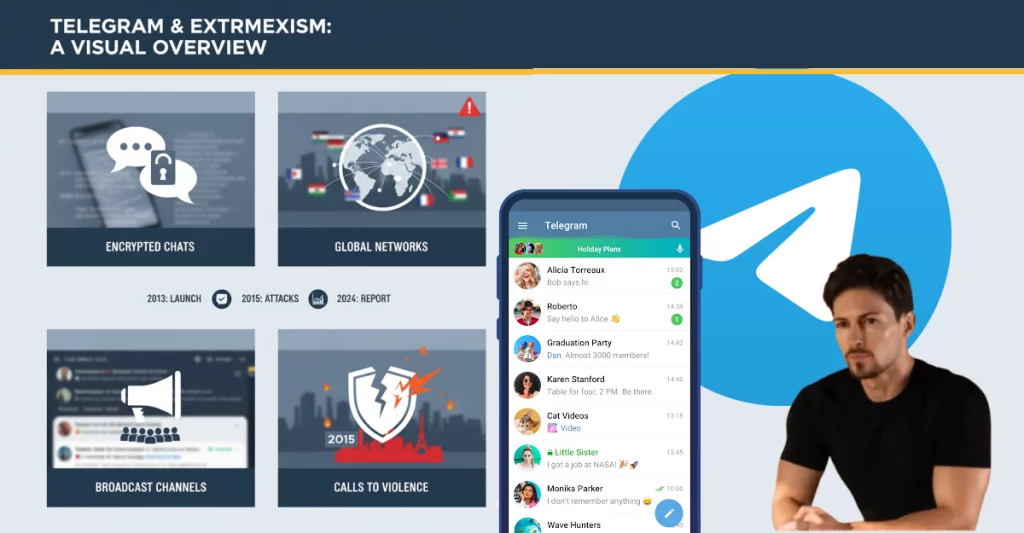
If you’ve ever used Telegram, you probably see it as just another messaging app, which is quick, clean, and private. But behind the scenes, this same privacy has turned into a double-edged sword. It has helped freedom movements… and given extremists the shadows they need. This is where Telegram’s Role in extremism becomes more visible than ever.
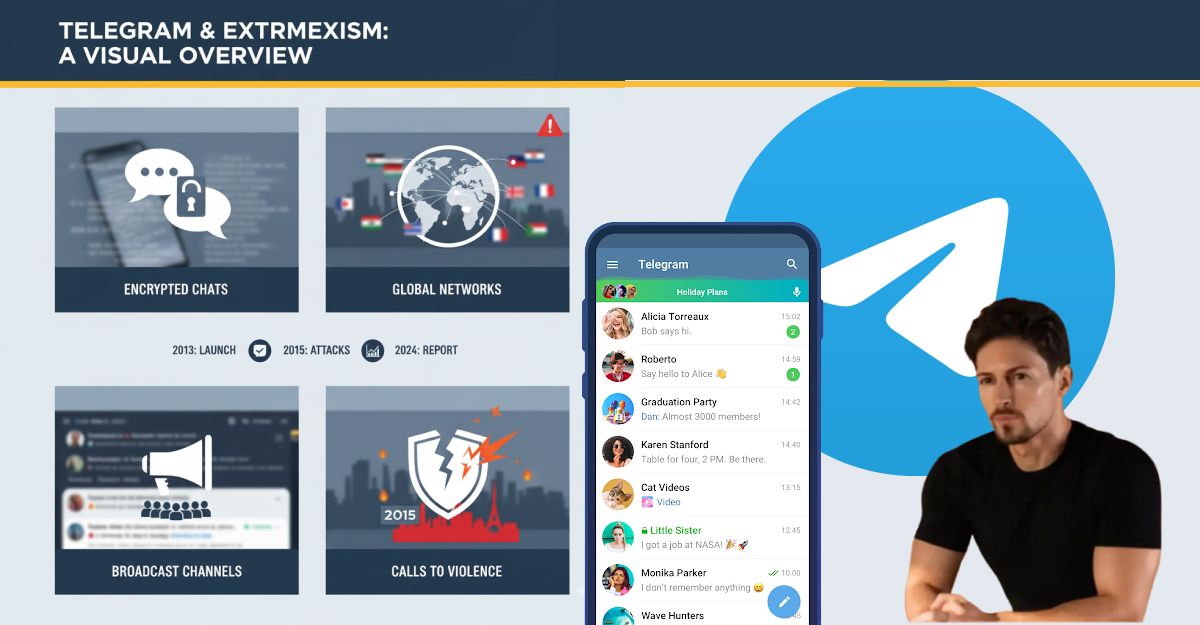
The Red Fort car blast in Delhi, which killed 13 people, forced the world to once again look closely at the platform. Investigators say that Dr. Umar Mohammad, who is suspected to be the suicide bomber, and his associates used encrypted Telegram groups to plan the attack, a chilling reminder of Telegram’s role in extremism. His links reportedly stretched all the way to Pakistan-based Jaish-e-Mohammed (JeM).
So how did an app built to protect free speech become a hotspot for extremists? Let’s walk through it together, step by step, while understanding Telegram’s role in extremism in this growing problem.
Quick Facts at a Glance
Here’s a simple table to help you skim the important data mentioned throughout this write-up that highlights Telegram’s role in extremism-
| Event | Details |
| Telegram Founders | Pavel & Nikolai Durov |
| Launch Year | 2013 |
| Famous For | Encryption, privacy, large channels, minimal moderation |
| Global Terror Groups using Telegram | ISIS, al-Qaeda, Hamas, Hezbollah, JeM |
| 2015 TechCrunch Quote (Durov) | “The right for privacy is more important… than our fear of bad things like terrorism.” |
| Paris Attacks (2015) | 130 killed, 350 injured; Telegram & WhatsApp partly used |
| New York Times Investigation | 3.2 million messages analyzed across 16,000 channels |
| White Supremacist Channels | ~1,500 channels with nearly 1 million global users |
| Illegal Activity on Telegram | Firearms sold on 24+ channels; drugs sold in 20+ countries |
| Telegram Employee Count | About 60 total; half are engineers |
| Data Access | Telegram may disclose IP & number only with a court order — never done so yet |
| CEP Report (2024) | ISIS activity is now “minimal and unstable,” but still present |
| Red Fort Blast | 13 people killed; Dr. Umar Mohammad linked to JeM; attack planned on Telegram |
The App With a Split Personality
Telegram arrived in 2013, built by the Durov brothers, and it instantly stood out. It wasn’t cluttered like WhatsApp. It wasn’t tied to a company like Meta. And most importantly, it offered privacy that felt like a haven. This is the very foundation of Telegram’s Role in extremism today.
People living under oppressive governments used it to speak freely. Journalists relied on it to protect sources. Even during major global events like the Ukraine war or the Hong Kong protests, Telegram became a lifeline.
But as the saying goes, “Where there’s light, there’s also a shadow.”
The same privacy tools that protect ordinary people also shield extremists. deepening Telegram’s role in extremism.
How Telegram Turned Into a Magnet for Extremists?
Terror groups quickly realized something: Telegram was perfect for them. This marks one of the clearest examples of Telegram’s role in extremism.
It allowed:-
- Encrypted chats
- Huge channels with thousands of followers
- Easy sharing of videos, PDFs, and propaganda
- Minimal moderation
Over time, groups like ISIS, al-Qaeda, Hamas, and Hezbollah started using it for:
- Recruitment
- Fundraising
- Propaganda
- Planning attacks
During a 2015 TechCrunch conference, Pavel Durov was questioned about this rising misuse. His reply shocked many:
“The right to privacy is more important than our fear of bad things happening, like terrorism.”
Two months later, the Paris attacks happened.
130 people were killed and more than 350 were injured.
French investigators later found that the attackers used Telegram and WhatsApp to coordinate. That moment changed the global conversation around encrypted apps.
Did Telegram Crack Down? Yes… But Not Enough
Under global pressure after the Paris attacks, Telegram did act. It blocked many ISIS channels, bots, and public groups.
But extremists didn’t disappear — they simply went underground, continuing Telegram’s role in extremism.
A 2024 Counter Extremism Project (CEP) report said ISIS content on Telegram is now “minimal and unstable,” but it never vanished.
Words may have changed, but the problem still existed.
Digging Deep Into Telegram’s Dark Corners
When The New York Times decided to dig into Telegram, the findings were jaw-dropping, and they painted a clear picture of Telegram’s role in extremism.
Investigators looked at:-
- 3.2 million messages
- Across 16,000 channels
What they found included:
- 1,500+ white supremacist channels with nearly one million users
- Over two dozen channels are selling weapons
- 22 channels offering drugs like MDMA, cocaine, and heroin
- Illegal networks delivering drugs to 20+ countries
- Fraud networks selling forged documents
It painted a picture of an app that had become an online black market.
Why Telegram Can’t (or Won’t) Monitor Everything?
Telegram has a tiny team. Around 60 employees, half of them engineers. That’s shockingly small for a platform with hundreds of millions of users, widening Telegram’s role in extremism.
According to Axel Neff, a member of Telegram’s early team:-
If Telegram gets a valid court order that confirms you’re a terror suspect, they may share your IP or phone number. This has never happened.
That statement alone explains why criminals feel safe on the app.
In a 2024 Fox News interview, Pavel Durov added that Telegram rejects government data requests that clash with its values. He even confirmed that Telegram refused to help with the investigation into the January 6 Capitol riots.
Telegram’s Defence Argument: “We Store Very Little Data”
When questioned, Telegram insists it is not a playground for criminals. A spokesperson told Frontline:
- Telegram stores very limited user information
- It can’t access most of your data
- Illegal content can be reported and removed
- The app follows India’s IT Act, 2021
Telegram also said it works with groups like the Etidal Center to fight extremist content and removes harmful material from public channels daily.
But critics argue that Telegram’s strong love for privacy has accidentally opened the door to:
- Terrorism
- Drug trafficking
- Child exploitation
- Misinformation
- Hate groups
Freedom, when unchecked, becomes a hiding place.
The Red Fort Blast: A Chilling Example
Investigators believe Dr. Umar Mohammad and his team relied heavily on Telegram. They:
- Used encrypted groups
- Spoke with handlers abroad
- Coordinated the attack digitally
The fact that professionals like doctors were involved surprised many experts. It marked a new trend in terror operations supported by groups like Jaish-e-Mohammed.
One Indian security official put it bluntly:
“Telegram is a double-edged sword — freedom for some, a shield for others.”
Why Extremists Love Telegram So Much?
Telegram became a hub for extremists because:-
It allows secret communication
End-to-end encryption keeps conversations private.
Minimal moderation
With a small team and no automated scanning, extremist content slips through easily.
Big channels and easy sharing
Perfect for spreading propaganda.
Almost no cooperation with law enforcement
This makes extremists feel untouchable.
User anonymity
No real-name requirement, no mandatory ID checks.
When you add all this up, the result is a digital space where illegal networks can grow quietly. All these reasons feed into Telegram’s role in extremism.
The Big Question: Can Telegram Fix This?
Telegram says it’s doing its best while still honoring its core values, privacy and free speech. But experts argue that “doing your best” isn’t enough when millions of people depend on your platform.
- Governments want stricter monitoring.
- Privacy advocates warn against surveillance.
- Telegram stays in the middle, refusing to bend.
And that’s the dilemma of our digital world.
Privacy vs Security: A Tug of War
Telegram’s story reflects a universal question:
How do you protect privacy… without putting society at risk?
On one side:
- Protesters use Telegram to stay safe
- Journalists protect sources
- Citizens escape censorship
On the other:
- Terrorists coordinate attacks
- Traffickers sell drugs and weapons
- Hate groups recruit globally
Finding the balance is like walking a tightrope — one wrong step and things fall apart.
Final Thoughts
Telegram isn’t just an app. It’s a symbol of the battle between freedom and safety in our digital age.
For millions of everyday users, it’s a helpful tool.
But for extremists, it’s a hiding place.
The challenge ahead is clear: How do we keep the good while cutting out the bad?
Until that question is answered, Telegram will continue to be — in the words of one investigator — “a platform for freedom, and a shield for those who use that freedom to destroy it.”
