
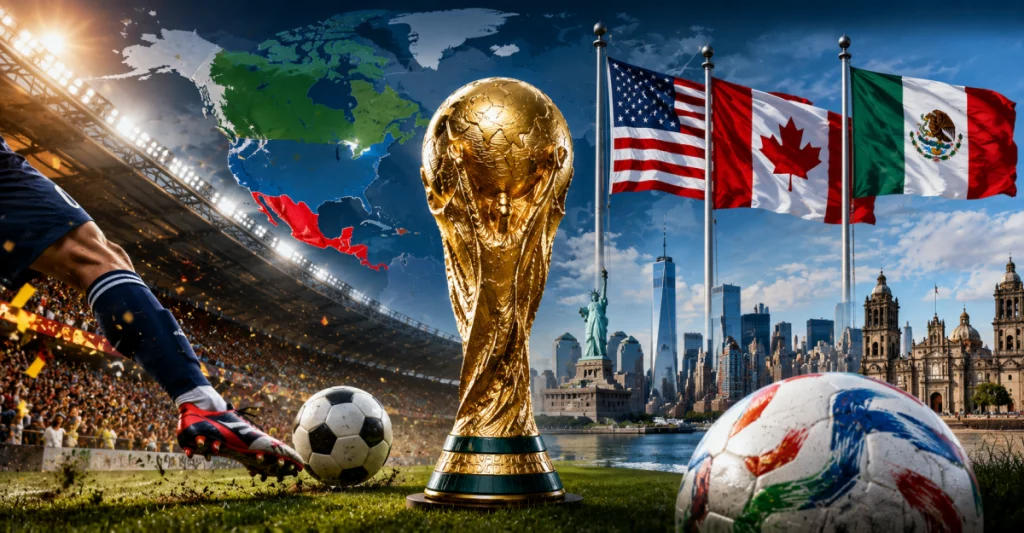
Every four years, the FIFA World Cup brings the world to a standstill. Families gather around television screens, stadiums erupt with cheers, and billions of fans follow every goal, upset, and dramatic penalty shootout. It is far more than just a football tournament. It is one of the largest entertainment events on Earth and a commercial powerhouse that attracts broadcasters, global brands, airlines, hotels, and governments alike.
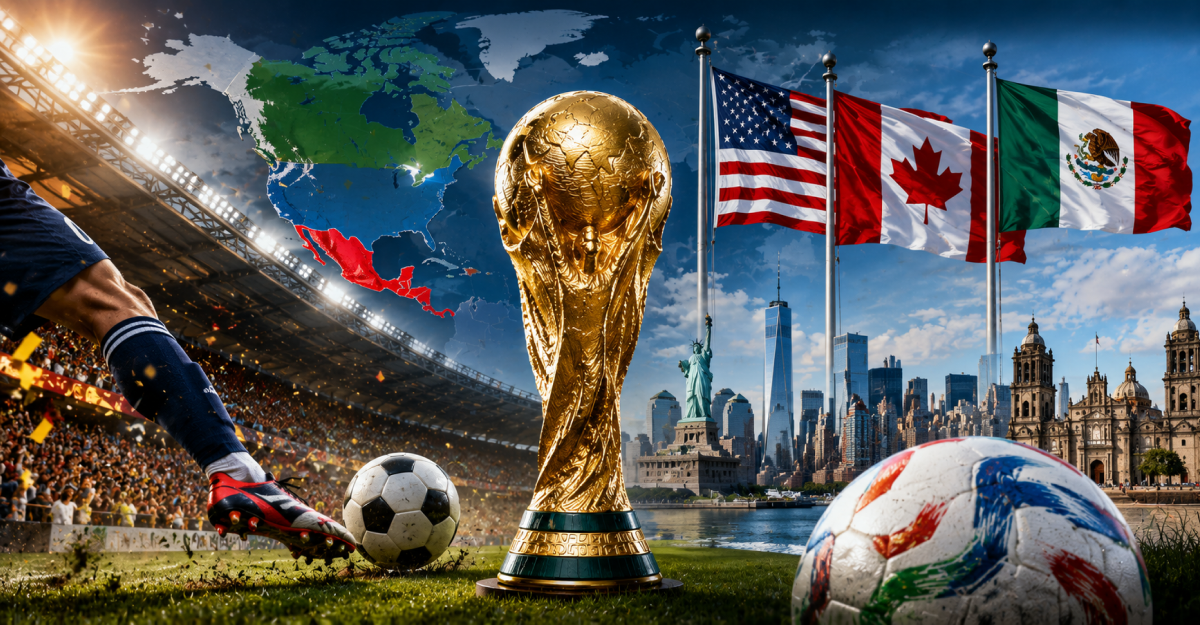
But have you ever wondered who earns the most money from the tournament? Is it the host countries that welcome millions of visitors? Is it local businesses that see a surge in customers? Or is it FIFA, the organization that runs the competition?
The answer surprises many people!
While host nations often spend billions of dollars building stadiums, upgrading transport systems, and strengthening security, FIFA usually walks away with the largest share of the profits. Through broadcasting rights, sponsorship deals, ticket sales, licensing, and hospitality packages, the FIFA World Cup business has become one of the most profitable sporting business models in history.
Understanding how this business works is important because hosting the tournament is not always the financial victory it appears to be. Some countries have enjoyed long-term benefits, while others have struggled to recover the money they invested. The 2026 edition, which will be jointly hosted by the United States, Canada, and Mexico, has once again sparked debate about who really benefits from football’s biggest celebration.
Why the FIFA World Cup Is More Than Just Football?
For most fans, the FIFA World Cup is about unforgettable matches and legendary players. Behind the scenes, however, it is also a massive global business that connects sports, media, tourism, advertising, and infrastructure.
The FIFA World Cup 2026 will be the biggest edition in the tournament’s history. Instead of 32 teams, it will feature 48 national teams competing across 104 matches. The tournament will be held in three countries: the United States, Canada, and Mexico. Matches will be played in 16 host cities over nearly six weeks, making it the largest World Cup ever organized.
Millions of fans are expected to travel to North America, while billions more will watch from home through television and digital streaming platforms. This enormous audience explains why companies are willing to spend hundreds of millions of dollars to become official FIFA partners. For global brands, appearing during the World Cup is like advertising during the world’s biggest festival, where billions of potential customers are watching.
| Feature | Details |
| Host countries | United States, Canada, and Mexico |
| Participating teams | 48 |
| Total matches | 104 |
| Host stadiums | 16 |
| Tournament duration | Approximately six weeks |
| Estimated global audience | More than 5 billion viewers across television and digital platforms |
The expanded tournament also creates more opportunities for broadcasters, sponsors, hotels, airlines, restaurants, and local tourism businesses. More matches mean more viewers, more advertisements, and more spending throughout the tournament.
However, bigger tournaments also require greater planning, stronger infrastructure, and higher operational costs, which are largely borne by the host nations rather than FIFA itself.
How Does FIFA Make Money?
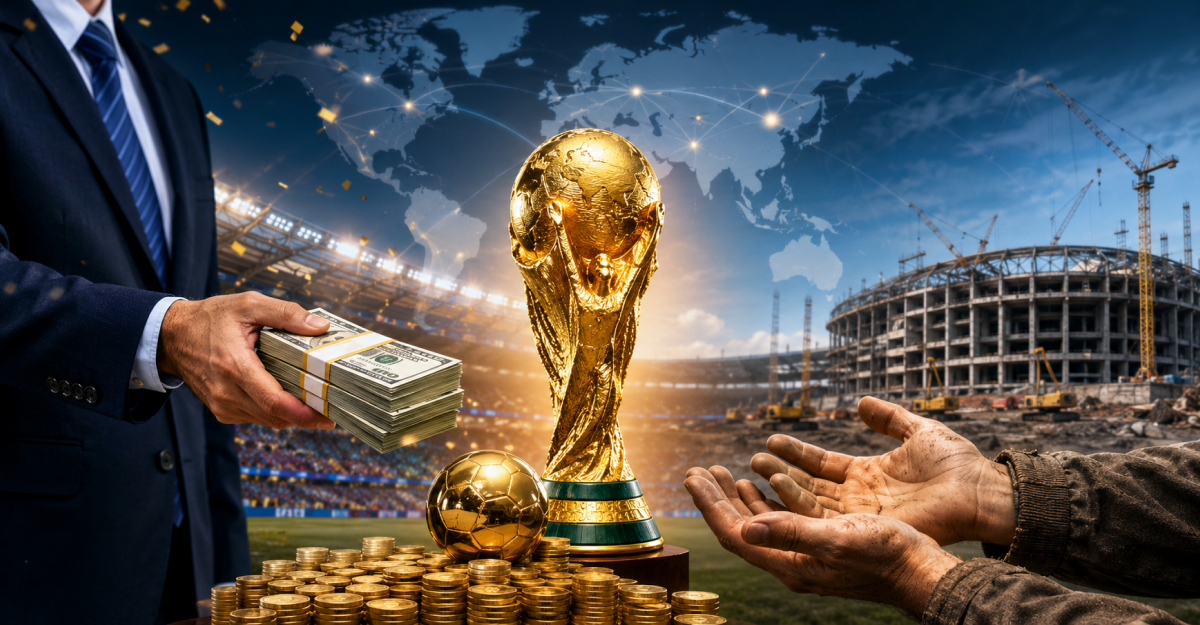
Many people assume FIFA earns most of its money by selling tickets. In reality, ticket sales are only one piece of a much larger business model.
The biggest source of income comes from broadcasting rights.
Think about your favorite television channel or streaming platform. Millions of football fans want to watch every World Cup match live. To attract those viewers, broadcasters compete for the right to show the tournament. They pay FIFA enormous sums because the World Cup guarantees huge audiences, which allows them to sell expensive advertising slots to brands.
It works much like buying exclusive rights to screen a blockbuster movie before anyone else. The broadcaster pays a premium because it expects to recover the cost through advertising and subscriptions.
Sponsorship is another major revenue stream. Global companies such as Coca-Cola, Adidas, Visa, Hyundai, Lenovo, and Qatar Airways pay substantial amounts to become official FIFA partners. In return, they receive worldwide marketing rights, exclusive branding opportunities, and access to one of the largest audiences in sports.
Licensing is another important business. FIFA owns trademarks, logos, mascots, and official tournament branding. Companies that want to manufacture official footballs, clothing, toys, video games, or souvenirs must obtain permission from FIFA, usually by paying licensing fees.
Hospitality packages generate additional income by offering premium experiences. These packages often include luxury seating, gourmet dining, private lounges, and exclusive networking opportunities for corporate clients and high-paying fans.
Then comes ticket sales. With stadiums hosting tens of thousands of spectators for every match, ticket revenue remains significant. FIFA expects ticket sales for the expanded 2026 tournament to contribute billions of dollars as attendance reaches record levels.
Official merchandise also adds to FIFA’s earnings. Jerseys, scarves, footballs, caps, collectibles, and other licensed products are sold worldwide before, during, and after the tournament.
| Revenue Source | How It Works | Why It Generates So Much Money |
| Broadcasting rights | TV networks and streaming platforms pay for exclusive rights to show matches | Billions of viewers create enormous advertising value |
| Sponsorships | Global brands pay to become official FIFA partners | Worldwide brand visibility and marketing opportunities |
| Ticket sales | Fans purchase match tickets across all host cities | Large stadium capacities and strong global demand |
| Licensing | Companies pay to produce official FIFA products | FIFA owns valuable trademarks and tournament branding |
| Hospitality | Premium match-day experiences for corporate guests and VIPs | High-priced packages generate strong margins |
| Merchandise | Sale of official jerseys, footballs, apparel, and souvenirs | Massive worldwide fan demand |
For the 2023 to 2026 commercial cycle, FIFA expects to generate around $9 billion in total revenue, making it the most financially successful World Cup cycle in the organization’s history. Broadcasting rights are expected to remain the largest contributor, while ticket sales for the expanded tournament are projected to exceed $3 billion.
This explains why the FIFA World Cup business remains so profitable. FIFA does not need to manufacture products or operate hundreds of retail stores. Instead, it earns money by owning valuable rights that broadcasters, sponsors, and businesses are willing to pay billions to access.
Note: We have also covered- The 11 Most Valuable Sports Teams Worldwide. If you’re interested in sports, this article will be highly recommended. Go through the article for detailed information.
Why Host Countries Spend So Much Money?
Hosting the FIFA World Cup is a matter of national pride, but it also comes with a hefty price tag. Winning the bid is only the beginning. Host governments must ensure that millions of visitors, players, officials, and media personnel can travel safely and comfortably throughout the tournament.
The biggest expense is often stadium construction or renovation. While some countries already have modern venues, others build entirely new stadiums that cost billions of dollars. Beyond football grounds, governments invest in roads, airports, railways, hotels, public transport, telecommunications, security systems, fan zones, and emergency services.
The 2014 FIFA World Cup in Brazil reportedly cost more than $15 billion, with significant spending on stadiums and transport infrastructure. Russia invested an estimated $11 billion for the 2018 tournament, while Qatar spent well over $200 billion ahead of the 2022 World Cup, although much of that investment supported the country’s broader long-term development plans rather than the tournament alone.
The United States presents a very different example. Most stadiums selected for the 2026 FIFA World Cup already exist because they regularly host NFL games and other major sporting events. This means the United States is spending far less on new stadium construction than previous hosts. Canada and Mexico are also relying largely on existing venues with necessary upgrades instead of building entirely new facilities.
| Country | Tournament | Estimated Spending | Major Investments |
| Brazil | 2014 | Over $15 billion | Stadiums, airports, public transport |
| Russia | 2018 | Around $11 billion | Stadiums, roads, railways |
| Qatar | 2022 | More than $200 billion* | Stadiums, metro, airports, urban development |
| United States, Canada & Mexico | 2026 | Significantly lower stadium construction costs | Stadium upgrades, operations, security, transport improvements |
*Much of Qatar’s spending formed part of wider national development projects beyond the World Cup.
Does the World Cup Really Boost the Economy?
FIFA believes the tournament creates substantial economic value. According to its projections, the 2026 FIFA World Cup could contribute around $41 billion to global GDP and support hundreds of thousands of jobs.
But what exactly is GDP?
GDP, or Gross Domestic Product, is simply the total value of all goods and services produced in a country. Imagine adding together everything a country produces in a year, from cars and smartphones to restaurant meals and haircuts. That total is GDP.
When tourists visit during the World Cup, they spend money on hotels, food, shopping, transport, and entertainment. Businesses earn more revenue, governments collect additional taxes, and temporary jobs are created. On paper, this looks like a major economic boost.
However, many economists argue that the picture is more complicated.
Sports economist Victor Matheson has spent years studying major sporting events. His research suggests that many economic forecasts before tournaments tend to overestimate the long-term benefits.
One reason is displaced spending.
Imagine a family planning to spend ₹20,000 on a holiday within their own country. Instead of visiting a beach town, they decide to attend World Cup matches. Their spending has shifted location, but it has not created entirely new economic activity for the country.
Another concept is tourist substitution.
Some regular tourists avoid host cities because they expect higher prices, crowded hotels, and traffic. A family that usually visits New York or Mexico City during the summer may postpone its trip because of the World Cup. As a result, some tourism revenue simply replaces existing visitors rather than adding new ones.
Economists also discuss opportunity cost.
Think of a government with $5 billion available to invest. It could build stadiums, or it could spend that money on schools, hospitals, public transport, or renewable energy. Opportunity cost simply means considering what alternative benefits might have been achieved with the same resources.
Financial institutions such as Goldman Sachs and Saxo Bank have also noted that while major sporting events create excitement and short-term business activity, lasting economic gains depend heavily on how effectively countries use the infrastructure after the tournament ends.
Why Economists Disagree With FIFA?
The debate over the FIFA World Cup economy continues because both sides have valid arguments.
FIFA focuses on global tourism, international exposure, job creation, business opportunities, and increased consumer spending.
Independent economists accept that these benefits exist but question whether they are large enough to justify the enormous public investment.
| Issue | FIFA’s View | Economists’ View |
| Tourism | Millions of visitors increase spending | Some regular tourists stay away |
| Employment | Large number of temporary jobs created | Many jobs disappear after the tournament |
| Economic Growth | Higher GDP and tax revenue | Benefits are often smaller than projected |
| Infrastructure | Long-term improvements for host cities | Some stadiums become underused after the event |
| Revenue | Strong commercial success | Much commercial revenue goes to FIFA and global companies |
The truth probably lies somewhere in the middle. Countries with strong tourism industries and existing infrastructure often benefit more than those starting from scratch.
Why FIFA Is the Biggest Winner?
This is where the FIFA World Cup business becomes especially interesting.
Unlike host governments, FIFA does not pay for building highways, airports, or metro systems. Those responsibilities usually belong to national or local authorities.
Instead, FIFA controls the tournament’s most valuable commercial assets.
It owns the broadcasting rights.
It negotiates sponsorship agreements.
It licenses official products.
It manages hospitality packages.
It oversees ticket sales.
These rights generate billions of dollars regardless of whether the host nation ultimately makes a financial profit.
Sports economist Richard Sheehan has argued that FIFA’s commercial structure allows it to capture much of the tournament’s direct financial value while governments shoulder much of the infrastructure risk.
Victor Matheson has similarly observed that host countries often receive significant publicity and civic pride, but the largest guaranteed financial returns usually flow to FIFA and its commercial partners.
This arrangement helps explain why FIFA consistently reports strong financial results after World Cup cycles, while host governments continue debating whether their investments delivered sufficient long-term returns.
Why Ticket Prices Became So Expensive?
Many fans have noticed that attending the World Cup has become increasingly expensive.
One reason is dynamic pricing.
Airlines and hotels use this pricing method every day. When demand is low, prices remain relatively affordable. As demand rises, prices increase automatically.
World Cup tickets now work in a similar way.
When millions of supporters compete for limited seats, prices naturally climb. Premium matches such as the opening game, semifinals, and final attract particularly strong demand, pushing prices even higher.
The resale market also contributes to rising costs, as some fans purchase tickets early and later sell them at much higher prices.
FIFA President Gianni Infantino has defended modern pricing strategies by arguing that strong demand reflects the tournament’s enormous global popularity and helps maximize revenue that supports football development worldwide.
For supporters, however, attending the tournament has become a much bigger financial commitment than it was decades ago.
Who Really Benefits From Hosting the World Cup?
The answer depends on whom you ask.
FIFA is undoubtedly one of the biggest beneficiaries because of its diversified commercial income.
Global sponsors gain unmatched worldwide exposure.
Broadcasters attract huge audiences and advertising revenue.
Hotels, restaurants, airlines, retailers, taxi operators, and tourism businesses often enjoy a sharp increase in customers during the tournament.
At the same time, governments, taxpayers, local authorities, and infrastructure agencies usually bear the largest financial responsibilities.
Countries with existing stadiums, efficient transport systems, and mature tourism industries generally face lower risks than countries that need to build everything from the ground up.
Lessons for Future Host Nations
The FIFA World Cup remains one of the greatest celebrations in global sport, but successful hosting requires careful planning.
Governments should evaluate whether existing stadiums can be upgraded instead of constructing new ones. Infrastructure projects should serve local communities long after the final whistle rather than becoming expensive symbols of a single tournament.
A realistic cost-benefit analysis is equally important. Policymakers should avoid assuming that every dollar spent will automatically generate higher economic growth. Tourism forecasts should be conservative, and investments should support long-term development goals instead of short-term excitement.
The expanded 2026 tournament offers a useful model because the United States, Canada, and Mexico are relying heavily on existing infrastructure. That approach reduces financial risk while still allowing the countries to benefit from increased tourism and global attention.
Wrapping Up FIFA World Cup Business
The FIFA World Cup business is much bigger than ninety minutes of football. It is one of the world’s largest commercial enterprises, generating billions through broadcasting rights, sponsorships, licensing, hospitality, merchandise, and ticket sales.
For FIFA, this business model has proved remarkably successful because the organization controls the tournament’s most valuable commercial rights while host governments shoulder much of the infrastructure investment.
That does not mean hosting the World Cup is a bad decision. Countries can gain international visibility, tourism, improved infrastructure, and lasting civic pride when investments are planned wisely. However, those benefits are strongest when host nations already have modern stadiums, efficient transport networks, and a clear long-term strategy.
As the FIFA World Cup 2026 approaches, the debate over costs and rewards will continue. One thing, however, remains clear. While players battle to lift football’s most famous trophy on the pitch, the biggest prize in the FIFA World Cup business may still be the billions of dollars earned behind the scenes.
