
For more than a decade, OnePlus has earned a loyal following in India, Europe, and the US by offering flagship-level performance at prices that often undercut rivals. From the original “flagship killer” philosophy to premium smartphones like the OnePlus 15 and affordable OnePlus Nord models, the brand has built a strong reputation among Android smartphone buyers.
That is why recent reports about a possible OnePlus exit from international markets have attracted widespread attention.
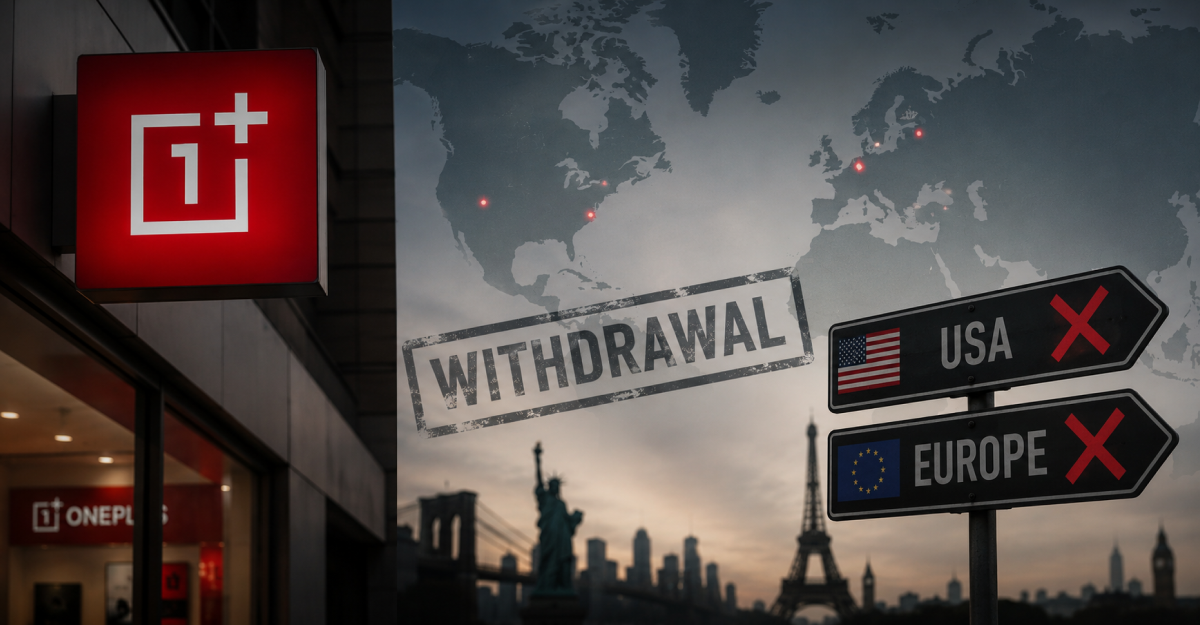
According to multiple reports, the company is considering a phased withdrawal from markets outside China, with the US and Europe reportedly being affected first, followed by India by 2027.
However, it is important to note that these claims are based on reports and restructuring discussions, not a confirmed global shutdown. Meanwhile, OnePlus has publicly stated that business in India will continue as usual, making the situation more complex.
If such a restructuring eventually moves forward, it could reshape the global smartphone industry and change how consumers view Chinese smartphone brands. It could also affect future product launches, software development, and competition against companies like Apple, Samsung, Google Pixel, Motorola, and Xiaomi.
What Does the Report Say About OnePlus Exit?
Recent reports suggest that parent company Oppo is restructuring its global smartphone business. Under the reported plan, OnePlus would gradually reduce or stop launching new products in several international markets while continuing to focus on China.
The reported strategy indicates that the US and Europe would be the first regions affected. India, one of OnePlus’s strongest overseas markets, has been linked to a later timeline extending to 2027. However, OnePlus has denied reports that it is leaving India and has reassured customers that operations, customer support, and after-sales services remain unchanged.
Reports also suggest Realme could undergo strategic changes within the broader Oppo ecosystem. While OnePlus may reduce its international footprint, Realme is reportedly expected to concentrate more on overseas expansion as Oppo reorganises its portfolio. None of these longer-term restructuring plans have been fully detailed by Oppo through an official announcement.
Reported OnePlus Exit Timeline
| Region | Reported Timeline | Current Status |
| US | Reported to begin first | OnePlus has announced an exit from new product launches. |
| Europe | Reported alongside US | Similar reported restructuring. |
| India | Reportedly by 2027 | OnePlus says business continues as usual. |
| China | No reported exit | Expected to remain the company’s primary market. |
Although reports point to a major strategic shift, they should not be interpreted as proof that OnePlus is shutting down globally. Companies often revise restructuring plans before they are fully implemented.
Why Is OnePlus Reportedly Leaving International Markets?
While OnePlus has not officially explained the reasons behind the reported international restructuring, industry analysts have highlighted several factors that may have contributed.
Weak smartphone sales
The global smartphone market has slowed compared to the rapid growth seen several years ago. Consumers are upgrading their phones less frequently because modern devices already offer strong performance for many years.
Increasing competition
When OnePlus launched, it stood out by offering premium specifications at aggressive prices. Today, buyers have many more choices. Samsung, Apple, Google Pixel, Motorola, Xiaomi, and several Chinese smartphone brands all compete aggressively across different price segments.
Financial pressures
Operating in multiple regions requires significant spending on marketing, retail partnerships, software development, customer support, and regulatory compliance. Companies sometimes simplify operations to reduce costs and improve profitability.
Industry slowdown
According to IDC, worldwide smartphone shipments have experienced slower growth in recent years, making expansion more challenging for many brands. In such an environment, companies often focus on their strongest markets rather than maintaining a presence everywhere.
Parent company restructuring
Reports indicate that Oppo is reviewing how its various smartphone brands operate internationally. OnePlus and Realme may receive different strategic roles under this restructuring, although Oppo has not publicly confirmed every reported detail.
Geopolitical tensions
Growing regulatory scrutiny, trade restrictions, and changing political relationships have made it more difficult for some Chinese consumer electronics companies to operate smoothly in certain overseas markets.
Legal and regulatory challenges
Different countries have introduced stricter rules covering data privacy, consumer protection, intellectual property, and product certifications. Meeting these requirements increases operating costs and complexity.
Market saturation
Most developed smartphone markets are now highly mature. Since many consumers already own capable Android smartphones, winning new customers has become increasingly difficult, especially in premium categories where brand loyalty is strong.
These factors do not necessarily mean that OnePlus is permanently leaving every international market. Instead, they help explain why reports about restructuring have gained credibility within the technology industry.
Why Is India Different?

India is a crucial market for OnePlus. Unlike the US and Europe, where OnePlus has faced tougher competition and regulatory pressures, India has remained one of the brand’s strongest overseas markets.
OnePlus entered India early and built a loyal customer base through online flash sales, community engagement, and premium Android smartphones that offered flagship-level features at competitive prices. Over time, the company expanded beyond online sales into offline retail stores and partnerships with major electronics chains.
This strong brand recognition is one reason why reports have linked India to a later exit timeline, reportedly extending to 2027. India’s smartphone market is still growing, and demand for premium devices continues to rise, especially in urban areas.
For OnePlus, India has also been important because it helped the brand move from a niche enthusiast brand to a mainstream premium smartphone player. Models in the OnePlus Nord series have further strengthened its presence in the mid-range segment.
However, OnePlus has publicly stated that business in India continues as usual. That means the reported timeline should be treated as speculation unless the company or parent company Oppo announces a confirmed change in strategy.
OnePlus Journey From Flagship Killer to Premium Brand
OnePlus began with a simple idea: offer high-end smartphone specifications at prices lower than traditional flagship phones. Early models gained popularity among Android enthusiasts because they combined strong processors, fast performance, and a clean OxygenOS experience.
The company also built a strong community around its products. Invite-only launches, online forums, and direct engagement with fans helped OnePlus create a loyal following in India, Europe, and the US.
Over the years, however, the smartphone market changed. Competitors such as Samsung, Apple, Xiaomi, Google Pixel, and Motorola improved their offerings across both premium and mid-range categories. At the same time, OnePlus gradually moved toward higher-priced flagship devices, including the OnePlus 15 series.
This shift toward premium pricing brought OnePlus closer to established premium brands, but it also made competition more intense. Consumers now compare OnePlus phones not only with affordable Android smartphones, but also with Samsung Galaxy devices, Apple iPhones, and Google Pixel phones.
The OnePlus Nord lineup has helped the brand maintain a presence in the more affordable segment, but the company’s identity has clearly evolved from “flagship killer” to a broader premium smartphone brand.
Challenges Facing the Smartphone Industry
The reported OnePlus exit discussions should also be understood within the context of wider smartphone industry challenges. Many smartphone brands, not just OnePlus, have faced pressure from slowing demand, rising costs, and intense competition.
Factors Affecting Smartphone Brands
| Challenge | Impact on Companies |
| Memory chip shortages | Can increase production costs and delay device launches |
| Rising manufacturing costs | Reduces profit margins and pushes prices higher |
| Slower consumer demand | Fewer smartphone upgrades mean slower sales growth |
| Premium market competition | Pressure from Apple, Samsung, and Google Pixel makes it harder to attract high-value customers |
| Geopolitical uncertainty | Regulatory and trade risks |
| Supply chain disruptions | Difficulty maintaining inventory and production schedules |
Memory chip shortages and supply chain disruptions have affected smartphone production globally. Rising manufacturing costs have also made it harder for brands to maintain aggressive pricing while preserving profitability.
Slower consumer demand has been another major challenge. Many users are holding onto their smartphones for longer periods because modern devices remain capable for years. This reduces the frequency of upgrades and increases pressure on brands to differentiate their products.
Competition in the premium smartphone market has also intensified. Apple and Samsung continue to dominate the high-end segment, while Google Pixel, Motorola, and Xiaomi have strengthened their positions in selected markets.
Geopolitical uncertainty has added another layer of difficulty. Chinese smartphone brands operating internationally often face closer regulatory scrutiny, changing trade policies, and concerns about data privacy and security.
These broader industry pressures help explain why companies may consider restructuring their international operations. Focusing on fewer, stronger markets can sometimes be a way to reduce costs and improve long-term stability.
What Does This Mean for Existing OnePlus Users?
Reports about a possible OnePlus exit have naturally raised concerns among people who already own OnePlus phones. Questions about warranty coverage, software updates, spare parts, and future product launches are common. However, it is important to separate reported restructuring plans from confirmed company announcements.
As of now, OnePlus has not announced that it is shutting down globally or ending support for existing devices. The company has also stated that its India business continues as usual. That means current users should not assume that their smartphones will suddenly stop receiving support.
If a company decides to scale back operations in a market, warranty obligations and after-sales commitments are typically honoured according to local consumer protection laws and the terms of purchase. Service centres generally continue operating for existing customers, while software updates for supported devices are usually delivered as previously promised.
Future launches could be affected if restructuring plans are eventually implemented, but no official announcement has confirmed changes to upcoming devices such as future OnePlus flagship models or the OnePlus Nord lineup outside the reported claims.
Until OnePlus or Oppo issues further official statements, existing users should rely on verified company updates rather than speculation circulating online.
OnePlus vs Samsung vs Apple vs Google Pixel
The global smartphone market has become far more competitive than it was when OnePlus first entered the industry. Today, several major brands compete across different price segments and regions.
| Brand | Strength | Primary Markets | Position Today |
| OnePlus | Fast performance, OxygenOS, premium Android experience | China, India and selected global markets | Premium Android brand under Oppo |
| Samsung | Wide product portfolio, strong ecosystem | Global | Leading Android smartphone maker |
| Apple | iPhone ecosystem, premium brand value | Global | Leader in the premium smartphone segment |
| Google Pixel | AI features, clean Android experience | North America, Europe and selected regions | Growing premium competitor |
| Motorola | Value-focused smartphones, near-stock Android | Americas, Europe, India | Strong presence in mid-range devices |
| Xiaomi | Competitive pricing and broad portfolio | China, India, Europe and other markets | Major global smartphone brand |
Each company has its own strengths. Samsung and Apple dominate the premium market, while Google Pixel continues to attract users looking for Google’s software experience. Motorola and Xiaomi remain strong competitors in value-focused segments, making it increasingly difficult for brands like OnePlus to maintain rapid growth.
Note: We have also covered the following-
- OnePlus vs Oppo: Which Chinese Brand Is Leading The Indian Market?
- OnePlus vs Samsung: Who Is Winning The Premium Android Market?
- iPhone vs OnePlus: Who Is Leading The Premium Phone Market?
- Apple vs Samsung: Which One Is Better & Leading The Market?
What Could Happen Next?
The coming months could provide greater clarity on the reported OnePlus exit plans.
Corporate restructuring strategies often change before they are fully implemented. Companies may revise timelines, continue operating in selected markets, or adopt a different business model based on market conditions.
For that reason, reports should not be treated as final decisions. Official announcements from OnePlus and Oppo carry greater weight than industry speculation or anonymous sources.
Oppo’s broader global strategy is also likely to shape OnePlus’s future. Whether the brand expands, consolidates operations, or focuses more heavily on China and selected overseas markets will depend on business performance, consumer demand, and long-term corporate priorities.
For now, smartphone buyers should watch for official updates rather than assuming that reported plans will definitely become reality.
FAQs (Frequently Asked Questions)
Is OnePlus leaving India?
Reports have suggested a possible withdrawal by 2027, but OnePlus has publicly stated that its India operations continue as usual.
Is OnePlus shutting down?
No. There has been no official announcement that OnePlus is shutting down globally.
Will OnePlus phones stop working?
No. Existing OnePlus phones will continue to function normally.
What happens to my warranty?
Unless officially announced otherwise, customers should expect warranty terms and after-sales support to continue according to existing policies and local regulations.
Why is OnePlus reportedly exiting?
Reports have linked the possible restructuring to slowing smartphone sales, stronger competition, rising operating costs, geopolitical challenges, and changes within parent company Oppo.
Is Oppo closing OnePlus?
There is no official confirmation that Oppo is shutting down OnePlus. Reports instead describe a possible restructuring of its smartphone brands.
Should existing users be worried?
At present, there is no evidence of immediate disruption for existing customers. It is best to follow official announcements from OnePlus and Oppo rather than relying on rumours.
Final Words
The reported OnePlus exit has sparked widespread discussion because the company has spent more than a decade building a loyal customer base across India, Europe, and the US. If the reported restructuring eventually moves forward, it could become one of the biggest changes in the global Android smartphone market in recent years.
At the same time, consumers should remember that the company has not officially confirmed a complete global withdrawal. OnePlus has also maintained that business in India continues as usual, highlighting the difference between media reports and confirmed corporate decisions.
Until more official information becomes available, existing OnePlus users have little reason to expect immediate changes to their devices, warranties, or software support. As the smartphone industry continues to evolve, the future of OnePlus will remain closely watched by consumers, industry analysts, competitors, and the wider consumer electronics market.
Thanks for reading 🙂
