
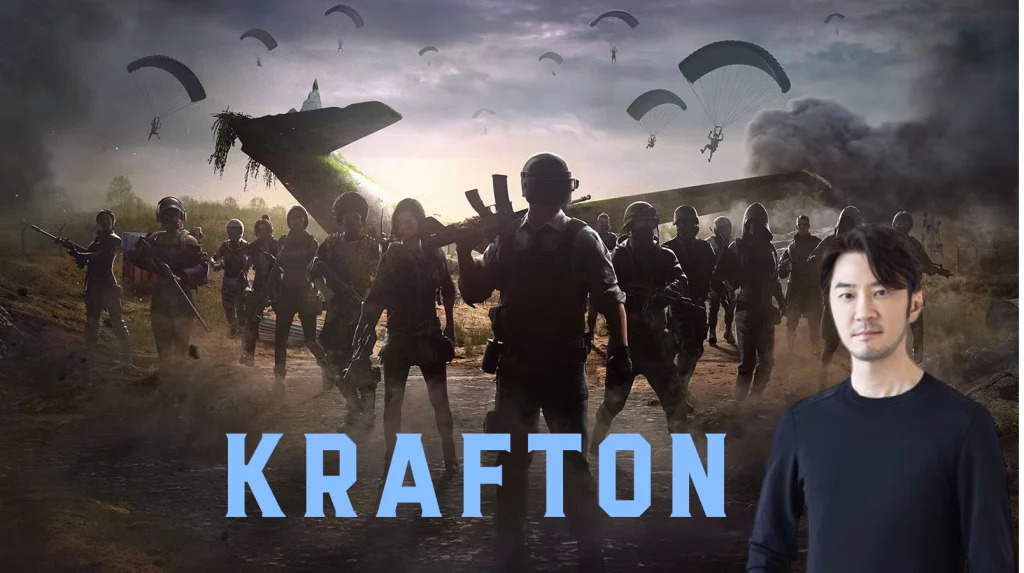
If you’ve won the lottery. You’re set for life, right? Now imagine that lottery ticket is the only thing standing between you and financial ruin. That’s the terrifying reality for Krafton, the company behind the global sensation PUBG.
Their one golden ticket has become a cage. This is the story behind Krafton’s Big Franchise IP Strategy, a desperate, brilliant, and breathtakingly expensive plan to break free. They’re spending billions to find the next big thing before the world moves on from their one-hit wonder.
But is this a masterclass in corporate strategy, or a billion-dollar roll of the dice that could bankrupt their future?
Buckle up, because we’re diving deep into the high-stakes game Krafton is playing!
The Ticking Time Bomb: Why Krafton Can’t Sit Still?
You might be thinking, “If PUBG is so successful, why panic?” Here’s the simple, scary truth: putting all your eggs in one basket is a disaster waiting to happen. Let’s look at the numbers that are giving Krafton’s CEO nightmares.
| Problems (Ongoing Risks) | Facts |
| Total Reliance on PUBG | A staggering 80% of Krafton’s money comes from the PUBG universe |
| The Tencent Trap | In 2022, the mobile version of PUBG, run by Tencent, alone made up 75% of all revenue |
| The Bottom Line | Krafton is dangerously dependent on one game and one partner for its survival |
Think of it like this. You own a restaurant, and 80% of your sales come from a single, amazing burger. What happens if people suddenly decide they’re done with burgers? You’re out of business.
This is the core motivation for Krafton’s Big Franchise IP Strategy. It’s not about getting richer; it’s a fight for survival. They need to build a full menu before their customers lose their appetite for the one thing they serve.
Krafton’s Plan For Survival: Franchise IP (Intellectual Property) Strategy
So, how do you fix a problem this huge? You attack it from every possible angle. Krafton’s Big Franchise IP Strategy isn’t a single move; it’s a multi-front war being waged on three distinct battlefields. Here are the three plans that Krafton will execute to ensure its sustainability.
Plan 1: Expanding PUBG Beyond Just PUBG
The first part of the strategy is the safest: squeeze everything you can from what you already know works.
- New Games in the Family: They’re creating new, standalone titles set in the PUBG universe to keep fans engaged.
- Regional Strength: They’re doubling down in key markets like India by operating Battlegrounds Mobile India (BGMI).
- Player Creativity: They’re adding user-generated content (UGC) tools to the core PC game, letting the community help keep it fresh for years to come.
This is the “low-hanging fruit” part of Krafton’s Big Franchise IP Strategy. It’s a smart, conservative play to build a safety net while they take bigger risks elsewhere.
Plan 2: Betting Big on New Studios and Global Markets
This is the heart and soul of Krafton’s Big Franchise IP Strategy. Krafton has transformed into a global treasure hunter, scouring the planet for the next legendary game studio. Instead of trying to force creativity in-house, they’re placing dozens of small bets on talented teams, mostly in the PC and console space.
They’ve tried building from within, with mixed results. The Callisto Protocol was a bold attempt that didn’t quite hit the mark, while their new life simulator, InZOI , shows they’re still experimenting. But the real wisdom comes from Maria Park, Krafton’s head of corporate development. She nailed it when she said:
“We believe that creativity cannot be easily taught, and so it is better to be discovered. And also, while a big budget can help a team achieve high fidelity, we’ve learned over time that it does not necessarily guarantee a fun game.”
This philosophy is the engine of their external investment spree. They’re not buying buildings; they’re buying brilliance.
Plan 3: Stepping Outside the Gaming Field
This is where Krafton’s Big Franchise IP Strategy goes from interesting to absolutely fascinating—and incredibly risky. Krafton isn’t just looking for new games; it’s trying to become the next Walt Disney. They are charging headfirst into businesses far beyond their gaming roots:-
- Audio and Micro-Dramas: They invested $89.3 million in Spoonlabs, a Korean audio livestreaming platform.
- Anime and Advertising: Their biggest move yet—a staggering $517 million to fully acquire ADK, a Japanese “big three” ad agency and anime production powerhouse behind classics like Doraemon and Yu-Gi-Oh! .
This offers the highest potential reward—becoming a true transmedia entertainment giant—but it also carries the greatest risk. It’s one thing to manage game developers. It’s a completely different challenge to run a Japanese advertising agency and anime studio, businesses in which they have zero experience.
Krafton’s 2024–2025 Investment Spree
To truly understand the scale of Krafton’s Big Franchise IP Strategy, you have to look at the checkbook. The numbers are staggering. While their public plan was to invest $1.08 billion over five years, their recent spending has exploded beyond anyone’s predictions.
| Year | Total Investment | The Key Acquisitions & Investments |
| 2024 | $171 Million | 10+ overseas game studios (small, minority stakes); Spoonlabs (audio/micro-drama platform) – $89.3M |
| 2025 (So Far) | At least $771 Million | ADK (Japanese anime/ad agency) – $517M; Eleventh Hour Games (Makers of Last Epoch ) – $96M; Various other studios & tech startups |
See that jump? It’s not just an increase; it’s a volcanic eruption of spending. The ADK deal alone is a megaphone blast to the world: Krafton’s Big Franchise IP Strategy is no longer a side project.
It is the main event. They are building a world where a character born in a Krafton game can leap into an anime series, backed by a global marketing campaign, all under one roof.
Krafton has promised to invest ₩1.5 trillion ($1.08 billion) over five years in acquiring and developing franchises. If you’re doing the math, that’s around $216M every year.
ADK Acquisition: Krafton’s Biggest Gamble Yet
One deal stands out from everything else: the $517M acquisition of ADK. Now, if you don’t know ADK, here’s the shocker — it’s not a game studio. It’s one of Japan’s biggest ad agencies and anime producers.
| ADK Division | What it does? |
| ADK Marketing Solutions | Advertising & Branding |
| ADK Creative One | Creative Campaigns |
| ADK Emotions | Anime production (Doraemon, Yu-Gi-Oh!, Crayon Shin-chan) |
So why would Krafton buy an anime powerhouse? Simple: IP synergy.
- ADK helps Krafton expand PUBG and future games into anime, merch, and other media.
- Krafton gains a foothold in Japan’s lucrative entertainment market.
- ADK’s anime can be turned into games, while Krafton’s games can become anime.
But here’s the risk — managing 2,300 employees in an ad agency and anime studio is a totally different ball game than running PUBG servers. Will Krafton adapt, or will ADK’s complexity slow them down?
Non-Gaming Bets: Bold but Risky
Krafton’s portfolio shows a clear trend — it’s no longer just about games.
| Non-Gaming Investment | Year | Result/Challenge |
| Spoonlabs (audio livestreaming, $89.3M | 2024 | Underperforming (284k MAU in 2025) |
| ADK (anime + ad agency, $517M) | 2025 | Huge potential, huge risk |
| Indian startups (social media, esports, payments) | 2025 | Still early stage |
This is where Krafton’s Big Franchise IP Strategy could either shine or shatter. If these bets work, Krafton becomes a Netflix-meets-Marvel of gaming and media. If they fail, that’s hundreds of millions down the drain.
The Billion-Dollar Question: Genius or Gamble?
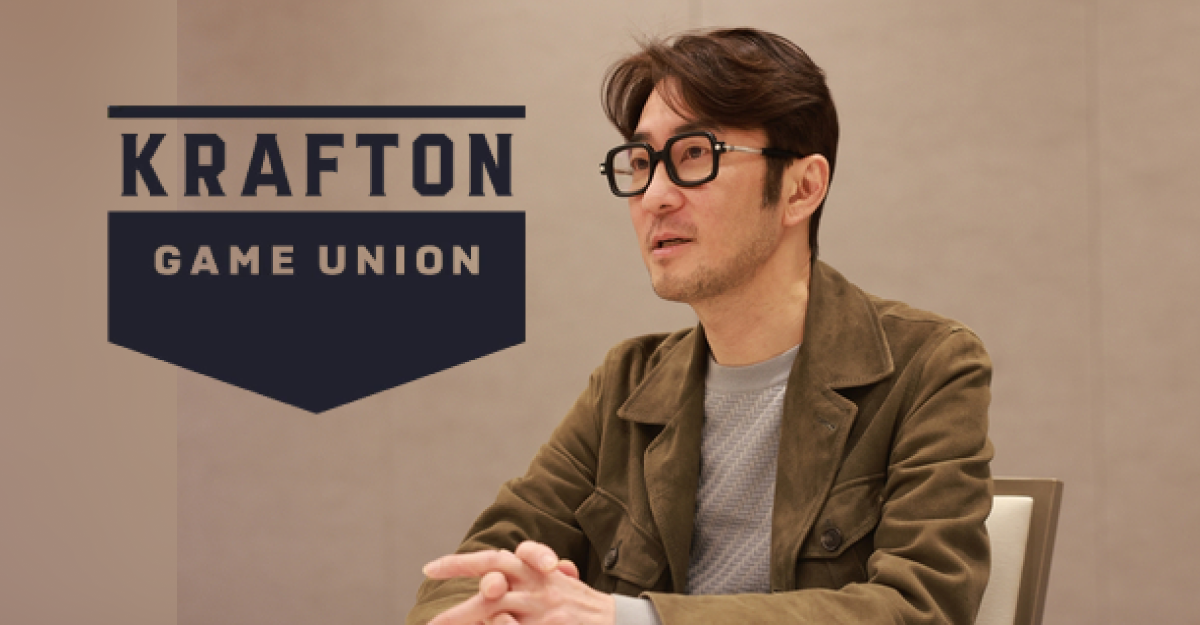
After seeing the full picture, the ultimate question remains. Is Krafton’s Big Franchise IP Strategy a work of strategic genius, or a reckless gamble?
Case 1: Genius Move
- It’s Essential for Survival: The data is undeniable. With 80% of revenue tied to one franchise, diversification isn’t a choice; it’s a life-or-death necessity. This strategy is the only logical path forward.
- It’s a Smart Way to Innovate: Maria Park’s philosophy of “discovering” creativity is brilliant. By funding external studios, they’re tapping into a global pool of talent and ideas, which is far more likely to produce a hit than a top-down corporate mandate.
- It’s Visionary and Forward-Thinking: The ADK acquisition isn’t random. It’s a chess move. In today’s world, the biggest entertainment properties aren’t just games or just shows—they’re both. Imagine a Krafton game being turned into a hit anime by the legendary studio behind Yu-Gi-Oh!. That’s the kind of synergy that builds empires.
Case 2: Catastrophic Gamble
- The “Unknown Unknowns” are Massive: Managing a 2,300-person Japanese ad agency is a world away from running a 1,600-person game company. The cultural, business, and operational clashes are a minefield. One misstep could sink the entire venture.
- Not Every Bet is a Winner: We already have a warning sign. Their investment in Spoonlabs’ Vigloo app has been underwhelming, pulling in less than 1% of the users of its biggest competitor. This proves that Krafton’s judgment outside of gaming is not infallible.
- Integration Hell: The biggest challenge in any merger is making the pieces work together. With Krafton and ADK having different languages, cultures, and business models, making them synergize is a Herculean task that could consume immense time and resources with little to show for it.
The Final Verdict
So, where does this leave us? The truth is, there is no easy answer today. Krafton’s Big Franchise IP Strategy is a monumental, high-stakes race against time. They are betting the company on the belief that they can discover and build the next big entertainment franchise before the world moves on from PUBG.
It’s a daring, all-or-nothing play that will be studied for years to come.
Will it be taught in business schools as a blueprint for how to reinvent a company? Or will it be a cautionary tale about the dangers of straying too far from your core business?
Only time will tell. But one thing is for certain: the gaming world will be watching, and the outcome will reshape the industry.
What do you think? Is Krafton building its future, or betting the house? Share your thoughts in the comment section below!
FAQs
1. What is Krafton’s Big Franchise IP Strategy?
It’s Krafton’s long-term plan to reduce dependence on PUBG and build multiple global franchises across gaming and non-gaming industries.
2. Why is Krafton so dependent on PUBG?
Because 75% of Krafton’s revenue in 2022 came from PUBG Mobile, and about 80% of its overall revenue is tied to the PUBG brand.
3. How much has Krafton invested recently?
- 2024: Around $171M.
- 2025: Over $771M (biggest year so far).
- 5-year plan: $1.08B dedicated to new franchise development.
4. What is Krafton’s biggest acquisition?
In 2025, Krafton bought ADK, a Japanese anime and ad agency, for $517M — its largest deal ever.
5. What are Krafton’s upcoming games?
- InZOI (life simulation).
- Last Epoch (MMO acquired via Eleventh Hour Games).
- Project Windless (Korean fantasy IP).
6. What’s the biggest risk in Krafton’s strategy?
Venturing too far outside gaming. Anime, ad agencies, and livestream platforms are very different industries, and mismanaging them could hurt Krafton financially.
Note: We have also explained- The Success Story of GamesKraft: India’s Gaming Ambition. Go through the article for detailed information.
The success or failure of this billion-dollar vision now rests squarely on the shoulders of CEO Kim Chang-han, and the world will be watching to see if his gamble transforms Krafton into a timeless entertainment empire or serves as a cautionary tale of ambition overreaching its grasp.
Thanks for reading 🙂
