
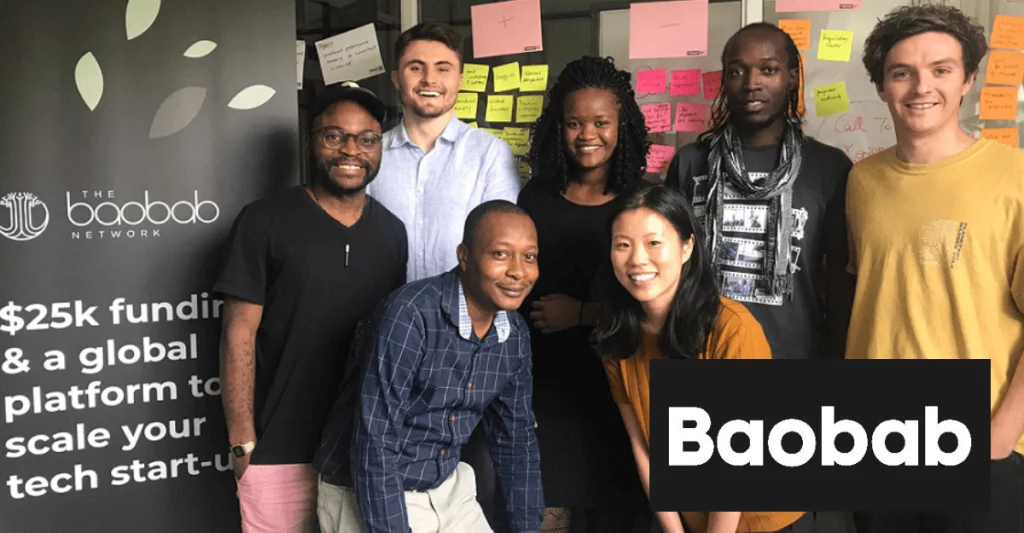
Can you think of any accelerator that doesn’t chase quick exits, but patiently waits for the next wave of game-changing startups? Well, there’s one i.e., Baobab!
In other words, Baobab business model is quietly powering Africa’s innovation boom. That’s why industry insiders describe Baobab Network as the “Berkshire Hathaway of African startups.”
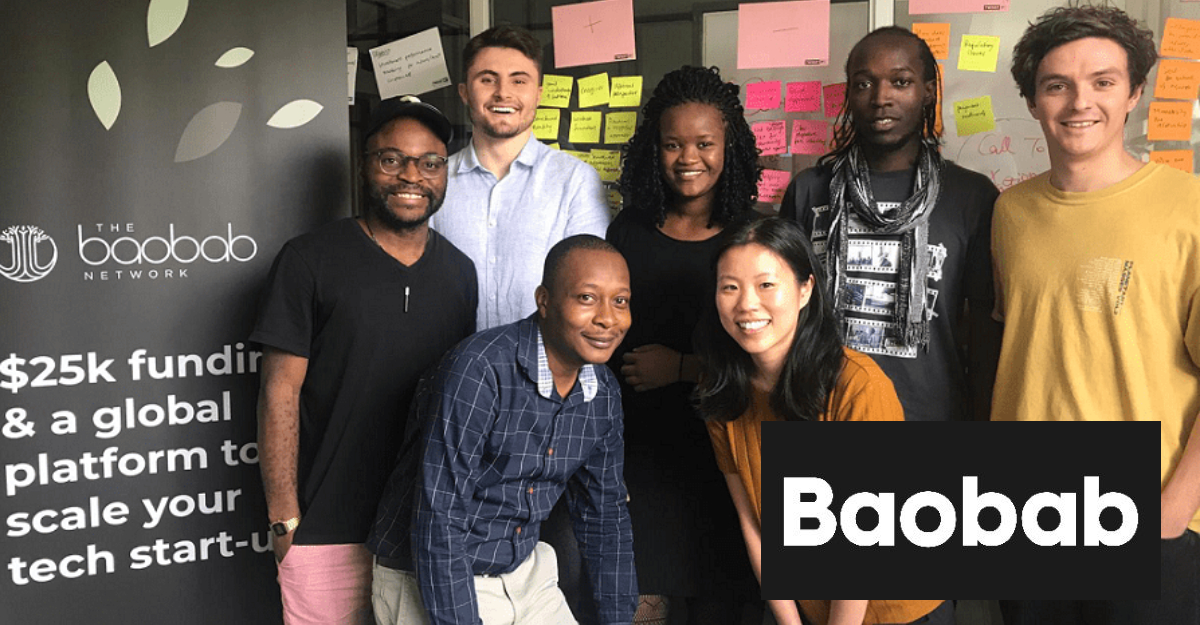
In this article, we will break down the Baobab Business Model, how it works, how it earns, and why it stands out from traditional venture capital models.
Stay tuned!
Profile Overview: Baobab Network at a Glance
Before we go deep into how Baobab’s business model works and makes money, let’s quickly check out who Baobab Network really is and what they’re all about.
| Particulars | Details on Baobab |
| Company | The Baobab Network Ltd. |
| Type | Private (Holding Company Structure) |
| Industry | Early-Stage Tech Investment & Accelerator |
| Founded | 2016 |
| Founders | Toby Hanington, Tom Fairburn |
| Headquarters | Nairobi, Kenya; Lagos, Nigeria; London, UK |
| Vision | Invest in 1,000 African tech startups by 2033 |
| Active Markets | 16 African countries |
| Ticket Per Startup | $100,000 USD (direct, plus co-investment vehicle) |
| Portfolio | 65+ companies as of 2025 |
| Accelerator Length | 12 weeks, intensive, hands-on support |
| Key Competitors | Novastar, YC Africa, Flat6Labs, GreenHouse Capital |
Note: If you’re interested in how banks innovate and grow sustainably, the MB Bank business model offers some great insights. Check out the full breakdown of MB Bank’s strategies and successes in our detailed article.
History: How Baobab Started?
Back in 2016, Africa’s startup scene was bursting with potential but facing a big problem—there just wasn’t enough early funding, mentorship, or hands-on support for local founders trying to build something meaningful in their own markets.
Seeing this gap, Toby Hanington and Tom Fairburn co-founded Baobab Network with a simple but powerful idea: provide patient capital and real, ongoing support that helps startups grow for the long term, not just chase quick wins.
Together, they built a business model that truly understands and backs Africa’s unique challenges and opportunities. Is there any similar VC-type business model in India? Comment down if you know the answer!
Recognizing that true transformation in Africa would require patient, long-term backers who understand the region’s unique risks and opportunities, Baobab’s founders launched with a “HoldCo” (holding company) structure.
Unlike traditional venture capital funds, this lets them extend investment timelines, actively support portfolio companies through multiple product cycles, and recycle profits back into the continent’s next generation of changemakers.
Working Strategy: How Baobab Works?
Baobab business model is refreshingly straightforward, direct, and founder-first. Let’s have a quick look at its working strategies-
| Step | Action | Example/Impact |
| Sourcing | Curates applications from founders across Africa | ~65 startups selected by 2025 |
| Patient Investment | Offers $100k first cheque, plus access to follow-on funding | Enables rapid scale, longer growth cycles |
| Accelerator Program | 12-week product-market fit, traction, and growth support | Portfolio valued at $55M+ in follow-ons |
| Post-Accelerator | Long-term advisory, mentorship, intro to global investors | 1,250+ jobs created |
| HoldCo Model | Uses holding company (not VC fund) to extend partnership duration and recycle capital | 4 exits to date |
| Platform Ecosystem | Proprietary Baobab OS for founder/investor support | Digital, AI-enabled scaling |
| Flexible Co-investment | SPVs and co-investor vehicles for larger rounds | Angels & VCs from Africa/Europe/Asia |
This multi-layer strategy means that Baobab has flexibility, agility, and the ability to nurture companies for far longer than a standard fund cycle.
Sounds complicated?
Okay, think of Baobab less like a classic VC, and more like an entrepreneurial ally that wears several hats:-
1. Patient Capital, Not Chasing Quick Exits
- Baobab invests its own balance sheet cash into startups, adding follow-on funds from global investors and co-investment vehicles.
- The HoldCo model enables long-term partnerships—Baobab isn’t forced to sell fast, so it can back founders through ups, downs, and pivots.
2. Value Creation, Not Just Capital Injection
- Every selected startup receives $100,000, access to Baobab OS (their AI-enabled portfolio platform), and a curated 12-week accelerator focused on developing product-market fit, traction, and scale.
- Post-accelerator, founders stay in the Baobab circle with ongoing mentorship, investor introductions, and growth resources.
3. Flexibility to Evolve
- Baobab can launch new funds, SPVs, and innovation initiatives as Africa’s ecosystem changes—without layers of restrictive LP agreements.
4. Risk Mitigation and Resilience
- The company emphasizes financial health: zero debt, strong balance sheet, and recycling of asset sale proceeds into new investments.
- This means Baobab can ride out market shocks and support startups when global VC funding contracts.
5. Sector and Geography Agnostic
- The focus is simple: exceptional founders with local insight. Sectors include fintech, e-commerce, healthcare, logistics, and beyond.
Revenue Sources: How Baobab Makes Money?
Baobab profits not from fees or management carry, but uniquely as a holding company:-
- Equity Appreciation: Gains from startup exits, IPOs, and buybacks (core long-term returns).
- Follow-on and Co-investments: Pool external and partner capital to boost portfolio and returns.
- Advisory & Platform Revenue: Research, Baobab OS, and founder/investor services provide additional income.
- Recycled Returns: Proceeds from exits reinvested into new cohort startups, compounding impact.
Below is the revenue breakdown of the Baobab business model-
| Revenue Source | Amount (in € thousands) | Equivalent Amount (in $ thousands) | Description |
| Interest and Similar Income | €176,549 | $194,204 | Interest income from loans to micro and small businesses |
| Commission Income | €17,495 | $19,245 | Commission and fee income from savings, insurance, and services |
| Other Income | €8,288 | $9,117 | Other operating income including capitalized production costs |
| Baobab Plus Income (Divested) | €0 | $0 | Divested, no contribution in 2024 |
| Financial Income | €6,200 | $6,820 | Other financial income from investments and similar |
| Total Operating Revenue | €143,012 | $157,313 | Income from core microfinance and financial services |
Baobab’s total operating revenue for 2024 is approximately $157.3 million USD. These figures highlight the focus on long-term value and ecosystem-building, rather than traditional management fees or short-term profits.
Financials of Baobab (2024)
Baobab Group has raised significant capital from investors, including Gojo & Co., Inc., and is currently finalizing a majority stake sale to Beltone Holding, a major MENA-region investor listed on the Egyptian Stock Exchange.
Here are Baobab’s latest financials–
| Financial Metric | Amount (€ thousands) | Approx. Amount (USD thousands) | Description |
| Market Capitalization/Equity | €131,890 | $145,000 (approx.) | Total equity of Baobab Group |
| Total Revenue (Operating Income) | €143,012 | $157,300 (approx.) | Includes interest income, commission, and other income |
| Interest and Similar Income | €176,549 | $194,200 (approx.) | Interest from loans and financial services |
| Commission Income | €17,495 | $19,250 (approx.) | Fees from savings, insurance, and transactions |
| Other Income | €8,288 | $9,120 (approx.) | Other financial and operating income |
| Total Operating Expenses | €129,111 | $142,000 (approx.) | Personnel, external expenses, provisions, taxes |
| Pre-Tax Profit | €13,901 | $15,290 (approx.) | Earnings before income taxes |
| Net Profit (Group Share) | €8,383 | $9,220 (approx.) | Final profit attributable to Baobab Group shareholders |
Each quarter, Baobab reviews thousands of startup applications, selecting 5–10 standout teams for intensive support and joining a network that now spans more than 16 African countries.
Funding & Valuation: Baobab’s Financial Growth Table
While Baobab’s precise market valuation is not publicly disclosed, its strengthened equity base and growing loan portfolio position it as a leading microfinance institution focused on African markets, with equity capital exceeding €131 million (approximately $145 million USD) as of 2024.
Here are its numbers on its financial growth-
| Round/Metric | Year | Key Data | Source/Impact |
| Pre-seed Investments | 2019-2023 | 50+ startups | 4 exits |
| Follow-on Funding | 2019-2025 | $55M+ raised by portfolio | Demonstrates scale |
| Investment Per Startup | 2024-2025 | $100,000 (standard ticket) | Most recent: Swyft, $100K |
| Estimated Annual Revenue | 2025 | $1.7M+ | Growing staff, network |
| Investor List | 2019-2025 | Angels, VCs (Ground Squirrel, Hustle Fund, Oui Capital, Techstars, Startup Wise Guys, etc.) | Co-investor ecosystem |
| Valuation | 2025 | No public figure, but rapidly compounding based on equity and exits; portfolio valued at $55M+ follow-on |
Baobab’s value is measured by its ecosystem impact and the compounding of long-term portfolio equity—not a single headline valuation or fund total!
Baobab vs Traditional VC: Comparison Table
When it comes to funding early-stage startups, the structure and approach of investors can significantly shape the growth path of new ventures. Baobab Network breaks the mold by adopting a unique holding company model rather than following the conventional venture capital fund approach.
This difference allows Baobab to take a longer-term view, provide hands-on accelerator support, and cultivate resilience in Africa’s emerging markets.
Let’s see how Baobab business model stands apart from traditional VC funds in key aspects:-
| Aspect | Baobab Network | Traditional VC |
| Structure | HoldCo (patient, agile) | Fund (fixed 10-year cycle) |
| Support Model | Accelerator + lifelong | Initial phase only |
| Revenue | Equity, co-investments | Fees, carry |
| Exit Pressure | Minimal | High |
| Sector Focus | Pan-Africa, agnostic | Often sector-niche |
This comparison highlights how Baobab’s carefully tailored model not only supports African founders differently but also aligns incentives for sustainable value creation over rapid exits.
In a market where success can take time and patience is key, Baobab’s approach offers a compelling alternative to the traditional VC path.
Baobab vs CcHub vs Flat6Labs vs GreenHouse Capital
The African startup ecosystem is vibrant and rapidly expanding, with numerous organizations competing to support early-stage ventures across the continent. Baobab Network is one of the leading accelerators, but it shares the landscape with several other prominent players, each offering unique programs, funding models, and regional focuses.
Here’s a comparison of Baobab Network with some of its key competitors in the African startup support ecosystem:-
| Aspect | Baobab Network | Co-Creation Hub (CcHub) | Flat6Labs | GreenHouse Capital |
| Founded | 2015 | 2010 | 2011 | 2011 |
| Headquarters | Nairobi, Kenya | Lagos, Nigeria | Cairo, Egypt | Nairobi, Kenya |
| Model | Holding company + accelerator | Innovation Hub + incubator | Seed-stage accelerator | VC fund + accelerator |
| Investment Ticket | $100,000+ per startup | Equity-free grants + funding | $50,000 – $150,000 | $100,000+ |
| Accelerator Length | 12 weeks | 6-12 months | 4-6 months | 3-6 months |
| Sector Focus | Pan-Africa, diverse sectors | Diverse (HealthTech, EdTech, AgriTech) | Diverse, tech-focused | Female-led and B2B tech |
| Number of Startups Supported | 65+ | 100+ | 80+ | 30+ |
| Funding Sources | Multi-million $ capital | Govt/donor grants + sponsorship | Seed funding + grants | VC funds |
| Differentiator | Patient, long-term support | Largest innovation hub in Nigeria | Regional seed fund | Focus on women-led startups |
While Baobab emphasizes patient capital with a broad pan-African reach, others like CcHub and Flat6Labs offer regionally concentrated, innovation-driven accelerators, and GreenHouse Capital targets female founders and B2B sectors specifically.
Together, these accelerators and hubs are driving the growth of Africa’s startup scene, supporting founders and innovative ideas to scale both continentally and globally.
Marketing Strategies of the Baobab Business Model
If you’re curious about how Baobab Network drives growth and visibility for African startups, their marketing strategy is a standout example of targeted, research-driven, and integrated efforts.
Let’s break down these strategies and see the tangible results they’ve achieved.
| Strategy Category | Description | Outcome / Impact |
| Acquisition of Reflector Marketing | In April 2024, Baobab acquired South Africa-based Reflector Marketing, embedding specialised marketing, branding, and digital support within Baobab. | Enabled portfolio companies to refine market positioning and increase funding readiness. |
| Data-Driven Research | Baobab gathers quantitative and qualitative insights on customer behavior, product usage, and market trends, continuously integrating findings into product and marketing roadmaps. | Allowed more tailored financial products and marketing campaigns, improving customer satisfaction and engagement metrics. |
| Founder Empowerment & Accelerator | Combined with $100k funding, Baobab’s 12-week accelerator program includes marketing mentorship, pitch preparation, and digital growth support. | Supported 65+ startups to collectively raise over $55 million follow-on funding and create 1,250+ jobs. |
| Digital Platform (Baobab OS) | Baobab OS connects founders with mentors, investors, and experts for ongoing growth and positioning. | Increased deal flow and strategic investor engagements, enhancing startups’ market presence. |
| Social and Community Engagement | Collaborative initiatives like women’s associations for baobab fruit collectors in Mozambique foster local empowerment and create sustainable supply chains. | Grew baobab fruit collector base from 150 to 1,800 women, improving incomes and market trust. |
| International Market Awareness | Through partnerships and trade fairs, Baobab-backed products have gained regulatory approvals and entry into export markets, including Europe and US. | Expanded international demand for baobab products with 53% annual growth in product launches (2013-2017). |
As you can see, Baobab’s marketing goes far beyond traditional promotion—it’s about building capability, empowering founders, and creating deep ecosystem connections.
FAQs on Baobab Network
Q1: What is the Baobab Network Accelerator program?
Ans: The Baobab business model revolves around its accelerator program, which offers $100,000 funding along with a 12-week intensive mentorship and growth support designed uniquely for early-stage African startups to scale and succeed.
Q2: How much funding does Baobab provide to startups?
Ans: In line with the Baobab business model, each startup receives a direct $100,000 USD seed investment, complemented by potential follow-on funding from a global network and co-investment vehicles.
Q3: What equity does Baobab take for its investment?
Ans: The Baobab business model typically involves a 12.5% equity stake in the startups it supports, balancing founder ownership with long-term partnership incentives.
Q4: Which sectors does Baobab Network focus on?
Ans: Baobab business model is sector-agnostic but centers on scalable, tech-enabled businesses across fintech, healthcare, logistics, e-commerce, agritech, and other high-impact fields in Africa.
Q5: Can non-African startups apply to Baobab?
Ans: According to the Baobab business model, startups must have an African presence with at least one African-born founder, emphasizing growth rooted in and for Africa.
Q6: What is the application process for Baobab’s accelerator?
Ans: Reflecting its business model, Baobab has a multi-stage online application and evaluation system that selects promising startups for its cohort-based accelerator program.
Q7: How long is the Baobab Accelerator program?
Ans: The Baobab business model includes a focused 12-week accelerator combining mentorship, workshops, and investor introductions to accelerate product-market fit and growth.
Q8: Does Baobab take board seats in startups?
Ans: Baobab business model supports founder autonomy with advisory roles but does not typically require board control or majority ownership.
Q9: What support does Baobab offer besides funding?
Ans: Founders get continuous access to Baobab OS, a proprietary digital platform for operations, mentorship, investor connections, and data-driven growth strategies under the Baobab business model.
Q10: How does Baobab Network help startups with follow-on funding?
Ans: Follow-on funding support is fundamental to the Baobab business model, leveraging a global investor network to fuel startups’ growth beyond initial investments.
Q11: Can solo founders apply to Baobab Network?
Ans: While teams are preferred, the Baobab business model accommodates solo founders possessing strong expertise and scalable ideas.
Q12: Does Baobab work with non-profit organizations?
Ans: No; the Baobab business model focuses exclusively on scalable, for-profit startups positioned for sustainable growth.
Q13: What is Baobab OS?
Ans: Baobab OS is a core digital component of the Baobab business model, acting as an AI-enabled platform linking founders to mentors, investors, and resources for strategic scaling.
Q14: How soon can startups expect funding after acceptance?
Ans: Consistent with the Baobab business model’s founder-first approach, funding is provided upfront at the accelerator’s start to enable immediate momentum.
Q15: How many startups has Baobab funded so far?
Ans: Baobab business model aims for scale, having already funded over 65 startups with a goal to invest in 1,000 over the next decade.
Q16: What countries does Baobab operate in?
Ans: Aligned with its pan-African business model, Baobab supports startups across 16+ African countries through hubs in Nairobi, Lagos, London, and Cape Town.
Q17: Are Baobab’s investments limited to tech startups?
Ans: Baobab business model invests in tech-enabled companies innovating traditional industries alongside software and digital tech startups.
Q18: What is the success rate of Baobab-backed startups?
Ans: Baobab business model has led its portfolio companies to raise over $55 million in follow-on funding while creating 1,250+ jobs, exemplifying strong outcomes.
Q19: How does Baobab Network support women entrepreneurs?
Ans: Gender inclusion is integral to the Baobab business model, with targeted programs empowering women entrepreneurs across sectors, such as baobab fruit commercialization projects.
Q20: How does Baobab Network differ from traditional venture capital firms?
Ans: The Baobab business model uniquely operates as a holding company with patient capital and lifelong accelerator support, contrasting with traditional VCs’ fixed fund cycles and exit pressures.
Wrapping Up
When you look closely at the Baobab business model, you’ll notice it’s built for the long haul, not just quick wins. It’s designed to support founders with the patience and resources they need to truly grow and succeed over time.
What’s impressive is how this model combines smart investment with deep, ongoing support—making it a unique player in Africa’s startup scene. If you’re exploring ways to build something lasting, Baobab’s approach might just change how you think about venture capital.
Thanks so much for sticking with this article all the way through!
