
If someone told you Google was breeding millions of mosquitoes, your first reaction would probably be, “Have they lost their minds?“
After all, mosquitoes are among the deadliest animals on Earth, responsible for spreading diseases like dengue, malaria, Zika, and West Nile virus. So why would one of the world’s biggest technology companies want to produce millions of them?
That’s exactly why the Google Mosquito Project has sparked so much curiosity and confusion online. Viral headlines claiming that Google plans to release millions of mosquitoes in California and Florida have led many people to believe the company is creating a new public health risk. But those headlines leave out the most important part of the story.
The truth is almost the opposite. Read on, and you’ll find out!
What is the Google Mosquito Project?
The Google Mosquito Project is not about creating more mosquitoes. It is about reducing the number of dangerous mosquitoes that spread diseases such as dengue, West Nile virus, Zika, and chikungunya.
Instead of relying on chemical pesticides, Google’s parent company, Alphabet, is testing a biological approach that uses artificial intelligence, robotics, and a naturally occurring bacterium called Wolbachia to suppress mosquito populations.
As discussions around the Google Mosquito Project continue to spread online, it is worth separating facts from viral claims. Here’s what the project actually does, why scientists are paying attention, and whether it could change the future of public health.
Did Google Really Release Millions of Mosquitoes?
The short answer is no.
One of the biggest misconceptions is that Google has already released millions of dangerous mosquitoes across the United States. That is not true.
Instead, Alphabet’s Google Debug Project applied for an Experimental Use Permit from the US Environmental Protection Agency (EPA) to conduct controlled field trials. The proposal involves releasing up to 32 million sterile male mosquitoes in California and another 32 million in Florida over two years.
The key detail often missing from social media discussions is this:
Only male mosquitoes are released.
Male mosquitoes do not bite humans because they survive on nectar rather than blood. Only female mosquitoes bite, since they require blood to produce eggs.
The goal of the mosquito release is not to increase mosquito numbers but to reduce future generations of disease-carrying mosquitoes.
Key Strategies Behind Google Mosquito Project?
The Google Mosquito Project began inside Verily, Alphabet’s life sciences company, as part of an initiative called the Debug Project.
Rather than focusing on software bugs, the project set out to “debug” one of humanity’s oldest public health problems: mosquitoes.
Scientists realized that traditional mosquito control methods were becoming less effective. Many mosquito populations had developed resistance to insecticides, while climate change was helping disease-carrying species expand into new regions.
Alphabet believed its strengths in automation, AI, robotics, and data science could help solve a biological problem at an entirely different scale.
Google Mosquito Project Timeline
| Year | Milestone |
| 2016 | Debug Project publicly announced by Verily |
| 2017 | Successful field trials begin in Fresno County, California |
| 2024 | Alphabet fully integrates the Debug program |
| 2026 | EPA reviews proposal for releases in California and Florida |
How Does the Technology Work?
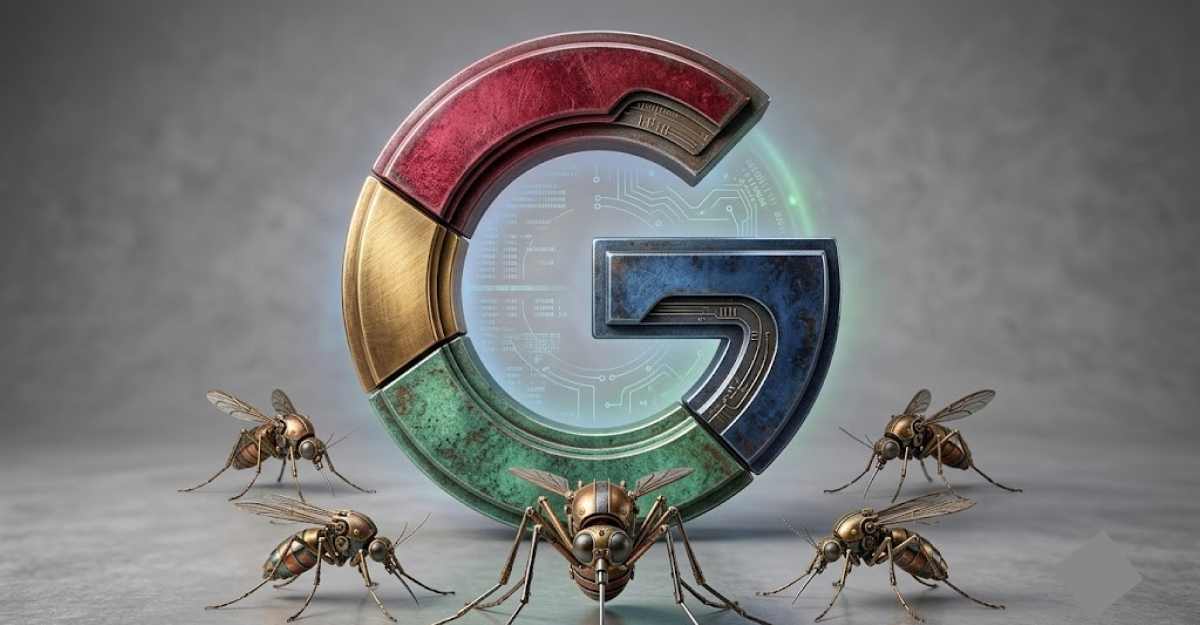
The science behind the Verily mosquito project sounds complicated, but the basic idea is surprisingly simple.
The project uses Wolbachia bacteria, a naturally occurring bacterium already found inside many insects.
Scientists infect laboratory-bred male mosquitoes with a specific strain of Wolbachia.
When these males mate with wild females that do not carry the same strain, the eggs never hatch.
That means each successful mating results in zero offspring.
Since only males are released, there are no additional biting mosquitoes in the environment.
How does the Process Works?
| Step | What Happens |
| 1 | Scientists breed millions of male mosquitoes |
| 2 | Males receive a specific Wolbachia strain |
| 3 | AI-powered computer vision separates males from females |
| 4 | Robotics automates mosquito production |
| 5 | GPS-assisted systems release only males |
| 6 | Eggs fail to hatch, reducing the mosquito population over time |
Alphabet has also developed automated breeding facilities where robotics handle mosquito development while AI monitors quality and accurately sorts males from females. These technologies allow millions of mosquitoes to be produced efficiently while minimizing human error.
Why Not Just Spray Insecticides?
For decades, mosquito control has relied heavily on pesticides.
The problem is that many mosquito populations are becoming resistant to these chemicals, making them less effective over time.
Chemical spraying can also affect beneficial insects and the surrounding environment.
The Google Mosquito Project takes a very different approach.
Traditional Mosquito Control vs Google Debug Project
| Traditional Method | Google Debug Project |
| Uses chemical pesticides | Uses biological control |
| Mosquitoes may develop resistance | Lower risk of resistance |
| Can affect non-target insects | Targets specific mosquito species |
| Needs repeated spraying | Population suppression through mating |
| Greater environmental concerns | More targeted and environmentally friendly |
Rather than killing mosquitoes directly, the project simply prevents the next generation from being born.
Has It Worked Before?
The answer is encouraging.
One of the most important demonstrations came from Fresno County, California, where Verily conducted field trials targeting Aedes aegypti, the mosquito responsible for spreading dengue, Zika, and chikungunya.
Over approximately three years, researchers reported up to a 95% reduction in local mosquito populations.
The technology is not unique to Alphabet either.
Singapore’s Project Wolbachia has been releasing Wolbachia-infected male mosquitoes for years as part of its national dengue-control program. Scientific studies have shown substantial reductions in mosquito populations and dengue transmission in treated areas.
These results are why many researchers see biological mosquito control as an important complement to traditional public health strategies.
Why Scientists Support It?
Many entomologists believe the Google Mosquito Project builds on decades of scientific research rather than introducing an untested concept.
Eric Caragata, a mosquito expert at the University of Florida, has noted that Wolbachia-based mosquito control rests on decades of scientific evidence.
Similarly, Jason Rasgon, an entomologist at Pennsylvania State University, explains that even mosquito populations already carrying Wolbachia can still be suppressed if scientists introduce mosquitoes carrying an incompatible strain.
Researchers also appreciate that released males cannot bite people or spread disease, making population suppression safer than releasing female mosquitoes.
Are There Any Risks?
No mosquito-control strategy is perfect.
Scientists acknowledge several challenges.
Benefits vs Challenges
| Benefits | Challenges |
| Reduces disease-carrying mosquitoes | Requires repeated releases |
| No biting males released | Continuous monitoring needed |
| Less reliance on pesticides | Can be expensive at large scales |
| Lower environmental impact | Populations may rebound after releases stop |
| Species-specific control | Regulatory oversight remains essential |
Environmental agencies also carefully evaluate proposed releases before approving field trials.
That oversight is one reason the EPA reviews projects like this before any large-scale deployment.
Is This Related to the “2.4 Billion Genetically Modified Mosquitoes” Claim?
Not exactly.
This is where many online discussions become confusing.
The claim about 2.4 billion genetically modified mosquitoes refers to separate projects involving different companies, different technologies, and different countries.
The Google Mosquito Project primarily relies on Wolbachia bacteria, not genetic modification.
While both approaches aim to reduce mosquito populations, they work in different ways.
| Wolbachia Mosquitoes | Genetically Modified Mosquitoes |
| Uses naturally occurring bacteria | Uses genetic engineering |
| Population suppression through incompatible mating | Population suppression through engineered genes |
| Used by Verily and Project Wolbachia | Used in separate biotechnology programs |
| Different regulatory approvals | Different regulatory approvals |
Understanding this distinction helps answer the common question, “Did Google release mosquitoes?“ The answer is that the proposed project involves Wolbachia-based sterile male mosquitoes, not the genetically modified mosquitoes often mentioned in viral posts.
Could This Help Fight Diseases Like Dengue and Malaria?
Potentially, yes.
Different mosquito species spread different diseases.
Diseases Spread by Different Mosquitoes
| Mosquito Species | Diseases |
| Aedes aegypti | Dengue, Zika, Chikungunya, Yellow Fever |
| Culex quinquefasciatus | West Nile virus |
| Anopheles | Malaria |
The Google Mosquito Project focuses primarily on Aedes aegypti and Culex mosquitoes.
It does not directly target the Anopheles mosquitoes that spread malaria.
That distinction is important because not every mosquito species carries every disease.
Note: Recently, Google upgraded its finance app and finally its on android phones. To know more, go through the article- Google Finance App Is Back: Google Brings AI Portfolio Tracking to Android
Why This Matters Beyond Google?
The Google Mosquito Project represents something much bigger than a single experiment.
As climate change expands mosquito habitats and insecticide resistance continues to grow, public health experts are looking for smarter, more sustainable ways to control disease vectors.
Projects like Debug combine biology with AI, robotics, computer vision, and precision engineering. Together, these technologies could transform how governments respond to mosquito-borne diseases in the future.
Whether or not Alphabet’s approach becomes the global standard, it highlights a growing trend: technology companies are increasingly contributing to public health challenges that once belonged solely to governments and research institutions.
Wrap-Up
The headlines make it sound as if Google is flooding neighborhoods with mosquitoes.
The science tells a very different story.
The Google Mosquito Project is an attempt to use carefully controlled biological methods, backed by AI and robotics, to shrink mosquito populations without relying heavily on chemical pesticides. Like any emerging public health strategy, it still requires rigorous testing, regulatory oversight, and continuous monitoring. But it is rooted in decades of scientific research rather than speculation.
Perhaps the better question is not, “Why is Google releasing mosquitoes?”
Instead, it is this:-
Can technology finally help humans control one of the world’s deadliest animals in a safer and more sustainable way?
What do you think? Feel free to share your thoughts in the comments!
