
Think about the last time you ordered a pizza. There’s a good chance names like Pizza Hut or Domino’s came to mind almost instantly. That’s the power of a brand that has spent decades becoming part of everyday life.
But what if I told you that the company behind many of those pizzas is now changing hands in a deal worth nearly ₹25,500 crore?
The Pizza Hut chain sold story is much bigger than a corporate transaction. It marks a major turning point for one of the world’s most iconic restaurant brands and offers a fascinating look at how changing customer habits, food delivery apps, and intense competition are reshaping the global fast-food industry.
Pizza Hut Chain Sold for ₹25,500 Crore
The Pizza Hut deal is valued at approximately $2.7 billion. Depending on the exchange rate used, Indian media reports have estimated the value between ₹25,000 crore and ₹25,500 crore.
The reason different reports mention slightly different figures is simple. The transaction is denominated in US dollars, while rupee conversions depend on prevailing currency rates. Even small fluctuations in the dollar-rupee exchange rate can alter the final headline number by hundreds of crores.
For investors and analysts, however, the most important figure remains the $2.7 billion valuation.
| Deal Component | Value |
| Total Deal Value | $2.7 Billion |
| Approximate INR Value | ₹25,000–25,500 Crore |
| US & International Business | ~$1.5 Billion |
| China Business | ~$1.2 Billion |
The sheer size of the transaction highlights how valuable global restaurant brands remain despite increasing competition and changing customer behavior.
Who Bought Pizza Hut?
The Pizza Hut sale has been structured in an unusual way, with ownership divided between two buyers.
LongRange Capital
LongRange Capital, a US-based private equity firm, will acquire Pizza Hut’s operations in the United States and most international markets outside mainland China.
Private equity firms typically invest in established businesses that they believe can be improved, repositioned, or made more efficient. In the case of LongRange Capital Pizza Hut, the firm’s objective will likely be to strengthen growth, improve profitability, and modernize operations.
Yum China Holdings
Yum China will acquire Pizza Hut’s mainland China business.
This is not a completely new relationship. Yum China already operates Pizza Hut and KFC under license in mainland China and has extensive experience managing Western restaurant brands in the market. Acquiring the China business gives the company greater control over one of Pizza Hut’s most important regions.
| Buyer | Market Acquired |
| LongRange Capital | United States + Most International Markets |
| Yum China Holdings | Mainland China Operations |
The split reflects the strategic importance of both China and the United States, which remain among Pizza Hut’s biggest markets globally.
Why Is Yum Brands Selling Pizza Hut?
This is the question at the center of the entire deal.
While Pizza Hut remains one of the most recognized restaurant brands in the world, its growth trajectory has not matched that of some competitors or even Yum! Brands’ other chains.
Slower Sales Growth
Over recent years, Pizza Hut has struggled to maintain the momentum seen by sister brands such as KFC and Taco Bell.
Although the brand continues to operate nearly 20,000 stores worldwide, growth has been slower than investors expected. In today’s restaurant industry, scale alone is no longer enough.
Intense Competition
The pizza market has become fiercely competitive.
Companies like Domino’s have built strong delivery-focused business models and invested heavily in technology, helping them gain an advantage among consumers who prioritize convenience.
This competitive pressure has made it harder for Pizza Hut to defend market share in several regions.
Rise of Delivery-First Rivals
Consumer expectations have changed dramatically.
Food delivery apps, digital ordering platforms, and mobile-first restaurant brands have transformed how people buy meals. Many newer competitors were built specifically for this environment.
Pizza Hut, by contrast, spent decades building a dine-in restaurant identity before shifting toward delivery and takeaway models.
Strategic Review
Reports indicate that Yum! Brands initiated a strategic review in late 2025 to evaluate the future of Pizza Hut.
The review reportedly explored various options, including restructuring, partnerships, and a potential sale. Ultimately, selling the business emerged as the preferred solution.
Capital Reallocation
By divesting Pizza Hut, Yum! Brands can focus more resources on faster-growing segments and brands.
For large restaurant companies, portfolio management is becoming increasingly important as investors demand stronger growth and profitability.
| Reason | Impact on Pizza Hut |
| Slower Sales Growth | Reduced momentum |
| Intense Competition | Market share pressure |
| Delivery-First Rivals | Consumer shift |
| Strategic Portfolio Review | Triggered sale process |
| Capital Reallocation | Focus on higher-growth brands |
The Rise and Evolution of Pizza Hut
Long before food delivery apps existed, Pizza Hut was already building a global pizza empire.
The company was founded in 1958 in Wichita, Kansas, by brothers Dan and Frank Carney. Using money borrowed from their mother, they opened a small pizza restaurant that would eventually become one of the world’s most recognized food brands.
The brand expanded rapidly across the United States during the 1960s and 1970s before moving aggressively into international markets.
For many consumers, Pizza Hut became synonymous with family dining, iconic red-roof restaurants, and a classic dine-in experience.
However, the restaurant industry evolved. Delivery became increasingly important, followed by mobile ordering, app-based delivery platforms, and digital loyalty programs.
Pizza Hut adapted, but not always as quickly as some competitors.
| Year | Milestone |
| 1958 | Pizza Hut founded |
| 1960s–1980s | Rapid US expansion |
| 1990s–2000s | Global growth |
| 2010s | Delivery-focused transition |
| 2026 | Sold in $2.7 billion deal |
Why This Deal Matters for the Global Fast-Food Industry?
The Pizza Hut acquisition is about much more than pizza.
The global fast food industry is undergoing a major transformation. Consumers increasingly expect speed, convenience, digital ordering, personalized promotions, and seamless delivery experiences.
Legacy restaurant brands are being forced to reinvent themselves while competing against digital-native operators.
Investors are watching this transaction closely because it could become a case study for how mature restaurant brands can be repositioned for modern consumers.
The success or failure of Pizza Hut’s new ownership structure may influence future acquisitions across the quick service restaurant industry.
What Does the Sale Mean for India?
India remains one of Pizza Hut’s most important growth markets.
The brand operates through franchise partners including companies such as Devyani International and Sapphire Foods. These operators manage day-to-day restaurant operations while following Pizza Hut’s brand standards.
For customers, there are unlikely to be immediate changes.
Pizza Hut outlets across India will continue serving customers under the same brand, with existing menus and operations largely unaffected in the short term.
However, over time, the new owners may introduce different growth priorities, technology investments, or store formats.
| Area | Potential Impact |
| Indian Outlets | No immediate changes |
| Franchise Partners | Continue operations |
| Expansion Plans | Could evolve under new strategy |
| Customer Experience | Gradual improvements possible |
India’s growing middle class and expanding food delivery market could make it an increasingly important region in Pizza Hut’s future growth plans.
What Could Change Under the New Owners?
Although customers should not expect overnight changes, new ownership often brings fresh priorities.
Potential developments could include:
- Modernized restaurant formats
- Greater focus on delivery and takeaway
- Enhanced mobile ordering experiences
- Technology-driven operations
- Menu innovation tailored to local markets
- Improved efficiency and profitability
Private equity firms often emphasize operational improvements, while established operators like Yum China focus on market-specific growth opportunities.
The exact direction of Pizza Hut’s future will depend on how successfully the new owners balance modernization with the brand’s long-standing identity.
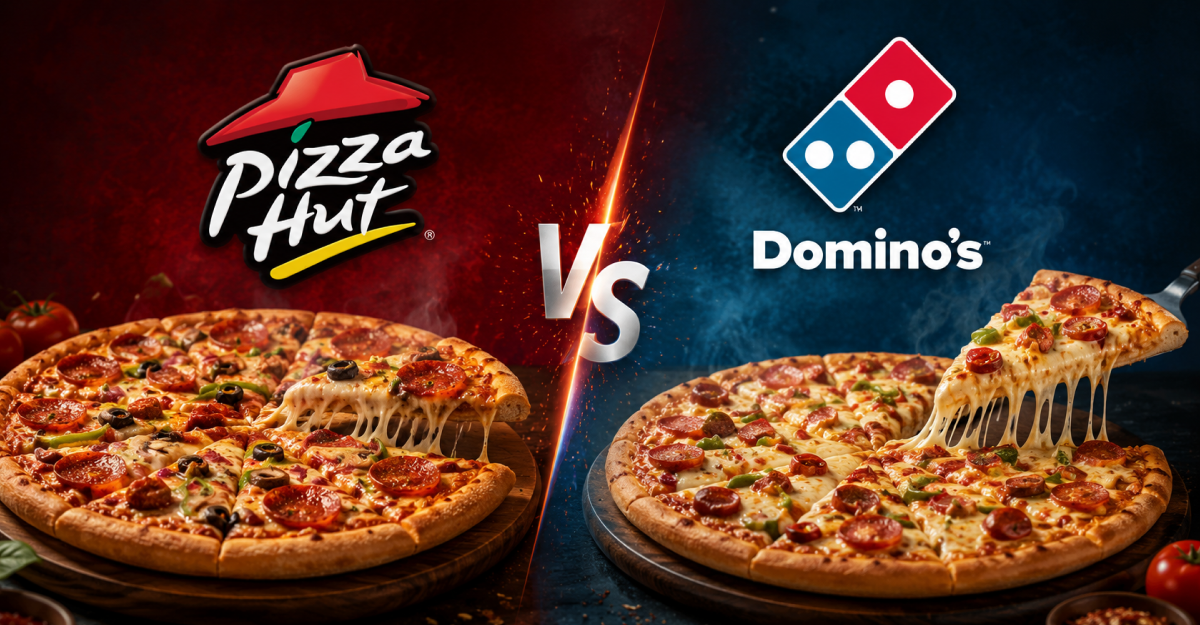
Pizza Hut vs Dominos
| Factor | Pizza Hut | Domino’s |
| Legacy Strength | High | Moderate |
| Delivery Reputation | Moderate | Strong |
| Global Presence | Very High | High |
| Dine-In Experience | Strong | Limited |
| Digital Adaptation | Improving | Strong |
This comparison helps explain why Pizza Hut has faced growing pressure despite its global recognition and large footprint.
For more details, you can go through this article on Pizza Hut vs Dominos: Which Is More Successful In India?
Brief Background of Pizza Hut
| Metric | Detail |
| Seller | Yum! Brands |
| Buyers | LongRange Capital & Yum China |
| Deal Value | $2.7 Billion |
| INR Value | ₹25,000–25,500 Crore |
| Founded | 1958 |
| Global Footprint | Nearly 20,000 Stores |
| Industry | Quick-Service Restaurants (QSR) |
Final Words
The Pizza Hut chain sold transaction is far more than a routine corporate acquisition. It reflects broader changes reshaping the restaurant industry, from digital ordering and food delivery to evolving consumer expectations and investor priorities.
For Yum! Brands, the Pizza Hut sale represents a strategic decision to focus on faster-growing opportunities. For LongRange Capital and Yum China, it is a chance to unlock value from one of the most recognized restaurant brands in the world.
Whether Pizza Hut sold under new ownership becomes a turnaround success story remains to be seen. What is certain is that the brand enters a new chapter at a time when the global fast-food industry is changing faster than ever.
Pizza Hut helped define modern pizza dining. Now, under new ownership, it faces perhaps its biggest challenge yet…Proving that a 67-year-old brand can still win in a digital-first food world.
FAQs on Pizza Hut
1. Why was Pizza Hut sold?
Yum! Brands sold Pizza Hut following a strategic review, citing slower growth, intense competition, changing consumer preferences, and a desire to focus on higher-growth businesses.
2. Who bought Pizza Hut?
Pizza Hut’s operations were acquired by two buyers: LongRange Capital purchased the US and most international businesses, while Yum China acquired the mainland China operations.
3. How much was the Pizza Hut deal worth?
The Pizza Hut deal is valued at approximately $2.7 billion, which converts to roughly ₹25,000–25,500 crore depending on exchange rates.
4. Will Pizza Hut stores change after the sale?
No immediate changes are expected. Existing restaurants, menus, and franchise operations are likely to continue as normal in the short term.
5. What does the sale mean for India?
Indian Pizza Hut outlets will continue operating through franchise partners such as Devyani International and Sapphire Foods. However, future expansion strategies, technology investments, and customer experiences could evolve under the new ownership structure.
