
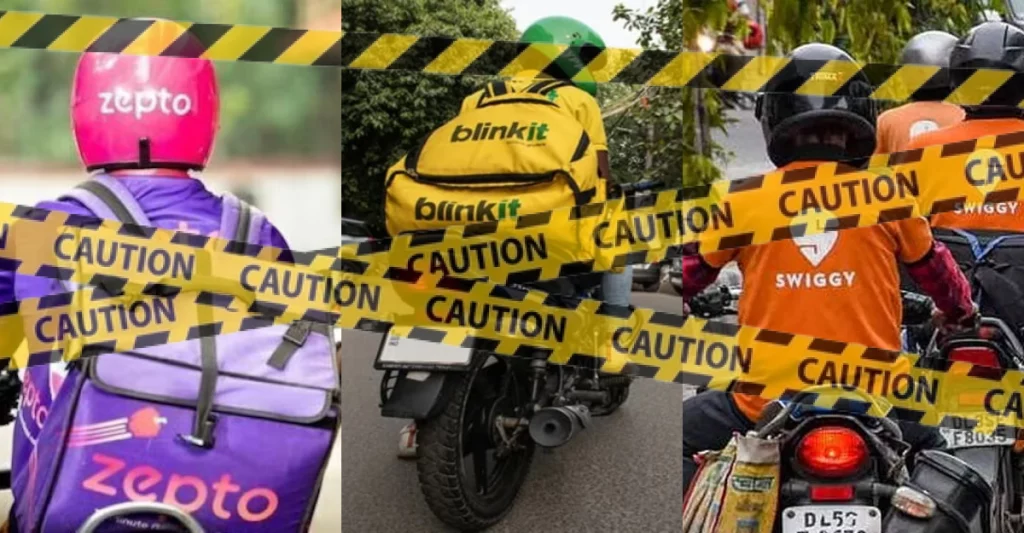
In the hustle and bustle of your daily life, who hasn’t leaned on that magical promise of “delivered in 10 minutes”? Be it groceries, snacks, electronics, or even medicines, quick commerce dark stores have swooped in to redefine convenience in India.
With just a tap, platforms like Blinkit, Zepto, Instamart, and Flipkart Minutes deliver essentials at lightning speed.
But as the saying goes, every rose has its thorn. Behind the glitz of instant deliveries lies a darker, grimmer reality. You’d expect your food to come from clean, well-maintained facilities, right? Unfortunately, that’s not always the case.
Let’s look thoroughly into the murky waters of quick commerce dark stores, where hygiene shortcuts, expired products, and regulatory oversights are more common than you’d think.
In other words, we will expose the hidden hygiene crisis behind your 10-minute delivery!
What Are Quick Commerce Dark Stores? 5,000 Outlets and Counting
Before we get our hands dirty (figuratively), let’s understand what we’re dealing with.
Quick commerce dark stores are small warehouses strategically located in your neighborhood. They’re not open to the public. Instead, they’re fulfillment hubs where workers pick and pack your orders—typically groceries, FMCG items, and increasingly, pharmacy goods, electronics, and more. These stores enable 10- to 15-minute deliveries by being close to high-demand areas.
In theory, it’s a brilliant logistical model. In reality? Things are getting messy.
Let’s talk scale. According to HSBC Global Research, India’s count of quick commerce dark stores is projected to hit 5,000–5,500 by end of FY26. Here’s where the major players stand as of March 31, FY25:-
| Company | Dark Store Count | Delivery Volume (Jan-Mar FY25) |
| Blinkit | 1,301 | 141.7 million orders |
| Instamart | 1,021 | 88.6 million orders |
| Zepto | ~1,000 (crossed) | Figures not specified |
| Flipkart Minutes | 400 | Plans to double to 800 by end‑2025 |
(Total ~3,722 stores—and that doesn’t include hundreds more from BigBasket or smaller players.)
All this crammed into over 100 cities, all while burning cash fast just to grow. But scale without safeguards? That equals risk.
The Alarming State of Hygiene in Dark Stores
If you’re thinking, “Surely these companies follow food safety norms,” brace yourself. Recent government inspections have blown the lid off what really goes on inside these facilities.
Maharashtra FDA Inspections – A Wake-Up Call
In June 2025, Maharashtra’s Food and Drug Administration (FDA) conducted surprise inspections at various quick commerce dark stores. What they uncovered was shocking:
| Company | City | Violation Summary |
| Zepto | Mumbai (Dharavi) | Fungal growth on food, expired products mixed with regular stock, stagnant water, and cold storage failures |
| Blinkit | Pune | Operating without a valid food business license |
Zepto’s dark store was so poorly maintained that 11 types of food products had to be destroyed on the spot. The store reopened only after a reinspection confirmed that corrective actions were taken. Blinkit’s facility in Pune wasn’t even legally licensed to handle food.
And these aren’t isolated incidents.
Let’s talk about something that hits too close to home—expired products.
At one Instamart facility in Mumbai, a manager revealed that expired groceries and edibles are packed separately and picked up the next morning. But without digital checks, daily logs, or compliance audits, this system is ripe for abuse.
During a raid on a Blinkit warehouse in Telangana, authorities found:
- Dusty, disorganised storage
- Seized expired products
- Hygiene violations across the board
Hygiene Guidelines? Mostly Verbal
What makes the situation worse is the lack of documented protocols.
At an Instamart dark store in Bengaluru, the store manager admitted there were no written hygiene guidelines available. Same story at a Flipkart Minutes facility. While companies claim to issue “general instructions,” the execution seems to depend on the store manager’s discretion.
Here’s a glimpse of the verbal-only hygiene checklist shared by multiple dark store managers:
- Keep fruits and vegetables in a clean, refrigerated space
- Frozen goods to be stored in temperature-controlled freezers
- Medicines handled by designated personnel only
- Expired goods to be discarded daily
Sounds good on paper—if only there was paper.
Legal & Moral Responsibility: FSSAI’s Regulations

Are there any laws related to food in India? You may wonder. Well, yes! India already has clear regulations governing food safety and hygiene. But not everyone follows it.
The Food Safety and Standards (Licensing and Registration of Food Businesses) Regulations, 2011, of India, require the following-
- Valid food business licenses
- Cold storage with temperature monitoring
- Clean, well-ventilated storage areas
- Regular checks for expired and near-expiry items
Additionally, one trained supervisor is required for every 25 workers in a dark store, according to industry standards.
But as Ashwin Bhadri, CEO of Equinox Labs, rightly points out:-
“With the pace at which dark stores are mushrooming, compliance is lagging far behind.”
He suggests daily SOP checks, regular staff training, and monthly surprise audits to keep hygiene standards in check. But here’s the catch—many companies skip third-party audits altogether to cut costs.
Let’s not forget—you have a right to safe food.
According to FSSAI norms customers can demand to see the food business license of any dark store.
Vaidehi Apte, a certified food safety auditor, encourages consumers to speak up:-
“If you’re suspicious about the quality of items, ask the store or delivery agent to show their license. It’s your legal right.”
Social Media Backlash and Customer Distrust
It’s not just regulators who are raising eyebrows. Social media is ablaze with complaints about:-
- Spoiled or expired food deliveries
- Damaged packaging
- Inconsistent quality
You’ve probably seen a friend ranting on Instagram stories or Twitter (or experienced it yourself). These viral complaints erode brand trust quickly.
Despite massive order volumes—Blinkit delivered 141.7 million orders and Instamart handled 88.6 million orders in Q1 FY2025—the question remains:
At what cost does speed come? You know better!
Why Is This Happening?
You might wonder—why would big names like Zepto or Blinkit drop the ball on hygiene?
The answer lies in their rapid expansion and obsession with unit economics. To stay ahead in a crowded market and boost revenue per user, companies:
- Expand too quickly, skipping proper audits
- Cut corners on training and staffing
- Prioritize delivery time over product integrity
- Defer internal process building
And that’s not just dangerous for their reputation—it’s a public health risk.
Quick Fixes: What must be done?
Can we fix the ugly face of quick commerce dark stores in India? Yes—but it needs action, not ambition.
Here’s what quick commerce platforms need to implement-
| Solution | Impact |
| Regular third-party audits | Unbiased hygiene assessments |
| Trained food safety supervisors | Ensures SOPs are followed daily |
| Digitized expiry date tracking | Prevents expired goods from entering orders |
| Surprize inspections | Keeps staff vigilant and facilities clean |
| Public display of food licenses | Builds customer trust |
Until these practices become industry norms, quick commerce dark stores will continue to be a ticking time bomb—fast, flashy, but fundamentally flawed.
Note: If you’re wondering how these quick commerce brands work, then go through the following business models-
- Blinkit Business Model
- Zepto business model
- Zepto vs Blinkit
- How quick delivery of Zepto, Bllinkit & Swiggy work?
Final Thoughts: The Hidden Cost of Convenience
You love the ease of ordering from your couch and getting it within minutes. We all do. But the truth is, speed without safety is a recipe for disaster.
As a consumer, you have power. Ask questions. Report bad products. Support platforms that prioritize safety, not just speed. And as regulators tighten their grip, let’s hope the industry wakes up and cleans up its act.
Because in the end, your health isn’t something to gamble with—not for 10-minute convenience, and certainly not for someone else’s profit.
The next time your order arrives suspiciously fast, you might want to wonder: What’s really going on behind those closed dark store doors?
Thanks for reading 🙂
