
Have you ever wanted to learn a new language but felt overwhelmed by the thought of it? Maybe you’ve downloaded an app, only to open it once or twice before forgetting all about it. For generations, this was the unfortunate reality for most aspiring language learners. The journey was either too expensive or too boring.
Then, something remarkable happened. A quirky, free app with a persistent green owl named Duo appeared, and with it, a new era of education began. This is the Duolingo Success Story—a masterclass in innovation, user psychology, and viral marketing.

It’s a story that proves you don’t need to be a formal institution or charge high fees to change the world. You just need to make learning fun, accessible, and deeply engaging.
Here’s what we will cover about Duolingo in this write-up-
- History & Origin
- Problem statement/trigger
- Goals
- Market Context & Industry Landscape
- Strategies adopted
- Implementation process
- Challenges & Roadblocks
- Results
- Significance
- Current status
- Lessons learned
- Way forward
- Conclusion
- FAQs
(A) History & Origin: The Vision of Free Education
The genesis of Duolingo is deeply personal and inspiring. The company was founded by two brilliant minds: Luis von Ahn and his Ph.D. student, Severin Hacker. Luis von Ahn, a computer science professor at Carnegie Mellon University, grew up in Guatemala. He saw firsthand how access to education, especially the ability to learn English, was a privilege reserved for the wealthy.
This experience fueled a powerful idea: What if he could create a platform that made high-quality language education completely free for everyone?
Severin Hacker shared this passion. He was a firm believer that free, high-quality products could change the world. Their combined vision wasn’t just to build another app; it was to use technology to level the playing field.
So, here’s the timeline of Duolingo and its milestones-
| Year | Milestone |
| 2009 | Luis von Ahn begins brainstorming the idea of a free, gamified learning app. |
| 2011 | Duolingo was founded by Luis von Ahn and Severin Hacker at Carnegie Mellon University. |
| 2011 (Nov) | Private beta testing begins. |
| 2012 (June) | Public launch of Duolingo with Spanish, French, English, and German. |
| 2012 (Dec) | Reaches 1 million users within just months of launch. |
| 2013 | Named iPhone App of the Year by Apple, boosting global recognition. |
| 2014 | Launches Duolingo Test Center (early version of Duolingo English Test). |
They wanted to create a system that made learning a language feel effortless and enjoyable, and in doing so, they set the stage for one of the most compelling narratives in modern business: the Duolingo Success Story.
(B) Problem Statement: The Twin Barriers to Learning
Before Duolingo, the language learning industry was a battlefield of two major challenges-
| Challenges | Description | Solution | Action |
| Cost Barrier | Traditional methods, like hiring a tutor or using expensive software like Rosetta Stone, were out of reach for a huge portion of the global population. | Accessibility | Make high-quality language learning available for free, to anyone with a phone or computer. |
| Motivation Barrier | Even for those who could afford it, language learning was often a grueling and boring process. People would start with the best intentions, but quickly lose steam. | Engagement | Turn language study into a fun, game-like experience that would keep learners hooked. |
Duolingo was created to tackle both of these problems head-on. Its goal was to not only provide a high-quality product for free access but to also make the experience so fun and so rewarding that users would build a strong habit formation. This core mission is the very foundation of the Duolingo Success Story.
(C) Objectives & Goals of Duolingo
Duolingo’s mission is simple yet audacious: “To develop the best education in the world and make it universally available.”
(C.1) Short-Term Goals
At the start, the focus was on proving the concept. Could a free, gamified mobile app actually help people learn languages effectively? The short-term goals were:
- Accessibility: Make language learning available to anyone with an internet connection, regardless of income.
- Habit Formation: Encourage daily practice through streaks, push notifications, and personalized reminders.
- User Engagement: Design bite-sized lessons so people could learn in just 5–10 minutes a day, making it easy to fit into busy lives.
- Gamification: Use XP points, rewards systems, achievement badges, and leaderboards to make learning feel addictive rather than like schoolwork.
(C.2) Long-Term Goals
Duolingo wasn’t just thinking about the next few months; it had a bigger vision for the future:
- Build the world’s largest language learning platform: By scaling rapidly through organic growth and social media marketing.
- Retention and Motivation: Create strong habit loops so users would stick around for months or even years.
- Revenue Sustainability: Test out a freemium model, where most people could keep using the app for free while a small percentage upgraded to Duolingo Plus (now Super Duolingo) for premium features like offline lessons and an ad-free experience.
- AI-driven Learning: Personalize lessons using AI personalization and data analytics so every learner feels like the app is tailored to them.
- Global Impact: Not just teach languages, but break down barriers to education, career growth, and global communication.
In short, the immediate mission was to hook people with gamification and free access, while the long-term goal was to change the way the world learns and to build a sustainable business model around it.
(D) Market Context & Industry Landscape: Standing Out in a Crowded Room
Duolingo didn’t invent the concept of a language app. When it launched, there were many competitors, some with decades of brand recognition. So, what did Duolingo bring to the table that its competitors couldn’t?
Here’s a look at how Duolingo differentiated itself-
| Competitor | Business Model | Strengths | Weaknesses vs. Duolingo |
| Rosetta Stone | Paid Subscription | Immersive, well-structured courses. | Extremely expensive, lacked the fun, bite-sized format. |
| Babbel | Paid Subscription | Strong focus on grammar and conversational skills. | Had a high barrier to entry with a paid subscription model. |
| Busuu | Freemium | Social learning with community features | Subscription-based, smaller user base |
| Memrise | Freemium | Focused on vocabulary with spaced repetition. | Less of a comprehensive learning path, more of a supplementary tool. |
| Lingodeer | Freemium | Strong for Asian languages | Limited global reach |
| Drops | Freemium | Fun, vocabulary-focused app | Not comprehensive for full language learning |
Industry Trends Duolingo Rode On-
- Mobile App Boom – Smartphones were becoming the primary tool for learning.
- EdTech Growth – Education technology was gaining popularity with investors.
- Gamification & Behavior Design – Making learning fun was emerging as a proven way to improve retention.
- Demand for Accessibility – Millions wanted to learn English and other global languages, but couldn’t afford traditional solutions.
By making the app free, fun, and mobile-friendly, Duolingo didn’t just compete—it redefined the industry standard. Instead of charging high fees, it built trust and scale first, monetizing later.
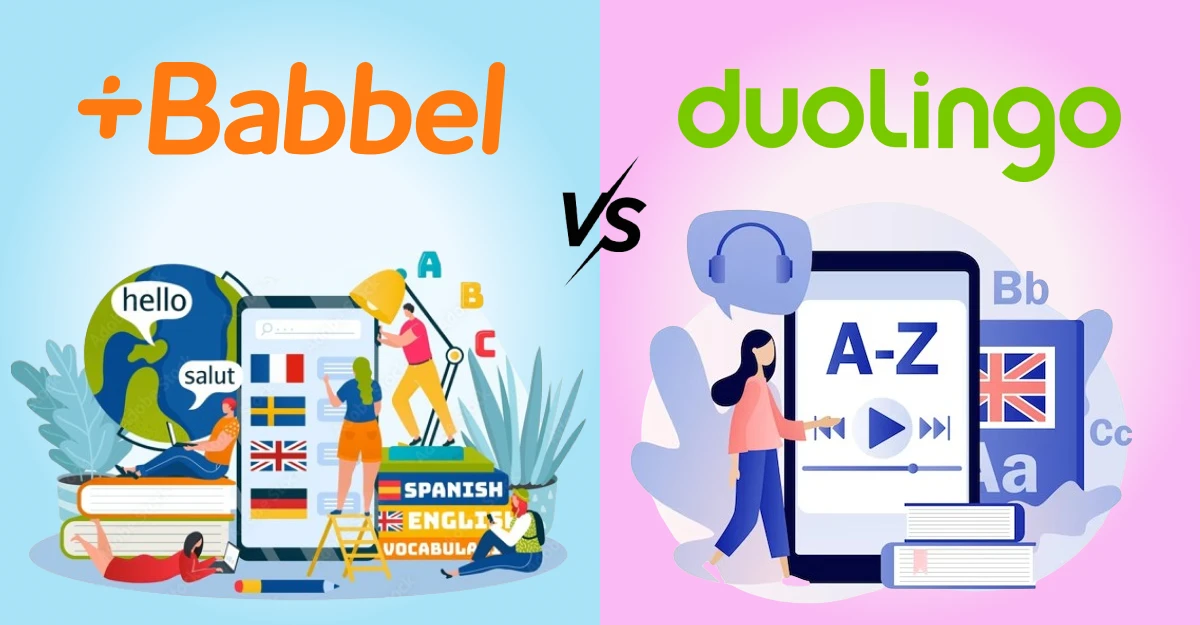
Note: We have also explained Duolingo vs Babbel. Go through the article for detailed info.
(E) Strategies Behind the Duolingo Success Story
This is the part of the Duolingo Success Story that every entrepreneur, marketer, and student of business needs to understand. Duolingo wasn’t just a product; it was a masterfully engineered psychological tool.
(E.1) The Freemium Business Model
This is the core of Duolingo’s financial engine. By offering its main courses for free, Duolingo achieved a massive scale in terms of user growth. The company’s revenue doesn’t come from selling the core product, but from a small percentage of its enormous user base.
(E.1.1) Revenue: How does Duolingo earn money?
The company’s revenue streams are clever and varied-
- Super Duolingo (formerly Duolingo Plus): This is the premium subscription service. For a monthly fee, users get an ad-free experience, unlimited hearts (so they can make mistakes without penalty), and offline lessons. This appeals to dedicated users who want to accelerate their learning and remove all friction.
- In-App Advertising: For the vast majority of casual learners who don’t pay, Duolingo shows a short ad after a lesson. These ads generate a significant portion of revenue from the non-paying user base.
- Duolingo English Test (DET): This is a stroke of pure genius. The Duolingo English Test is an affordable, convenient, and accepted alternative to expensive proficiency tests like TOEFL and IELTS. It provides a crucial revenue stream while also expanding Duolingo’s influence in the global education market.
- In-App Purchases: Users can purchase virtual currency (gems) to buy things like a streak freeze, which prevents them from losing their learning streak if they miss a day.
(E.2) Gamification & Habit Formation
The reason so many people stick with Duolingo is because it’s not designed like a school subject—it’s designed like a game. This is the ultimate example of behavior design.
- Streaks: The daily learning streak is the most powerful tool for habit formation. It leverages the human desire for consistency and the fear of losing progress. You don’t want to break that chain!
- Rewards System: Lessons give you XP points, badges, and virtual currency. These tangible progress milestones are highly motivating. Every small achievement, from a lesson completion to a new level, feels like a win.
- Leaderboards & Competitive Challenges: The weekly leaderboards tap into our natural desire for social comparison. Seeing your name at the top of a league or in a group of friends is a powerful incentive to do more lessons. This creates a sense of friendly competitive challenges.
- Bit-sized Lessons: By making lessons just a few minutes long, Duolingo removes the intimidation factor. Anyone can find time for a quick lesson, which encourages a consistent daily practice and leads to powerful retention.
(E.3) Marketing Strategy: The Unhinged Viral Sensation
The Duolingo Success Story owes a huge debt to its unique marketing.
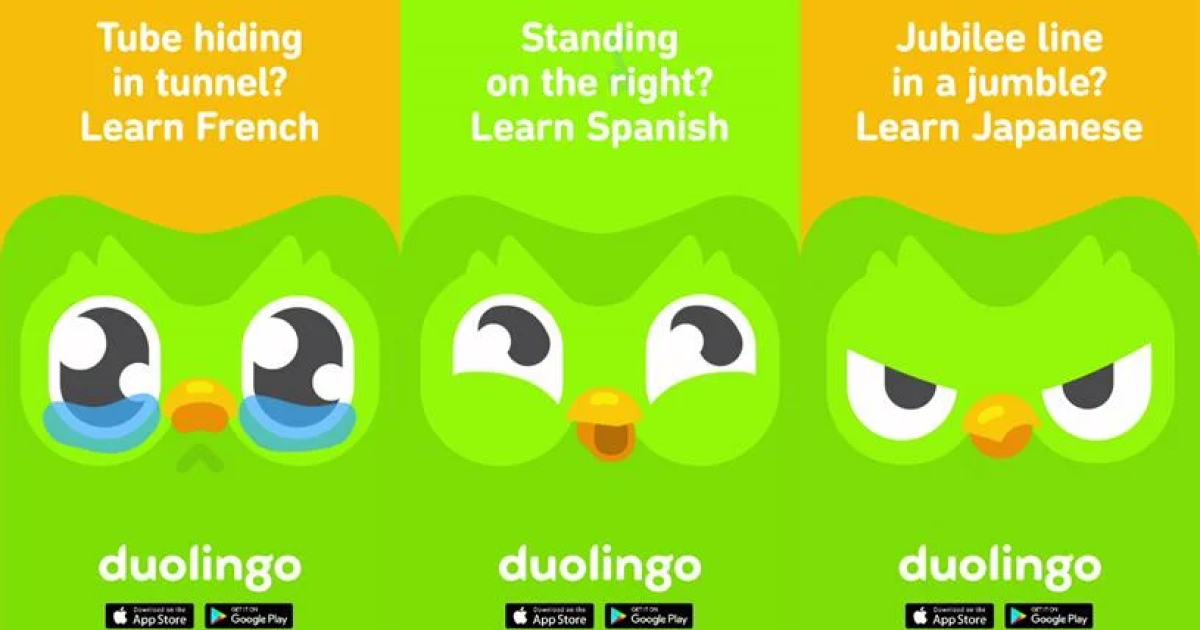
- Meme Marketing: Instead of pouring millions into traditional ads, the company created an iconic brand character: Duo the Owl. On social media, particularly on TikTok, Duo became a hilarious, intimidating, and viral mascot. Duolingo’s team created content that wasn’t just selling an app; it was creating a culture around it.
- Community Features: Users could follow friends, join weekly challenges, and compare progress—turning learning into a social activity.
- Push Notifications: Personalized reminders kept users coming back daily.
- A/B Testing & Data Analytics: Every design decision—from button color to reminder timing—was tested to maximize retention.
This genius approach led to a massive amount of organic growth and brand recognition that money simply can’t buy.
(E.4) Operational Strategy – Tech at the Core
Duolingo has always been AI-driven. From the beginning, the platform used machine learning and data analytics to improve lessons. Over time, this evolved into:
- AI Personalization: Lessons adapt to your pace and mistakes.
- Speech Recognition: For practicing pronunciation.
- Automated Feedback: Immediate corrections to keep learners motivated.
- Scalable Infrastructure: Building an app that could handle over 100 million monthly active users.
(F) Implementation Process
Strategies mean nothing without execution, and in this Duolingo Case Study, the company’s implementation is where things really shine. Instead of chasing profits right away, Duolingo focused on building scale, engagement, and trust first.
| Phase | Years | Key Actions | Focus |
| Launch & Early Growth | 2011–2013 | Private beta, public launch, 1M users, App of the Year award | Accessibility |
| Gamification & Stickiness | 2013–2015 | Streaks, XP, leaderboards, notifications | Habit Formation & Retention |
| Scaling & Monetization Tests | 2015–2018 | More languages, DET, ads, Duolingo Plus | Global Reach & Revenue Experiments |
| Viral Growth | 2018–2021 | Meme marketing, offline lessons, social features | Organic Growth & Engagement |
| IPO & AI Expansion | 2021–2025 | IPO launch, AI-driven personalization, 116M MAUs | Market Leadership & Innovation |
Here’s how it unfolded:-
Step 1: Launch & Early Growth (2011–2013)
- 2011: Private beta launched.
- 2012: Public launch with free access to Spanish, French, English, and German.
- 2012 (Dec): Hit 1 million users within months.
- 2013: Won Apple’s “iPhone App of the Year,” boosting downloads globally.
At this stage, the goal was accessibility—to prove that a free app could compete with expensive giants like Rosetta Stone.
Step 2: Building Stickiness with Gamification (2013–2015)
- Introduced streaks, XP points, and rewards systems.
- Launched bite-sized lessons to encourage daily practice.
- Rolled out leaderboards and social features for competitive challenges.
- Added push notifications and personalized reminders to improve retention.
This phase focused on habit formation and user engagement, making learning addictive.
Step 3: Scaling & Experimentation (2015–2018)
- Expanded to new languages (from 4 at launch to over 30).
- Launched Duolingo English Test (DET) as an affordable alternative to TOEFL/IELTS.
- Began monetization experiments with ads and Duolingo Plus (premium subscription).
- Invested heavily in A/B testing and data analytics to optimize every detail of the app.
The goal was to scale globally while testing a sustainable business model.
Step 4: Marketing Breakthroughs & Viral Growth (2018–2021)
- The Duolingo Owl mascot became an internet meme, driving organic growth through social media marketing.
- Introduced offline lessons for premium users.
- Expanded community features like weekly challenges and friend leaderboards.
- Continued optimizing with AI-driven learning for personalization.
Here, Duolingo mastered social media marketing and competitive challenges to reach new audiences.
Step 5: IPO & Beyond (2021–2025)
- 2021: Duolingo went public on NASDAQ under ticker $DUOL.
- 2022–2025: Expanded to AI personalization, including interactive speaking practice with AI tutors.
- By Q1 2025: Duolingo had 116.7M monthly active users, 40.5M daily active users, and 9.5M paid subscribers.
At this stage, Duolingo cemented itself as the world’s #1 language learning mobile app.
(G) Challenges & Roadblocks
No success story is without hurdles, and in this Duolingo Case Study, the road to becoming the world’s #1 language learning app was full of challenges. From convincing investors to battling user dropouts, Duolingo had to constantly adapt.
| Challenge | Impact | Solution |
| Monetization struggles | Delay in profits | Introduced the freemium model, Super Duolingo subscription |
| User retention issues | High dropout rates | Gamification, habit loops, streak features |
| Skepticism on effectiveness | Negative press, doubts | AI personalization, Duolingo English Test |
| Intense competition | Market pressure | Free access + viral growth strategies |
| Investor pressure (IPO) | Questions on sustainability | Diversified revenue streams |
Here are the details-
(G.1) Monetization Struggles
Duolingo’s mission was to make education free, but investors needed to see profits. For years, the company operated without a clear revenue model. Ads risked ruining the user experience, and charging upfront fees went against its mission of accessibility.
- Solution: They tested multiple approaches—ads, in-app purchases, and eventually the freemium model with Duolingo Plus. Today, subscriptions account for most of their revenue.
(G.2) User Retention Issues
Many people download apps but quickly stop using them. Early on, Duolingo faced a problem with inactive users and low lesson completion rates.
- Solution: They doubled down on gamification—introducing streak freezes, push notifications, achievement badges, and personalized reminders to strengthen habit formation and boost retention.
(G.3) Skepticism About Effectiveness
Traditionalists argued that no free app could match the effectiveness of paid tutors or immersive programs. Critics said Duolingo was “too much like a game” and wouldn’t lead to real language proficiency.
- Solution: The company invested in AI-driven learning, speech recognition, and data analytics to make lessons more adaptive and practical. They also introduced the Duolingo English Test (DET), which gained credibility when universities began accepting it.
(G.4) Intense Competition
Duolingo wasn’t the only player. Babbel, Rosetta Stone, Busuu, Memrise, Lingodeer, and Drops all had strong user bases. Many focused on deeper grammar or conversational skills.
- Solution: Duolingo leaned on its strengths—free access, social media marketing, and viral gamification—to dominate in scale rather than depth.
(G.5) Investor Pressure & IPO Risks
When Duolingo went public in 2021, skeptics questioned whether it could keep growing while remaining profitable, especially since 80% of users don’t pay.
- Solution: The company expanded its revenue streams—Super Duolingo subscriptions, DET, ads, and in-app purchases—while proving its massive global user engagement numbers.
(H) Results & Outcomes: The Metrics of Success
The numbers tell the most powerful part of the Duolingo Success Story. Its ability to grow and monetize its massive user base is a model for any tech company.
| Metric | Q1 2025 Data | 2024 Full Year Data |
| Monthly Active Users (MAUs) | 130.2 million | 88.4 million |
| Daily Active Users (DAUs) | 46.6 million | 27.2 million |
| Paid Subscribers | 10.3 million | 8.3 million |
| Annual Revenue | – | $748 million |
- Financials: The company is now profitable. Duolingo’s annual revenue for 2024 was an impressive $748 million. Its net income for 2024 was $89 million, proving that its freemium model is not only sustainable but highly profitable.
- Global Impact: Duolingo is the most downloaded education app worldwide. It has democratized education in a way that traditional institutions could only dream of. The low-cost Duolingo English Test has become a recognized credential for university admissions and jobs, creating tangible opportunities for millions.
(I) Way Forward: Building a Better App Than Duolingo
While Duolingo is a phenomenal success, it’s not perfect. It still struggles with teaching advanced grammar and creating a truly immersive conversational experience. So, if you were to create a new language app, how would you make it better?
- Focus on Conversational Fluency: Duolingo’s weakness is in speaking and listening. A new app could use more advanced AI to create a true AI-driven learning experience, where users can have realistic, dynamic conversations with AI tutors. Think real-time feedback on pronunciation and grammar, not just repetition.
- Deeper Grammar and Context: Many users find that Duolingo lacks proper grammar explanations. A new app could integrate short, engaging videos or interactive modules that explain grammar rules in a clear, simple way. The goal would be to help learners understand the “why” behind what they’re saying, not just memorize phrases.
- Community-Driven Learning: While Duolingo has social features, a new app could truly leverage the power of community features. Imagine a feature that connects you with other learners at the same level for live, casual conversations, or a system where native speakers can give feedback on your writing. This would tap into the desire for social connection and give learners a taste of real-world practice.
- Specialized Language Tracks: Instead of being a one-size-fits-all solution, a new app could offer specialized tracks. For example, a “Traveler’s Track” with essential phrases for trips, or a “Business Track” for professionals. This would cater to user segmentation and provide more targeted value.
- A Better Monetization Model: Instead of just ads or a simple premium subscription, a new app could offer micro-transactions for one-on-one sessions with a real tutor. This would add a high-value revenue stream without putting a hard paywall on the core learning experience.
(J) Lessons Learned from Duolingo Success Story
This Duolingo Case Study is a powerful lesson for any entrepreneur or creator.
- Start with Accessibility: By offering a quality product for free, Duolingo removed the biggest barrier to entry and attracted a massive audience.
- Make it Fun: The most important lesson is that gamification is not a gimmick. It’s a powerful tool for behavior design that turns a chore into a habit.
- Focus on Retention: User acquisition is expensive; user retention is everything. Duolingo’s obsession with streaks and daily engagement is the key to its long-term success.
- Leverage Organic Growth: A strong brand and a viral marketing strategy are more effective and sustainable than a huge advertising budget.
- Monetize Later: Build a product people love first, and the money will follow. The Duolingo Case Study proves that you can create a profitable company even when 80% of your users don’t pay.
(K) Final Words on Duolingo Success Story
The Duolingo Success Story is a powerful reminder that an unwavering focus on the user experience is the ultimate growth hack. By making language learning feel like a fun game, Duolingo solved the problem of motivation that had plagued the education industry for centuries. Its brilliant freemium model, its genius use of gamification, and its savvy marketing created a truly unique and powerful brand. Duolingo didn’t just teach us a new language; it taught us a new way to learn.
Note: We have also covered the success stories of the following brands-
FAQs (Frequently Asked Questions)
- How is Duolingo so successful?
The Duolingo Success Story is built on its ability to make learning fun and accessible. Its freemium model brings in a massive user base, while its deep use of gamification—including streaks, rewards system, and leaderboards—creates a powerful habit loop that drives incredible user retention and daily practice.
- Why is Duolingo so successful?
Duolingo’s success is due to its focus on two core principles: accessibility (it’s free) and engagement (it’s entertaining). It turned a chore into a game, which is a key part of its success story. It also leverages AI-driven learning and a viral social media presence to keep users coming back.
- Why is Duolingo free?
Duolingo is free to achieve its mission of making education available to everyone. Its freemium model allows it to attract millions of users, a small percentage of whom convert to a premium subscription or generate revenue through ads.
- When did Duolingo become popular?
Duolingo became popular very quickly after its launch in 2012, especially with the release of its mobile app. It reached 1 million users in just over six months.
- What are the USPs of Duolingo?
- Free Access: The core courses are entirely free.
- Gamification: It uses a powerful rewards system and competitive challenges to make learning addictive.
- Bite-Sized Lessons: Lessons are short and easy to fit into a busy schedule, promoting a strong learning streak.
- Iconic Brand: The Duo the Owl mascot is instantly recognizable.
- What were the cons and weaknesses of Duolingo?
Some of Duolingo’s weaknesses include a lack of in-depth grammar instruction, limited opportunities for true conversational practice, and a tendency for users to focus on XP points and streaks rather than genuine language proficiency.
- How much money does Duolingo make?
Duolingo’s revenue for the full year 2024 was approximately $748 million. It earns money from its premium subscription (Super Duolingo), in-app advertising, and the Duolingo English Test.
- How much money does Duolingo have?
As a profitable, publicly-traded company, Duolingo has a strong financial position with significant cash reserves. Its net income in 2024 was $89 million, which indicates its financial health. The company is not losing money.
- Does Duolingo sell your translations?
No, Duolingo stopped selling user-generated translations in 2014. This was an early experiment that they abandoned as their freemium model and other revenue streams proved more successful.
- Marketing Stunt- How did Duolingo die?
This question refers to a viral marketing campaign Duolingo ran in 2024 where they pretended their mascot, Duo the Owl, had “died.” It was a hugely successful stunt that generated massive buzz and engagement, proving the power of their creative social media marketing approach.
Thanks for reading!
