

Have you ever wished you could put your money where your predictions are? Imagine earning when your guess about the Federal Reserve’s decision, the outcome of the next election, or even a sports result comes true.

That’s exactly what Kalshi lets you do—and this is why the Kalshi Business Model is getting so much attention. Valued at over $2 billion in 2025, Kalshi is not just another betting platform; it’s a CFTC-regulated financial exchange where you trade “event contracts.” Whether you’re curious about politics, economics, or sports, Kalshi transforms your predictions into opportunities.
Let’s uncover how the Kalshi Business Model works, how it makes money, and why people are calling it the future of forecasting.
Quick Profile: Kalshi at a Glance
Kalshi Inc. is a New York City–based American financial exchange and prediction market that specializes in event contracts. Before going into the details, let’s have a look at Kalshi’s profile-
| Particulars | Details |
| Company | Kalshi Inc. |
| Type | Private |
| Industry | Event-based financial trading |
| Founded | 2018 |
| Kalshi Founders | Tarek Mansour (CEO) & Luana Lopes Lara (COO) |
| Headquarters | New York City, USA |
| Valuation | $2 billion (2025) |
| Market Share | 62% |
| Competitors | Polymarket, Predictlt, DraftKings, Betfair, Smarkets |
| Regulation | Commodity Futures Trading Commission (CFTC) |
Note: We have also covered the following topics related to trading. Go through them for detailed info-
- What is Paper Trading in Zerodha & How to do it?
- 8 Best Paper Trading Apps in India to learn trading
- What is the ideal trading Psychology? Best Practices
- Is Forex Trading Legal in India? Everything you should know!
The Story: How Kalshi Started?
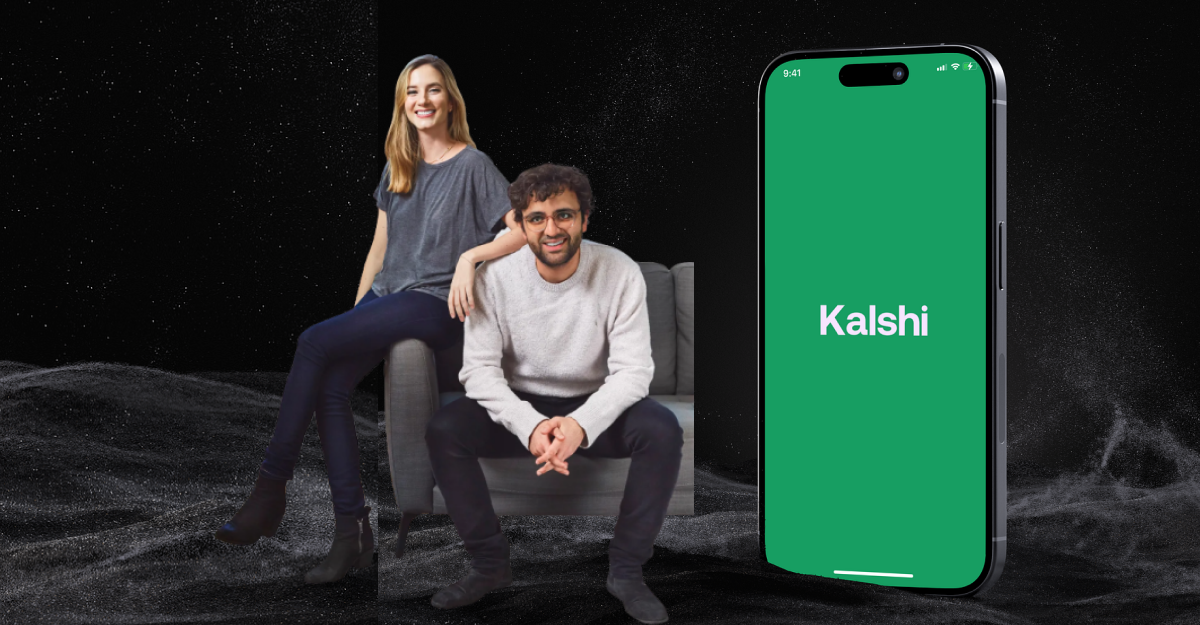
You might be surprised to know that Kalshi’s founders didn’t set out to build a betting app!
Back in 2018, Tarek Mansour and Luana Lopes Lara were working as financial analysts. They realized there was no direct way for investors to hedge against real-world uncertainties—like Brexit or unexpected inflation.
So, they decided to create a regulated exchange where people could trade on event outcomes. After 18 months of fighting for approval, they became the first platform to get a federal license from the CFTC in 2020. The name “Kalshi” comes from the Arabic word for “everything,” symbolizing the wide range of events you can trade on.
The Kalshi app finally launched in 2021, and by 2025, it was valued at $2 billion, backed by $185 million in funding.
Working Strategy: How Does Kalshi Work?

Think of Kalshi as a marketplace where, instead of buying stocks, you buy answers to future questions. Every contract is basically a Yes or No bet on whether something will happen. If you’re right, you get $1. If you’re wrong, you lose what you put in. Pretty straightforward, right?
Let me give you the snapshot-
| Step | Action | Example |
| Market Creation | Kalshi sets events | “Will the Fed raise rates?” |
| Buy Contracts | Yes/No | Buy “Yes” at $0.60 |
| Price as Probability | Market sets chance | 60% implied chance |
| Expiry & Payout | Outcome decides | If “Yes,” you get $1 |
Under the hood, here’s how the strategy plays out-
1. Questions Turned Into Markets
Kalshi transforms real-world uncertainties into simple markets. It could be “Will inflation rise above 4% this quarter?” or “Will Team X win the championship?”. You’re not staring at complicated charts—you’re just picking Yes or No.
2. Prices Show the Odds
Instead of rolling dice, the market itself tells you the probability. A contract priced at 70 cents means the crowd believes there’s a 70% chance the event will happen. This way, prices act like live predictions, constantly adjusting as people buy and sell.
3. Straightforward Trading
You can jump in two ways:
- Instant Trade (buy or sell immediately at the current price).
- Set Your Own Price (place an order and wait for someone else to match it).
What’s cool is that you can never lose more than you spend. There’s no leverage, no complicated borrowing—just what you see is what you risk.
4. Fair Settlements
When the event wraps up, Kalshi instantly settles. If you’re on the right side, you get $1 per contract. If you’re wrong, your contract simply expires worthless. No long waits, no confusion.
5. Smarter Forecasting
Kalshi’s magic lies in collective intelligence. The more people trade, the sharper the prediction becomes. It’s like turning everyone’s opinions into a single, living forecast. That’s why many traders use Kalshi not just for profit, but also to gauge where public sentiment is heading.
6. Safety and Trust
Because Kalshi is fully regulated by the CFTC, every dollar you trade is secured. Your account is verified (yes, you’ll need an SSN if you’re in the U.S.), and trades are backed with actual collateral. That means no shady risks—your funds are protected.
Revenue Sources: How Kalshi Makes Money?
Now, let’s talk about the revenue sources of the Kalshi Business Model. Unlike traditional betting apps, Kalshi doesn’t gamble against you. Instead, it makes money in four main ways:-
1. Transaction Fees
Kalshi earns money mainly from “taker” orders—instant trades executed at the market price. These carry fees range from 0.07% to 7%, with longshots costing more than high-probability outcomes. On the other hand, “maker” orders (limit orders where traders set their own price) are completely free. This balance keeps liquidity flowing while ensuring Kalshi consistently collects revenue from faster trades.
2. Trading Volumes Drive Revenue
The more people trade, the more Kalshi earns. In 2024, total trading activity reached nearly $1.97 billion, generating about $24 million in revenue. By mid-2025, sports alone accounted for three-quarters of all trading, with volumes exceeding $2 billion. This shows how spikes in political and sports events directly translate into higher earnings for the platform.
3. Incentives to Boost Activity
To encourage more trading, Kalshi sweetens the deal for users. Market makers can earn rebates of up to 1%, deposits can be as low as $1, and idle balances earn interest of up to 4.05% annually. These features encourage users to park funds on the platform and participate more often, which in turn drives fee revenue higher.
Look, how the trading volume contributed to the revenue of the Kalshi business model-
| Year | Trading Volume | Revenue |
| 2023 | $183 million | $1.8 million |
| 2024 | $1.97 billion | $24 million |
| 2025 (First 90 Days) | $1.3 billion+ | $15.2 million |
4. Regulatory Edge
As the first CFTC-regulated event exchange, Kalshi can operate nationwide without state-by-state restrictions. This gives it a cost advantage over traditional betting apps and ensures long-term growth.
In short, Kalshi makes money from small fees on instant trades, surging volumes, and smart incentives, all underpinned by its regulatory approval.
Kalshi Funding & Valuation
Kalshi has raised over $185 million from investors like Sequoia Capital and Charles Schwab. Its valuation hit $2 billion in June 2025, thanks to massive growth in political and sports markets.
| Round | Year | Amount Raised | Lead Investors | Notable Participants | Valuation |
| Seed | 2019 | $4.5M | Y Combinator | SV Angel | – |
| Series A | 2021 | $15M | Sequoia Capital | Multicoin Capital | $9.1M |
| Series B | 2022 | $11M | Sequoia Capital | Paradigm | Not Specified |
| Series C | 2025 | $185M | Paradigm | Sequoia, Multicoin, Peng Zhao | $2 billion |
The investments have been directed toward enhancing Kalshi’s technology and infrastructure, integrating with brokerage platforms, expanding the variety of contracts available, and strengthening its leadership position in the regulated event prediction market space.
How Kalshi Payout Works (and Deposits/Withdrawals)
If you’re wondering, “How does Kalshi pay?” here’s the process:
- Deposit: You can fund your Kalshi account via ACH transfers, wire, or debit card.
- Withdraw: Kalshi lets you withdraw to your linked bank account (Bank Transfer).
- Settlement: If your contract wins, you automatically get $1 per contract.
- Cash Out: You can sell your contracts before expiry if you change your mind.
Is Kalshi Betting or Investing?
Here’s the tricky part: Kalshi feels like betting but is legally not gambling. Why? Because it’s regulated by the CFTC, just like futures and options exchanges.
So while Kalshi betting on elections or sports sounds like gambling, it’s technically financial trading on event contracts. That’s the genius of the Kalshi Business Model.
Kalshi vs Competitors: How Kalshi is different from other betting apps?
Let’s see how Kalshi stacks up against others-
| Comparison | Kalshi | Polymarket | Robinhood | DraftKings |
| Regulation | CFTC (US) | Not regulated (US banned) | SEC/FINRA (Stocks) | State gambling licenses |
| Market Type | Event Contract | Crypto-based prediction | Stocks & ETFs | Sports betting |
| Fees | 0.07%-7% Taker Fees | 2% + Spreads | Commission-fee | High vig (The “vig” is like a fee that the betting company takes from each bet.) |
| Payouts | $1 per contract | USDC Stablecoin | Cash | Variable Odds |
If you want a detailed comparison, feel free to comment down below 🙂
Marketing Strategies: How Kalshi Became Famous?
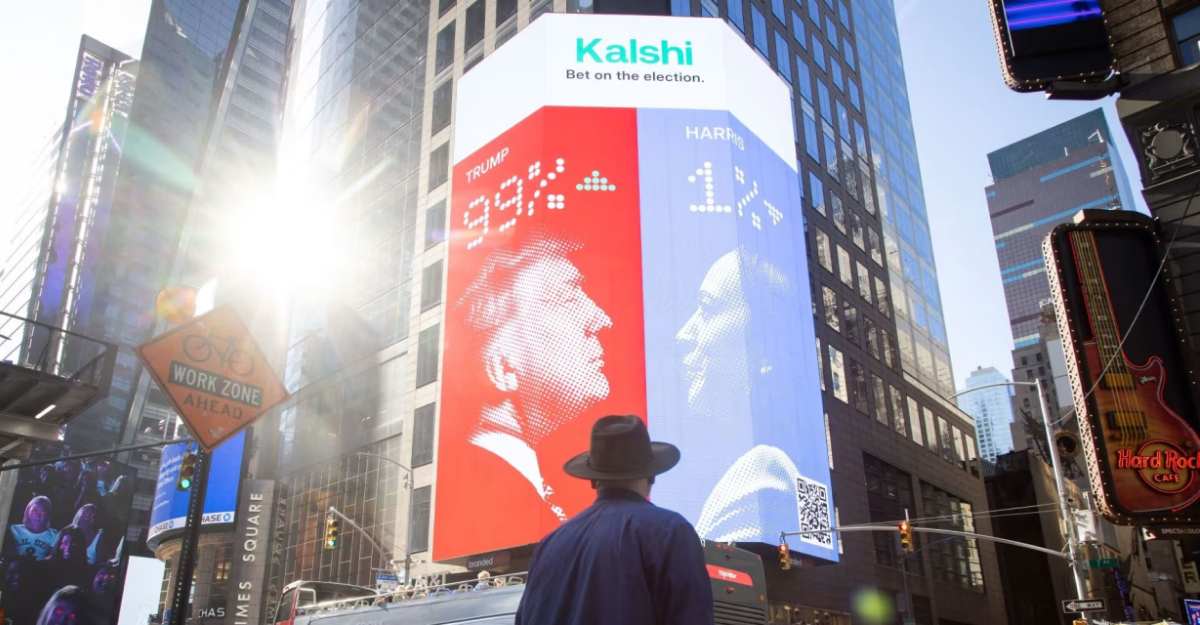
Kalshi didn’t rise to fame overnight—it built momentum by combining smart partnerships, event-driven buzz, and the credibility of being the only regulated platform of its kind.
The Kalshi CEO, Tarek Mansour, knew regulation would be their biggest weapon. Instead of fighting laws like crypto-based Polymarket, Kalshi embraced compliance. That gave it trust, access, and massive media coverage.
1. Building a Developer Ecosystem
Through its KalshiEco hub, the company reached out to developers and creators, teaming up with blockchain networks like Solana and Coinbase’s Base. This expanded Kalshi’s footprint beyond finance into areas like politics, sports, and culture, while turning outside innovators into active promoters of the platform.
2. Partnering with Big Brands
Kalshi struck deals with recognizable platforms, including Robinhood, to bring prediction markets on popular sports directly to wider audiences. These collaborations turned casual fans into traders and gave Kalshi instant visibility among mainstream users.
3. Riding Big Events
The 2024 U.S. presidential election was a game-changer. By positioning itself as the go-to place to trade on election outcomes, Kalshi attracted massive attention, trading volume, and headlines—all of which cemented its reputation as the leading prediction market in the U.S.
The election markets were approved in October 2024.
4. Playing the Regulation Card
Kalshi leveraged its status as the first CFTC-regulated event exchange, highlighting safety and legality. Unlike betting apps restricted by state rules, Kalshi could market itself nationwide, making regulation a built-in trust signal.
5. Expanding Into Sports & Culture
By offering markets on football, entertainment, and cultural events, Kalshi tapped into everyday interests. Targeted campaigns and digital outreach around these markets brought in new users who might never have traded otherwise.
The first week of the 2025 NFL season alone saw over $441 million traded in NFL-related contracts, making it one of Kalshi’s busiest periods ever.
In short, Kalshi became famous by mixing credibility with creativity—turning regulation, partnerships, and major events into powerful marketing fuel.
FAQs on Kalshi Business Model
Q1. Does Kalshi work in India?
No, Kalshi is currently only available in the United States. There’s no Kalshi India version yet.
Q2. Does Kalshi pay out?
Yes, contracts pay $1 per winning contract directly into your Kalshi account.
Q3. Does Kalshi report to IRS?
Yes, Kalshi issues tax forms (like a 1099) and reports to the IRS.
Q4. Does Kalshi have an API?
Yes, the Kalshi API gives traders programmatic access for market data, trading, and backtesting.
Q5. Does Kalshi have fees?
Yes, only on “taker” orders (0.07%–7%). “Maker” orders are free.
Q6. Does Kalshi do parlays?
No, Kalshi doesn’t allow parlays like DraftKings. Each contract is independent.
Q7. Does Kalshi charge a fee?
Yes, but no hidden fees. Just trading fees and small withdrawal costs.
Q8. Does Kalshi require SSN?
Yes, since it’s US-regulated, you need a Social Security Number for KYC.
Q9. Does Kalshi use crypto?
No, Kalshi works only with US dollars. Competitors like Polymarket use crypto.
Q10. Does Kalshi take a cut?
Yes, via trading fees. It does not take positions against users.
The Big Picture: Why the Kalshi Business Model Matters?
At its core, the Kalshi Business Model isn’t just about betting—it’s about financializing everyday uncertainty. From politics to sports, Kalshi gives you a legal, regulated way to profit from what you know (or think you know).
It’s:-
- Simple (yes/no contracts)
- Transparent (prices reflect probability)
- Regulated (CFTC approved)
- Scalable (huge trading volume growth)
In other words, Kalshi is building the Wall Street of everyday events!
